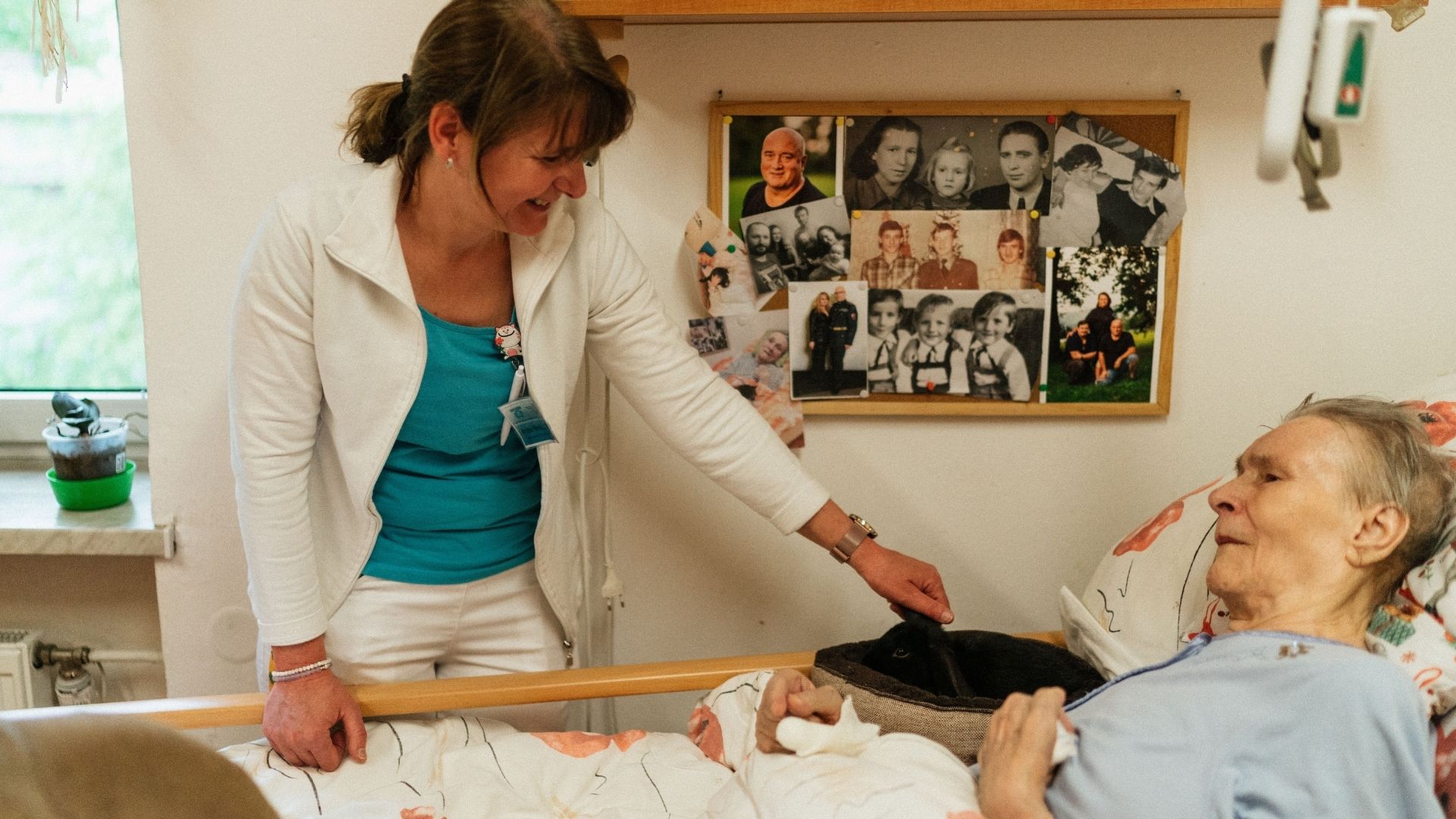
State and territory health ministers are stepping up pressure on the Albanese government to provide more aged care funding and beds, as thousands of older Australians remain in hospital despite being medically ready to leave.
Queensland is at the centre of the dispute, with 1,437 medically cleared patients currently waiting for an appropriate aged care or disability placement.
Around three-quarters are waiting for residential aged care.
The Queensland government says those patients are occupying 11.4 per cent of the state’s hospital capacity and costing more than $3 million a day. Fifteen people have reportedly been waiting for more than 700 days.
Queensland Health Minister Tim Nicholls has accused the Commonwealth of failing to provide enough aged care capacity and said the state still does not have clear information about how many additional places will be delivered, where they will be located or when they will open.
“The Commonwealth’s aged care plan for Queensland remains unclear,” Mr Nicholls said. He warned that the lack of aged care capacity was placing further pressure on hospitals already struggling with demand.
The issue is not confined to Queensland.
Western Australia has reported 427 medically cleared patients waiting to move into residential aged care, while South Australia has hundreds more patients waiting for aged care placements.
The growing numbers have prompted state and territory health ministers to push for greater Commonwealth investment ahead of their meeting this week.
States operate public hospitals, while the Commonwealth funds aged care. When an older person no longer requires acute hospital treatment but cannot access an aged care placement, states continue paying for their hospital stay. The result is an expensive form of bed block that can prevent hospitals from admitting other patients.
The Commonwealth has pointed to the $25 billion increase in hospital funding agreed through National Cabinet in January.
The funding package included an additional $2 billion over four years intended to help address pressure on hospital systems, although the Commonwealth says the states chose not to have that money specifically quarantined for aged care.
Federal Health and Ageing Minister Mark Butler has acknowledged the shortage of aged care beds and described the need for more supply as one of the biggest challenges facing the sector.
Mr Butler said last month that Australia would need to build a new aged care facility roughly every three days for the next 20 years to keep pace with the ageing population. That longer-term expansion does little to resolve the immediate problem facing hospitals.
Grattan Institute health and aged care program director Peter Breadon has argued the Commonwealth should cover the cost of people who remain in hospital after they are medically ready to leave, as well as funding alternative accommodation that would allow them to be discharged safely.
The Australian Medical Association has also warned that the problem has been building for more than a decade.
AMA president Danielle McMullen said Australia needs more aged care beds, but argued that additional beds alone will not solve the problem.
She pointed to the need for more home care packages, a larger aged care workforce and greater investment in primary care, alongside improvements within hospitals themselves.
For state governments, however, the immediate concern is the number of hospital beds being occupied by people who no longer need acute care.
With billions already committed to hospitals and the Commonwealth facing renewed demands for aged care funding, the issue is becoming another major test of the relationship between Labor federally and the states.
For older Australians waiting for an aged care placement, the funding dispute has a very practical consequence: they remain in hospital because there is nowhere else for them to go.



Leaving aged care to the market is the most expensive form of Commonwealth cost shifting to the states and territories we have seen to date. The Commonwealth has no incentive to solve the problem because the states and territories pay and the Commonwealth saves