Jul 21, 2020

Superheroes wear masks

As Australia enters into a second wave of COVID-19 infections, the prospect of mandatory face masks has become a reality for many.

The World Health Organisation is now recommending that health workers, anyone with even the mildest symptom of COVID-19 or people caring for suspected or confirmed cases of COVID-19 should wear a mask. 

The WHO also recommends masks for people aged 60 and over, and anybody with an underlying health condition if they are in an area of widespread transmission and they cannot guarantee social distancing.
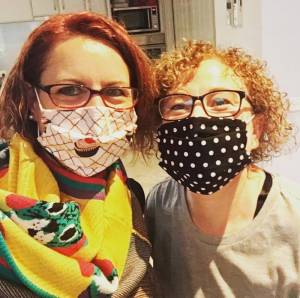
Image supplied by Rachel Bosher.

With that in mind, Victoria has updated its guidance for Melbourne and the Mitchell Shire, where community transmission is rising, and masks will be compulsory from midnight 22 July 2020. Those who fail to wear a mask will be issued with a $200 fine.

Mary-Louise McLaws, an epidemiologist and WHO adviser, recently told the ABC that a similar order should be implemented across the whole of Sydney to stem the outbreak in New South Wales.

“I know this will be criticised because it’s across a wide geographical area, but that’s the point”, Professor McLaws wrote.

Professor McLaws, who helped the WHO evaluate evidence on the efficacy of cloth and fabric masks, said new evidence showed wearing almost “any sort of cloth is better than a bare face”.

How do face masks stop the spread of infection?

Face masks can be used to either protect the health of a person who is well, or to prevent the spread of infection from someone who is sick.

COVID-19 is spread in four main ways: 
  1. through contact with droplets from an infected person’s sneeze or cough, or when they are talking, 
  2. from touching objects that have sneeze or cough droplets from an infected person on them, 
  3. close contact with an infected person, or, 
  4. touching your face or mouth.
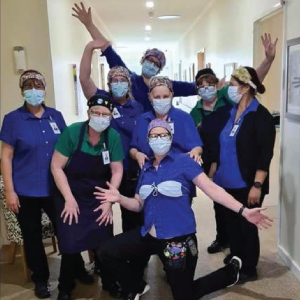
Image supplied by Brianna Ryan.

COVID-19 can still spread from an infected person who does not have symptoms. 

The disease is spread in these cases through viral shedding, when the virus starts to replicate within the body, circulating to different parts of the body and potentially being released into the environment.

Face masks act as a simple barrier to help prevent droplets from travelling into the air, onto surfaces or onto other people when an infected person coughs, sneezes or talks. 

It’s important to remember that face masks are only one tool in the fight against COVID-19. Other important measures include: 

  • washing hands, 
  • thorough and repeated cleaning, 
  • social distancing, and 
  • avoiding touching your eyes, nose and mouth, even when wearing a mask.

How to wear a face mask

Check out our printable mask “how to” guide

We’ve all seen the pictures of the Minister for Health, Greg Hunt, struggling to put his facemask on. It can be a bit tricky at first.

How to put on a medical face mask

  1. Wash your hands with alcohol-based hand sanitiser or soap and water.
  2. Inspect the mask for tears, holes or damage. Do not wear a mask that has already been worn.
  3. Identify the top of the mask, where there is usually a metal noseband.
  4. Identify the inside of the mask, which is usually white.
  5. Place the mask on your face covering your nose, mouth and chin.
  6. Make sure there are no gaps between your face and the mask.
  7. Pinch the metal noseband so that it moulds to the shape of your nose.
  8. Do not touch the front of the mask.
  9. If you accidentally touch the front of your mask, wash your hands.

How to remove a medical face mask

  1. Wash your hands with alcohol-based hand sanitiser or soap and water.
  2. Remove the mask from behind your ears or the back of your head.
  3. Do not touch the front of the mask. If you do accidentally touch the front of your masks, clean your hands.
  4. Lean forward and pull the mask from your face.
  5. Medical masks are made for single use only. Put the used mask in the bin.

Medical face masks should be thrown out if they become wet, soiled or damaged.

How to wear a non-medical mask or fabric mask

Fabric masks can be hand made or bought in a shop. Like medical face masks, they can be used as a barrier to protect you and those around you. 

Fabric masks should be made of three layers: 

  • the outer layer should be water resistant, 
  • the middle layer must be able to act as a filter, and 
  • the inner layer should be water absorbent.

Fabric masks should not be shared.

  1. Wash your hands with alcohol-based hand sanitiser or soap and water.
  2. Inspect the mask to make sure it is not damaged.
  3. Put the mask over your nose, mouth and chin.
  4. Make sure there are no gaps between your face and the mask.
  5. Do not touch the mask while you are wearing it to avoid contamination.
  6. If you accidentally touch the front of your mask, clean your hands.

To remove the mask

  1. Wash your hands with alcohol-based hand sanitiser or soap and water.
  2. Lean forward as you remove the mask.
  3. Remove the loops of the mask from behind your ears.
  4. Avoid touching the mask.
  5. Wash your hands with alcohol-based hand sanitiser or soap and water.
Image supplied by Leionie Boyle.

Ideally you should wash your mask in hot water every day, but if your mask is clean and remains dry, you can store it in a clean, resealable plastic bag. 

Children aged two years and under should not wear a face mask due to the risk of strangulation.

Face masks should also not be worn by someone who has trouble breathing or who is unable to remove the mask on their own.

Check out our printable mask “how to” guide

For more information about Victoria’s guidance on wearing face masks, visit the Victorian Department of Health and Human Service’s website.

mask instructions


Lead images supplied by: Bianca Stray, Yvonne Fellner, Sherree Cooper, Maria Aarons, Madonna Fonseca Francisco, Melanie Blair. Thank you for your contributions!


Leave a Reply

Your email address will not be published. Required fields are marked *

Advertisement
Advertisement
Advertisement

Young And Old Trade Songs In An Intergenerational Choir

  Upon hearing Ilona Harker sing, it’s hard to imagine that somebody with such an amazing voice derives more joy from watching others than she does from performing herself. As an experienced singer-songwriter who has performed at major festivals like the Big Day Out and Splendor on the Grass, the experience that Ilona most enjoys... Read More

Quality Commission halts unannounced visits during extraordinary times

  The Aged Care Quality and Safety Commission will not be making unannounced visits to aged care facilities while tough social distancing and infection control restrictions are in place during the COVID-19 pandemic. The Quality Commissioner, Janet Anderson PSM, told HelloCare the commission is adopting new procedures to ensure it can adhere to infection control... Read More

Omicron is overwhelming Australia’s hospital system – 3 emergency measures aim to ease the burden

The current Omicron outbreak has loaded even heavier demands on hospital beds, both for those who need oxygen and for the severely ill in intensive care wards, as well as those who cannot be cared for at home or in an aged care facility. Read More
Advertisement