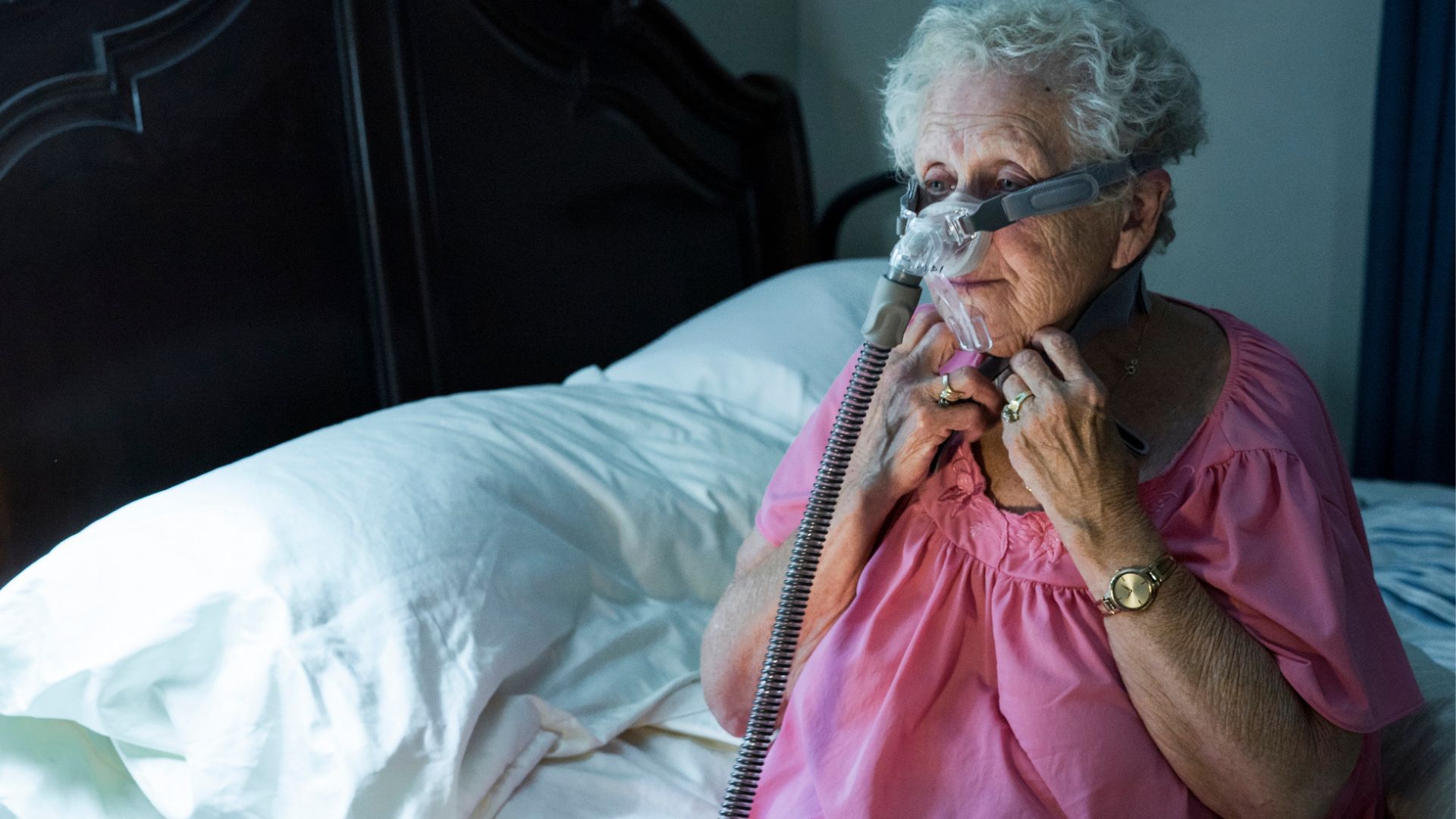
For hundreds of thousands of older Australians, the Continuous Positive Airway Pressure (CPAP) machine is not a luxury device. It is the difference between a stable night’s sleep and a life-threatening drop in oxygen; between managing chronic obstructive pulmonary disease (COPD) at home and ending up in an ambulance.
Yet almost a year into the Albanese government’s landmark aged care reforms, this everyday piece of respiratory equipment has fallen into a policy blind spot, and state health ministers are now warning it could tip an already record winter surge in emergency departments into full-blown crisis.
On 1 November 2025, the federal government’s new Support at Home program formally replaced the old Home Care Packages system and the Short-Term Restorative Care Programme, folding assistive technology and home modification funding into a single, needs-based scheme.
It was billed as the most significant overhaul of in-home aged care in a generation: a $5.6 billion package designed, in the government’s words, to let older Australians remain independent at home for longer while separating everyday assistive technology funding from the core care budget.
That separation was meant to stop older people having to choose between paying for a shower rail or a hearing aid and paying for basic personal care.
But respiratory equipment, including CPAP machines used for obstructive sleep apnoea and more serious conditions like COPD, where patients rely on the device simply to breathe safely overnight, has been carved out of both the old Home Care Packages scheme and the new Support at Home program entirely. It sits in neither bucket.
The practical result, according to reports from New South Wales, is that some patients have had requests for CPAP machines knocked back on the grounds they are already receiving Support at Home funding, even though the device is explicitly excluded from that funding. Families and carers are being caught in a bureaucratic no-man’s-land: technically ineligible for the new scheme, but with the old pathway gone.
It’s easy to underestimate what a CPAP machine actually does. For people with moderate to severe obstructive sleep apnoea, the device stops the airway collapsing repeatedly through the night, a problem linked to high blood pressure, heart disease, stroke risk and falls brought on by daytime fatigue. For patients with COPD or other chronic respiratory conditions, non-invasive ventilation support can be the only thing standing between a manageable night at home and a respiratory crisis that lands them in an ambulance.
Access to publicly funded CPAP has never been simple in Australia. Medicare does not directly fund the machines; instead, each state and territory runs its own limited public respiratory equipment scheme, such as EnableNSW’s Home Respiratory Program or Queensland Health’s Sleep Disorders Program, generally reserved for concession card holders with more severe disease, and typically involving lengthy waitlists.
For years, older Australians without a state scheme place have leaned on aged care package funding to fill that gap. The new reforms have now closed that route too, without opening an alternative.
It is this gap that has now drawn a direct warning from NSW Health Minister Ryan Park, who says clinicians are increasingly concerned that older people locked out of respiratory equipment could end up presenting to emergency departments, or being admitted to hospital altogether, for conditions that better home support could have prevented.
He has described the state’s public hospital system as already under significant strain, compounded by older patients who are medically ready for discharge but stuck in hospital beds because a Commonwealth aged care placement isn’t available to them.
Park is far from alone. At a meeting of the nation’s health ministers earlier this year, state and territory counterparts collectively challenged federal Health and Aged Care Minister Mark Butler over the mounting pressure aged-care-related bed block is putting on their hospital systems, arguing that a promised pipeline of new aged care beds from 2029 does nothing to relieve the crisis already unfolding.
Queensland Health Minister Tim Nicholls put it bluntly, describing his state as “ground zero” for patients stranded in hospital awaiting aged care placements. South Australia has gone as far as standing up a transitional care service in a hotel to house elderly patients who no longer need hospital treatment but have nowhere else to go.
The numbers back up the alarm. NSW government data shows the number of patients stuck in hospital beds awaiting an aged care or NDIS placement surged from 871 to 1,276 in the year to March 2026, with those specifically waiting on aged care placements climbing from 597 to 948.
Nationally, health ministers revealed earlier this year that more than 3,000 people were stranded in public hospitals around the country for the same reason, with one report finding the number of aged care patients occupying hospital beds with no ongoing medical need had jumped 30 per cent in just five months.
The federal government rejects the suggestion that its reforms are the root cause. Aged Care Minister Sam Rae has pointed to what he describes as unprecedented investment in the sector, including more than $1 billion in aged care capital grants, with a share directed to pressure points in NSW such as the Illawarra and Hunter regions, and a further $1 billion pledge to fully fund in-home services such as showering.
He has also noted that states themselves knocked back a $2 billion Commonwealth offer tied to aged care services under the National Health Reform Agreement, opting instead to negotiate a larger overall hospital funding share.
That disagreement over money is really a disagreement over where the responsibility, and the fix, lies. States argue the Commonwealth’s aged care system isn’t producing placements fast enough, leaving hospitals to absorb the overflow and, in cases like CPAP, to absorb people who could have been safely cared for at home if the right equipment funding existed. The Commonwealth argues it has structurally reformed the system for the better and that states need to work within the new architecture rather than treating hospitals as a backstop.
Caught in the middle are patients like those in NSW who have simply been told, in effect, that the piece of equipment keeping them breathing safely overnight isn’t covered by either the scheme that replaced their old funding or the scheme that came before it.
The timing could hardly be worse. NSW Premier Chris Minns has warned the state is bracing for its toughest three weeks of the year on the back of a record-breaking surge in emergency demand, with almost 10,000 people presenting to Sydney EDs in a single day this week and roughly 4,100 ambulance call-outs recorded over the same period.
Minns has urged residents to use GPs and urgent care clinics rather than emergency departments wherever possible, so hospital staff can focus on the most critical cases.
Against that backdrop, a policy gap that pushes even a small proportion of older Australians with respiratory conditions towards ambulances and emergency departments, rather than keeping them safely and affordably supported at home, represents exactly the kind of avoidable pressure the health system can least afford right now.
An interstate taskforce has been agreed between the Commonwealth and the states to examine ways of reducing the number of patients who remain in hospital beyond their expected discharge date, and Minister Butler has promised thousands of new aged care beds annually from 2029.
But that timeline offers little comfort to families navigating the CPAP funding gap today, or to state health systems already absorbing the strain.



I am a pensioner & my family have helped me pay for my escape machine. I am on a care plan which has being of no help & pte fund paid little.