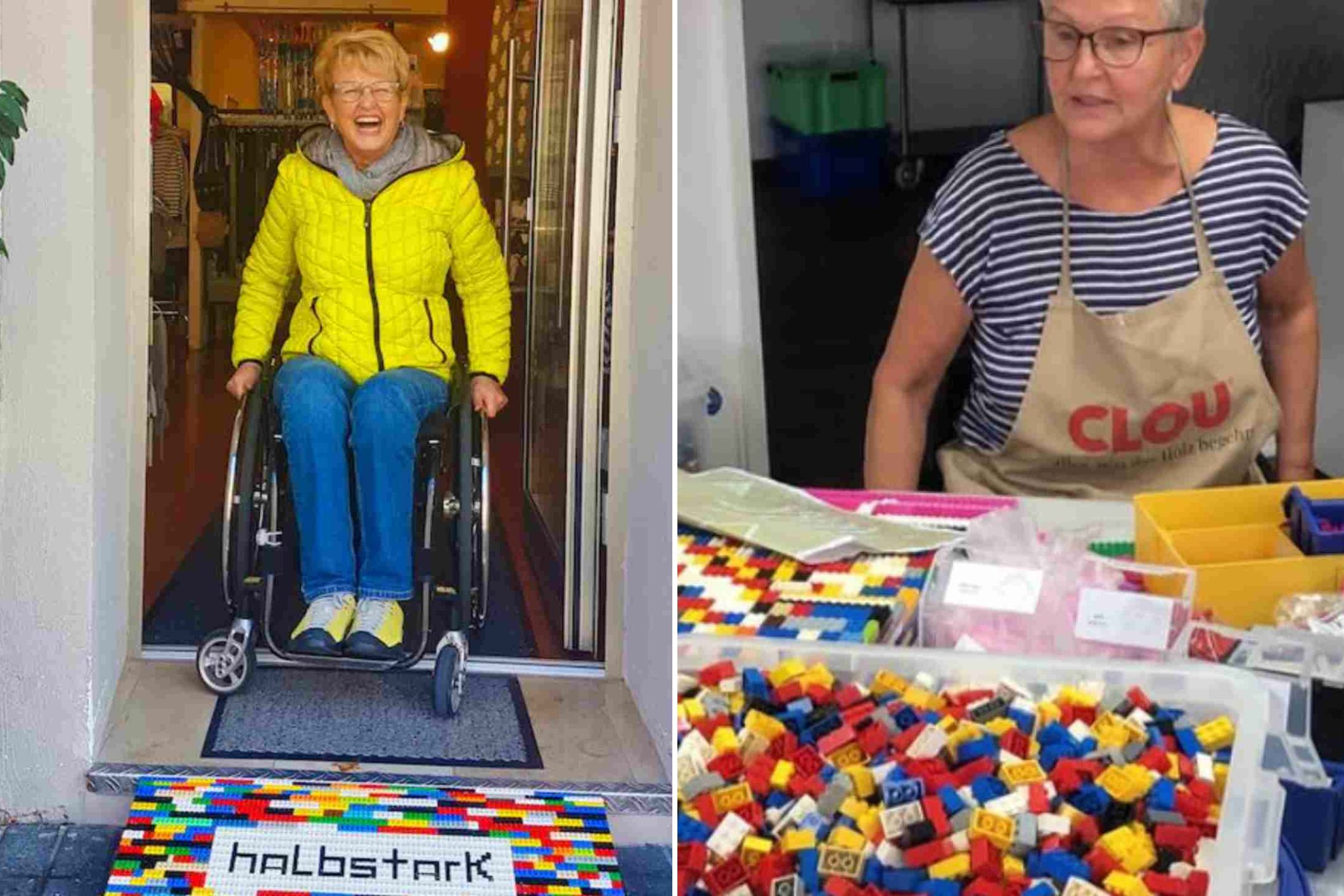
In the German town of Hanau, a grandmother known fondly as “Lego Oma” is transforming accessibility one colourful brick at a time.
For 67-year-old Rita Ebel, life has been anything but ordinary. More than three decades ago, she survived a car accident that left her with incomplete paralysis. She has also endured two divorces and a battle with cancer. Yet despite these challenges, Ebel has become a symbol of resilience and creativity, using Lego bricks to build wheelchair ramps for local businesses.
“I always try to find the good in a bad situation,” Ebel told Ability Magazine. “If you are used to being independent, you don’t want to knock on a shop door and ask for help every time you want to go inside.”
Like many wheelchair users, Ebel found her hometown largely inaccessible. Shop owners often assumed that offering assistance at the door was enough, but for someone who values independence, relying on others was not the answer. Instead of waiting for change, she decided to create it herself.
Rather than wood or metal, Ebel chose Lego as her material of choice. The blocks are lightweight, colourful, and easy to assemble. They also make the ramps visually striking, offering a bonus benefit for people with low vision who can spot the incline more easily. Parents with prams and customers on crutches also use the ramps, proving accessibility helps everyone.
Her first challenge was sourcing the Lego. With modern sets often themed around franchises such as Star Wars or Lego Friends, finding the classic building blocks she needed was not easy. “Getting the Lego is actually the hardest part,” she explained. “Most families do not want to part with it because it passes through generations.”
Reluctantly, Ebel turned to social media to ask for donations. To her surprise, the community responded generously. One of her earliest supporters arrived with two large boxes filled with Lego, more than enough to build her first ramp. Since then, donations have poured in, from individuals, families, and even local kindergartens.
Each ramp takes only a few hours to complete, but the designs are always unique. Some feature playful themes such as Finding Nemo, while others are built in bright geometric patterns. Ebel’s husband helps construct the base while she carefully builds the surface. Together, they are making Hanau more accessible brick by brick.
Technically, her ramps do not meet Germany’s official accessibility regulations, which require a much shallower incline. In many urban areas, space simply does not allow for such long ramps. Yet local officials have supported her efforts, recognising that the ramps give wheelchair users the ability to enter shops independently.
Since starting her project in 2019, Ebel has built dozens of ramps for businesses across town, from sweet shops to breweries. Her efforts have gained worldwide attention, and the nickname “Lego Oma” has stuck.
Her workshop has grown too. Thanks to her landlord, she now has a second basement room to store the mountains of Lego pieces donated from across Germany. And she has no intention of slowing down.
“There is always a way to make life a little better,” she said. “Sometimes you just have to build it yourself.”


