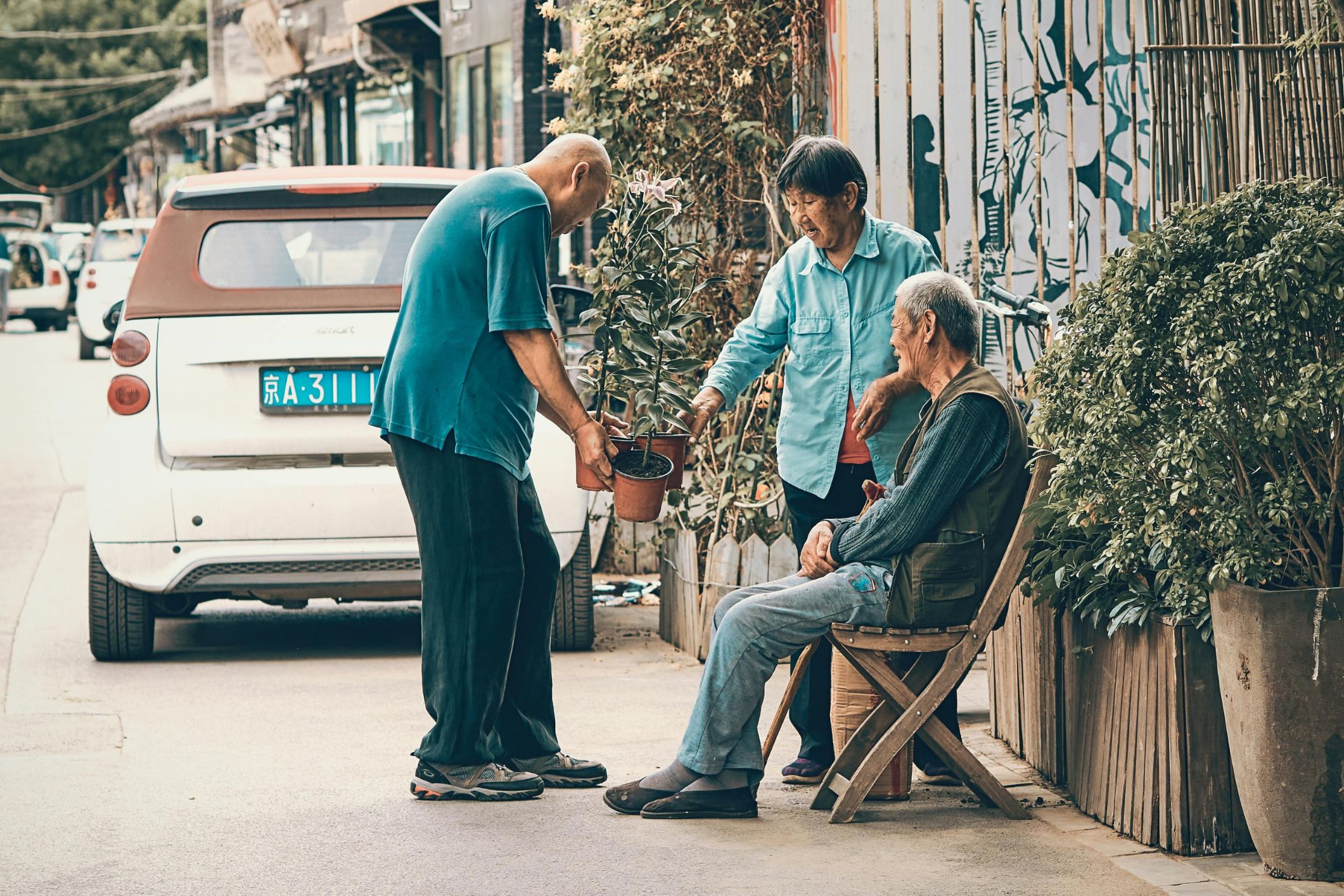
Between independence and institutionalisation, there’s a gap, and that’s where many older Australians fall through.
For decades, the Australian aged care narrative has been a binary struggle. On one side, we have “Ageing in Place,” a policy goal that often manifests as an elderly individual living in a large, empty family home, technically independent but profoundly isolated. On the other side, we have residential aged care, the “nursing home,” which, despite the dedicated staff, remains an institutional solution that often severs the individual’s ties to their lifelong community.
As of 1 November 2025, the Australian government’s latest reforms to the aged care sector have come into full effect. Far from bridging this gap, these reforms have been met with widespread condemnation. Critics argue that the new funding models and regulatory frameworks have increased the administrative burden on providers while reducing the actual hours of bedside care, ultimately creating outcomes that many seniors and advocates regard as even worse than the “broken system” identified by the Royal Commission.
While Australia struggles with a top-heavy, corporatised, and increasingly contentious system, a different philosophy is taking root elsewhere. China, facing a demographic “silver tsunami” of 323 million people over the age of 60, is aggressively developing a “Missing Middle,” a community-based, socially embedded layer of care known as mutual-aid eldercare.
The Chinese Model: Mutual Aid and Social Integration
A recent national guideline issued by eleven Chinese government departments, including the Ministry of Civil Affairs, outlines a vision for eldercare that is not just a medical service, but a social fabric. The goal is ambitious: by 2030, 70 per cent of all urban and rural community facilities must be equipped for “mutual-aid” services.
What does this look like in practice? Unlike the Australian model, which relies heavily on professionalised, hourly-rate “home packages,” the Chinese mutual-aid model leverages the existing community. It defines eldercare as a voluntary, non-profit exchange among neighbours and residents.
This is not merely “neighbours looking out for each other” in an informal sense. It is a structured, state-supported system where township and subdistrict levels establish regular visit mechanisms. Local governments are tasked with forming service teams that provide what they call “socially embedded” support: meal assistance, housekeeping, and emergency response, integrated into the daily life of the neighbourhood. In rural areas, unused school buildings and township nursing homes are being repurposed, not into clinical wards, but into “elder-friendly mutual-aid communities.”
The Australian Extremes: Why the Middle is Missing
To understand why the Chinese approach is relevant, we must look at why the Australian system is failing the “Middle.”
Currently, the Australian system operates on two poles:
The Isolated Independent: Seniors receive Home Care Packages (HCP) to stay in their own homes. While this provides clinical support and basic cleaning, it does nothing to combat the “epidemic of loneliness.” A person may have their floor mopped once a week by a rotating roster of strangers from an agency, but they remain socially starved.
The Institutionalised Senior: When home care is no longer viable, often due to a lack of social support rather than a medical catastrophe, the senior is moved to residential care. Here, they are supported, but they are “removed.” They are no longer part of the local shops, the local park, or the local neighbourhood rhythm.
The November 2025 reforms have exacerbated this. By tightening the criteria for home care and shifting more costs onto the individual, the government has made it harder for the “middle” group, those who need more than a weekly visit but less than 24-hour nursing, to find a sustainable path. The result is a system where seniors are either “not sick enough” to get help or “too far gone” to stay in the community.
Building the Third Layer: How a Socially Embedded System Works
What China is building, and what Australia desperately needs, is a system that treats eldercare as community infrastructure rather than a clinical service.
A socially embedded model works because it addresses the three primary pillars of ageing: physical safety, emotional connection, and social participation.
1. Repurposing the Built Environment
Instead of the Australian trend of building massive, 120-bed residential facilities on the outskirts of suburbs, a socially embedded model utilises the “micro-local.” Imagine transforming a suburban cul-de-sac or a floor of an apartment complex into a mutual-aid hub. Like the Chinese repurposing of school buildings, Australia could use its underutilised local community centres to create “Day Clubs” that offer meals and basic health monitoring without the need for permanent residency.
2. The “Time Bank” and Volunteerism
The Chinese guideline emphasises “mutual assistance among neighbours.” Australia could adopt a “Time Bank” model, where younger retirees or able-bodied seniors provide care for older neighbours in exchange for credits they can use when they themselves require assistance. This turns eldercare into a circular economy of care, rather than a one-way financial transaction that is currently buckling under the 2025 funding cuts.
3. Professional-Community Hybridity
The “Missing Middle” does not mean a lack of professional care. The Chinese model encourages the development of professional teams to ensure quality and sustainability. However, these professionals act as the “scaffolding” for the community. In Australia, instead of a home care worker spending 30 minutes driving to a house to spend 30 minutes cleaning, that worker could be stationed within a “mutual-aid neighbourhood,” overseeing a group of local volunteers and providing specialised medical care where needed.
Why It Could Work in Australia
The common pushback is that Australian culture is more individualistic than Chinese culture. However, the success of “Men’s Sheds” and local community gardens proves that Australians have a deep appetite for social connection.
The current 2025 aged care framework is failing because it treats seniors as “consumers” in a marketplace. But seniors are not just consumers; they are citizens. A community-based model shifts the focus from “buying a service” to “belonging to a network.”
By investing in the “Missing Middle,” Australia could achieve three things:
Reduced Cost: Utilising community volunteers and mutual aid reduces the astronomical cost of the professionalised home care workforce, which is currently plagued by staffing shortages and high travel overheads.
Delayed Institutionalisation: Socially active seniors stay physically and mentally healthier for longer. By providing a “middle” option, we can keep people out of expensive residential care for years.
Better Outcomes: It addresses the trauma of relocation. Seniors can transition from total independence to “supported community living” without ever leaving their postcode or their social circle.
Conclusion: A Call for Radical Localisation
The “Missing Middle” is the space where life happens. It is the morning coffee with a neighbour who also happens to check if you have taken your medication. It is the repurposed local hall where a meal is served not by a “provider,” but by a community team.
The 1 November 2025 reforms have shown that tinkering with the top-down, corporate-led model of aged care is no longer sufficient. It has led to a system that is more expensive, more bureaucratic, and less human.
China’s move towards mutual-aid eldercare provides a blueprint for a more resilient, socially embedded future. If Australia is to fix its broken system, it must look beyond the binary of the home and the institution. We must build the “Middle,” a place where ageing is not a clinical problem to be managed, but a communal journey to be shared.
Between independence and institutionalisation, there is a gap. It is time we filled it with community.



As I often do when visiting a country for the first time, I joined an organised tour. It was on such a tour to China many years ago that I asked our guides how many residential nursing homes existed in each province. I first had to explain what I meant, and the look of horror in their eyes said everything. They politely explained that they care for their parents and grandparents themselves—older family members live with them. It was my first real insight into how deeply ingrained the value of family responsibility is within Chinese culture, where caring for elders is not outsourced but seen as a natural and expected part of life.
This cultural approach was reflected everywhere. I witnessed the sheer joy of multigenerational parks where people of all ages gathered together, not separated by age or ability. Children, parents, and grandparents shared the same spaces—flying kites, dancing, practising tai chi, playing ball games, singing, and making music. Older people were not sidelined or merely accommodated; they were visible, active, and respected participants in community life.
I also learnt just how unfit I was while attempting to climb the Great Wall of China, as people in their eighties ran past me, some even offering to help. At the time, this was a profound eye‑opener for a reasonably fit 50‑year‑old woman. Their physical capability was not incidental—it was the result of a lifetime of movement, purpose, and social engagement, all reinforced by a culture that values active ageing rather than fearing or hiding it.
I returned to China on several occasions and brought back to Australia some elements of their approach to caring for the elderly. However, I came to realise that while programs or practices can be copied, culture cannot be imported so easily. Until we experience a genuine cultural shift—one that re‑embraces multigenerational living, shared responsibility, and visible respect for older people—we will never fully replicate the depth of care, dignity, and belonging that Chinese culture affords its older generations.
Great article Cheryl. Did you write it? I think an author deserves acknowledgment.
Australian communities may not be as evident as those in China, but we too have strong traditions of volunteering and mutual assistance. These were expressed well through the HACC program, now known as the CHSP. But for you years that program has starve of funds in Australia, and has been threatened with closure.
It’s about time we started to appreciate the wonder of the CHSP program in this country. It helped bridge the gap you point to in the great final paragraph of the article. There is now a chance to save it and use it as the basis of much more exciting range of support services. That’s not possible using the individualised, fragmented and expensive approach evident in the SAH program. But the CHSP has its roots in community development and offers us a chance to regain some of the strengths that local, democratically controlled services with volunteers in their governance and in their workforce.
Wow I love this model, it reminds me of growing up in a street where neighbours all looked out for each other, helped with overseeing the kids in the neighborhood. Supported each other when sick by providing a meal and quick trip to the shops to pick up shopping.
I see so many neighborhood or community buildings, old church buildings sitting there empty and think why not this could be a community hub again, social interaction, etc and community supporting community.
We just need to break the red tape of local Councils, and the wider government.
In the mid fifties and sixties in suburban Fitzroy we all looked out for our elderly neighbours. We provided social interaction and meals where necessary. Mum would cook extra to accomodate our elderly neighbour and Dad would play the handymans part like fixing the fence or weeding the garden for them. The elderly would look out for us kids in the street playing and kept an eye on our property whilst Mum and Dad were at work or away.
I can see the China model working in Australia. It certainly has a plenty of benefits that are missing in our current system.
While this might seem practical in China it is not practical in Australia.
Already the new system is causing many older australians to fear they will not get the help they need.
The providors have been left with so much red tape it is slowing everything down.
Older Australians who have worked to have a home and be living in their homes should have assistance they need to do so. That is cheaper than having everyone in aged care or nurseing homes.
Exactly right! I used to prattle on about this kind of approach in different settings while looking after my mum. It’s a definite way forward. The current system tweaks will not solve anything.
There is an information gap here: the main reason why older people require care at home is because of their complex medical diagnoses. The purpose of home care is not all about loneliness. It is, to a large extent, about health monitoring and transport to medical appointments. When a person is falling frequently at home, will the “ middle layer” of the community provide the equipment needed and deliver the physiotherapy to prevent further injury from falls? Will your neighbour change your colostomy bag? Will a friendly local person prevent a mentally disturbed person with dementia and aggressive behaviours from physically abusing their spouse? If a neighbour assists with picking up your shopping, how will we be sure you are not being taken advantage of financially? From my experience neighbours are already helping out many older people living at home with chronic illnesses and reduced mobility. They mow lawns, they make home safety checks, they walk and feed pets. They drive their friends to the shops and collect medication from the pharmacy. But they don’t monitor medication compliance and they don’t dress wounds or deliver allied health services. They don’t clean toilets and do the washing. Home care works, even in its constrained and weakened configuration as the new Support at Home program. The main issue is the wait time to get into the program and the Minimum Service Offer of 60% when you finally get to the head of the queue.
I definately agree, there is a BIG Middle gap, my mother is currently stuck in the middle, she has a Home Package that is useless when she was admitted to the hospital due to a fall, now she’s waiting for a place in a nursing home, in the meantime, it’s a very expensive exercise for the families, the systems in place DO NOT work, it creates more vulnerable elderly penniless and the government thinks they are helping- so far from the truth.
Thank you for this great article. It is important to also acknowledge the very high number of Australian seniors that remain at home in the care of family and friends. Family carers save our country billion of dollars every yer. (at least three million unpaid primary carers at present).
In addition, it is important to note that in China, there was a high number of neglect and abuse among the older people until the Chinese government introduced a new law: quote
China officially passed the revised Protection of the Rights and Interests of Elderly People law in July 2013. Often referred to as the “filial piety law,” this legislation mandates that adult children , or their children, provide both financial support and emotional care to parents aged 60 and older, including visiting them regularly.
Unquote
Yes, we, as a community, need to do much more, but let us focus more on countries like Switzerland,Denmark,Norway, which have robust government funded services and a very strong “healthy agin” approach.
unquote
It seems to me that there is an additional option. That would be to teach people how to cope without the need for external intervention. Would HelloCare consider undertaking a project to show people how they can assist themselves at almost minimal cost? That is, to use aids in their everyday living situation/s? For example, how to put on TED stockings, or even ordinary socks, without having to pay someone to come in? Easy-peasy solution. (Outsider cost of visit approx. $40. One-off cost of equipment, around $50.) Also, new dressing aid, which allows people who have, say, suffered a stroke to dress themselves? Maybe a video on how to navigate the shower using different aids, with things like water-temperature regulators, taps that slowly turn off, devices that stop disabled people from falling, things to lessen the possibility of drowning in the shower? (I personally know of three persons who have died in the shower from drowning.) Water-less hot water bottles, kettle holders, ways to make the bed to keep your feet warmer, leg warmers, arm warmers, different pillows for different needs, and so on. The possibilities are endless. There is also, of course, the need for people to take better care of their own health by not smoking, not abusing alcohol, eating properly, etc. What about some recipes for no-cook, wholesome breakfasts or lunches? The benefits in buying a decent washing machine and drier, or a dishwasher (if people can afford it, of course)? The cost would certainly be less than moving into a Residential Aged Care facility. Clearly, we cannot rely on the government to provide the necessary care, so it is surely time to start looking after ourselves.
In the past there was “Lodge” accommodation, where seniors who had difficulty living alone. They provided a community/dining room with kitchen facility, individual rooms with onsuite and cleaning. Meals were provided, resident’s bed linen washed, washing machines/dryer for personal use and a Enrolled Nurse to provide medication management assistance, health observations, diabetes monitering, small wound management, assistance with showering. Residents could socialise ind the community room where organised activities were available as well.
Thank you for this insightful article. It makes so much sense to build the Middle place for aged care.
Omg I love these outside the broken box models. So many win/win outcomes for all. I propose starting a “brain trust” to investigate further?