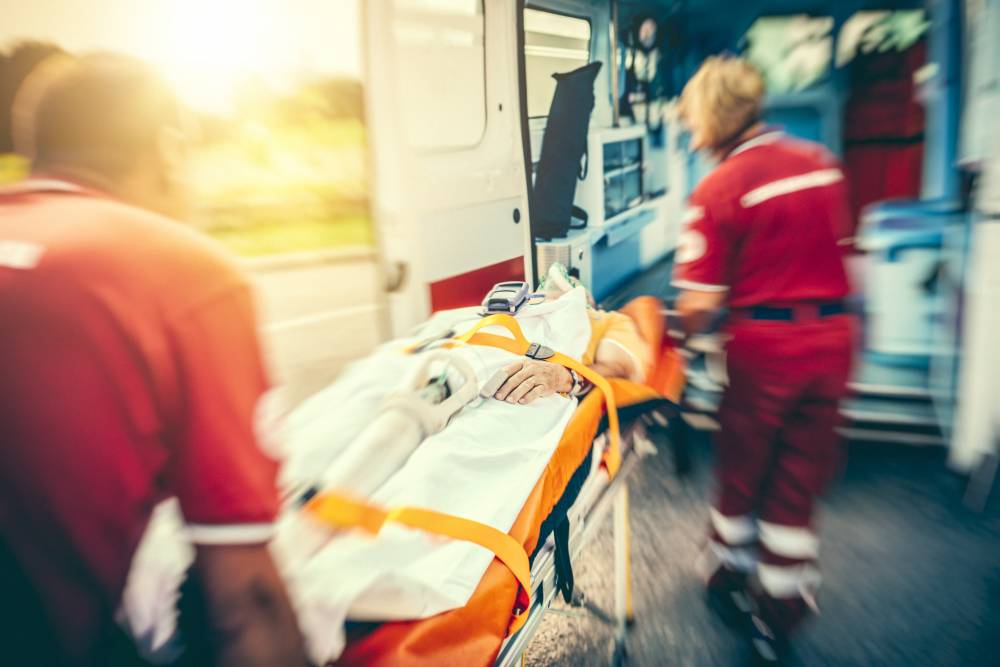
In my father’s final weeks, there came a point at which it became clear that my mother could no longer cope with caring for him at home on her own.
He was so unwell, upset and angry, and losing control of his body. It was absolutely heartbreaking.
One day, when things were particularly bad, we decided we had no choice but to call an ambulance. I clearly remember the relief I felt. Though we were doing our best for my dear dad, he needed more help than we could give him.
Within fifteen minutes of calling 000, my father was being looked after by people who knew what they were doing, in contrast to our loving, but not medical, attention. The paramedics were gentle, kind and caring, yet at the same time systematic and professional.
We were so happy for dad to be cared for in their capable hands.
Unfortunately for many families, being able to pinpoint a critical situation can sometimes be unclear when dealing with frail elderly people.
Every day, similar emergency calls are being made to ambulance services across Australia. In 2016-17, there were 4.4 million ambulance responses to emergency calls around the country.
Nursing homes are one of the largest users of ambulance services. With often only a small number of nurses on duty to care for residents, nurses will commonly choose to call an ambulance because the medical attention unwell residents need is not available at the time on site.
In 2016, eight of the top 10 locations for calling an emergency ambulance were aged care facilities, with one nursing home making nearly 1,000 emergency calls during the year.
The NSW Ambulance website states that an ambulance should only be called in cases of an emergency. It lists examples of emergencies as chest pain, severe burns, uncontrollable bleeding, or falling from a great height, among many other things.
But it can be quite difficult for people without medical knowledge, such as my family when we were caring for my father, to know exactly what constitutes an emergency. The circumstances for us were certainly a crisis, but they probably didn’t fall into a medical definition of an emergency.
In 2016-17, Australian ambulances attended 3.5 million incidents. Only 1.1 million of these – or 37 per cent – were considered true emergencies.
A NSW Ambulance spokesperson told HelloCare, “People should always call an ambulance if they feel unwell, even if they are unsure whether or not it’s an emergency.”
The spokesperson said older members of our community are highly respected and valued by both paramedics and call takers.
“The elderly are a treasured part of the community,” he said.
He said over the past 12 months, from 1 September 2017 to 25 September 2018, the main reasons people over the age of 65 call ambulances were: difficulty breathing, transfers requiring a stretcher, falls, and acute severe pain.
The paramedics that came out to my parents house that afternoon made us realise we weren’t alone in our struggle to keep dad alive, and they helped us embark on the next stage of my father’s care.



Living alone and female. Became dizzy and disoriented very quickly, perspiring heavily and certain I was about to faint I called ambulance at 7.21 pm 14/6/23. After giving details I was transferred to nurse. By this time I had collapsed to floor and was vomiting. Nurse yelling asking what was happening. Felt better after 5 minutes and ended conversation
Just wondering as t what stage would ambo be sent. Would they come if I wasn’t able to speak due to becoming unconscious as I fell on tiled floor?