A new project will help personal carers from diverse backgrounds build meaningful relationships with older people in aged care services.
Close to 90% of Australian residential aged care services and 70% of in home care services employ personal care staff from culturally and linguistically diverse (CALD) backgrounds according to the 2016 National Aged Care Workforce Census and Survey. The work these carers do requires them to build a connection with each older person they are supporting. These carers frequently have to bridge a cultural divide as they communicate with that older person, yet they rarely have any training in how to address those cultural differences. Farnham Street Neighbourhood Learning Centre (FSNLC) and Meaningful Ageing Australia (Meaningful Ageing) are leading The Little Things project, involving six other participating organisations to develop a package of evidence-based cross-cultural language training materials to better support personal carers in aged care.
The Little Things will run from now till June 2020, and includes input from collaborating aged care providers and Learn Local Registered Training Organisations.
As part of her Masters in applied linguistics, Pip Mackey, an English as an additional language teacher from FSNLC identified key linguistic features that can be readily taught to people from CALD backgrounds to improve their ability to connect with older people in the context of aged care.
According to Qianfei Kuang, a student planning to work in aged care, who participated in an initial pilot of The Little Things training, the most useful things she learnt in the training were, “The ‘little’ words and expressions we can use to build up a relationship with (an older person) or even in our daily life.”
“It’s often the little things we do with our voice or the little words we use, that can make all the difference to the way we relate to others,” said Pip Mackey, Little Things Project Coordinator. “We tend to be quite unconscious of the cultural rules we follow and the minor adaptations we make to help us avoid causing offence and to come across as friendly and polite, but if another person doesn’t follow those rules, they come across as rude…but we don’t tend to know why. In this project we want to raise awareness of how using some of those little aspects of communication can make a big difference to how a carer connects with an older person.”
“Building bridges between staff and older people is the foundation of high quality integrated spiritual care. Meaningful Ageing is excited to be the lead project partner in this unique collaboration between aged care and learn locals that will ultimately lead to improvements in the care experience for older people and carers alike,” commented Meaningful Ageing CEO Ilsa Hampton. “The new era of aged care is all about the experience of each person, so we anticipate this training will become a fundamental piece of development offered for all CALD staff.”
Carers and managers from aged care project consortium Uniting AgeWell, Arcare and Jewish Care, as well as staff and students from Learn Local Registered Training Organisations Laverton Community Education, The Centre for Continuing Education, Wangaratta and Westgate Community Initiatives Group will all participate in the project. La Trobe University will conduct the independent evaluation.
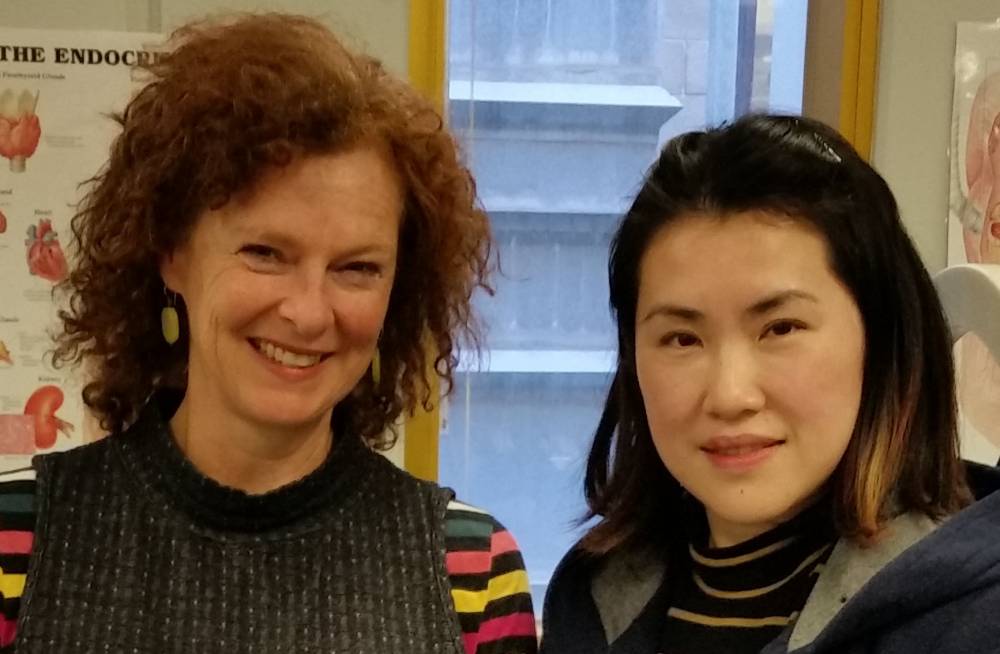
Lead image: Pip Mackey, FSNLC Project Coordinator, with student Qianfei Kuang (supplied).


