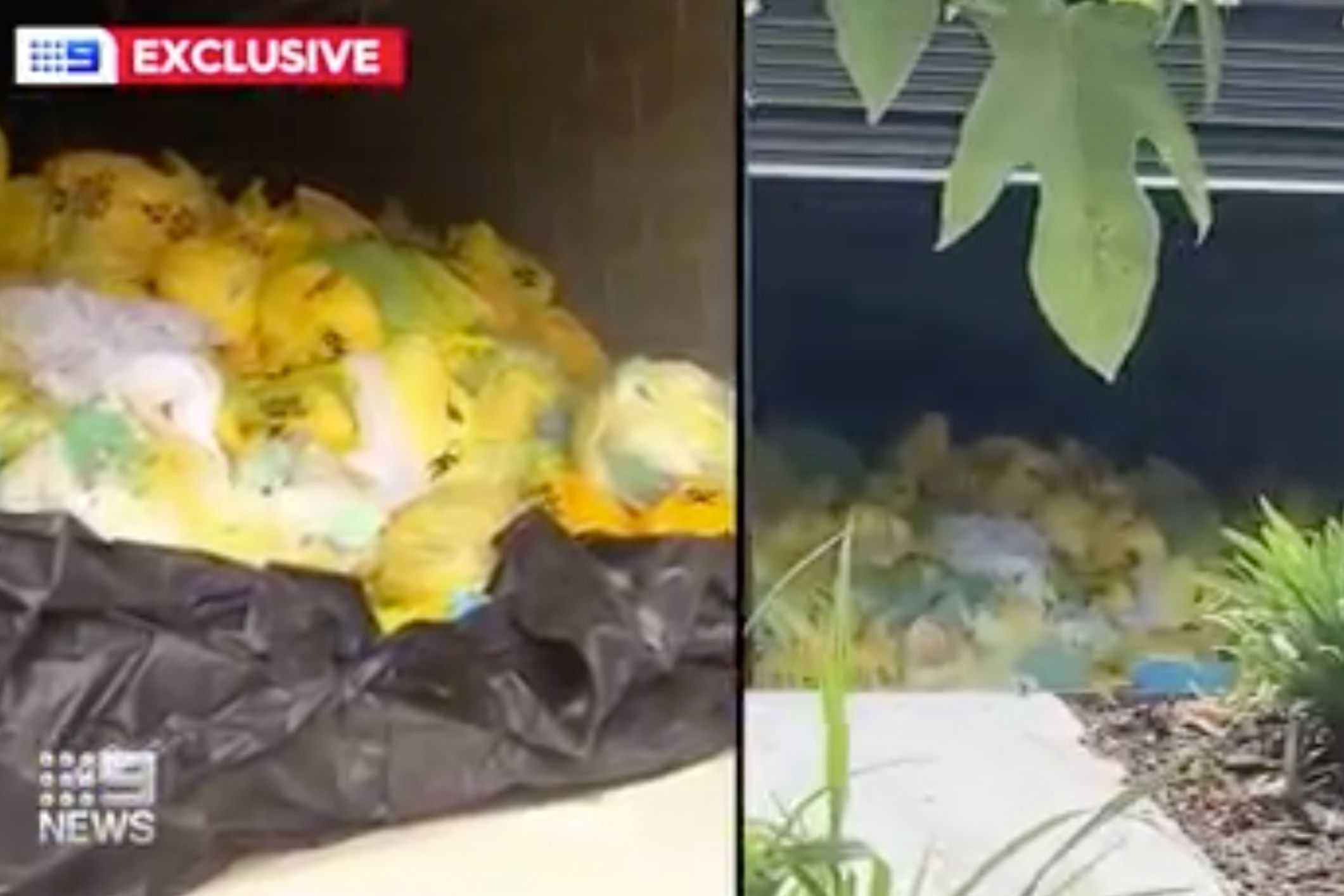
Queensland aged care homes are struggling to dispose of growing piles of COVID-19-related waste as specialist removal workers grapple with staff shortages amid a huge increase in demand for their services.
Used supplies of personal protective gear – including gowns, face masks, gloves and shields – as well as other clinical waste, are mounting, placing pressure on both aged care staff and contractors who are unable to keep up with the growing piles, 9News has reported.
9News has photographed piles of clinical waste at aged care homes in garages and shipping containers, and there are growing concerns about the impact of toxic waste left to heat in the Queensland sun.
Some fear the smell will begin to impact residents.
The Council of the Ageing’s Mark Tucker-Evans told 9News disposing of huge volumes of waste is one of the many unforeseen side effects of the pandemic.
The aged care homes in question said waste contractors were doing their best amid COVID-19-related staff shortages.
But aged care homes across Queensland have faced similar problems.
Queensland Premier Annastacia Palaszczuk welcomed the government’s announcement that Defence Forces will be stepping in to help the aged care sector.
“When you have instances where staff are testing positive for COVID, where residents are testing positive, you need to make sure people are getting that care — so I do welcome that decision,” she said.
Tucker-Evans said the government needs to address staff shortages as a matter of urgency.



Our facilities in Sydney had outbreaks that only lasted 14 days each. Despite the short duration we had one instance where our waste contractor did not pick up for a whole month, in metropolitan Sydney. They like most industries had significant amounts of staff furloughed and so had no one to drive their trucks. This perhaps was foreseeable, but still a difficult problem to manage. And a shortage of man power is now across all industries.