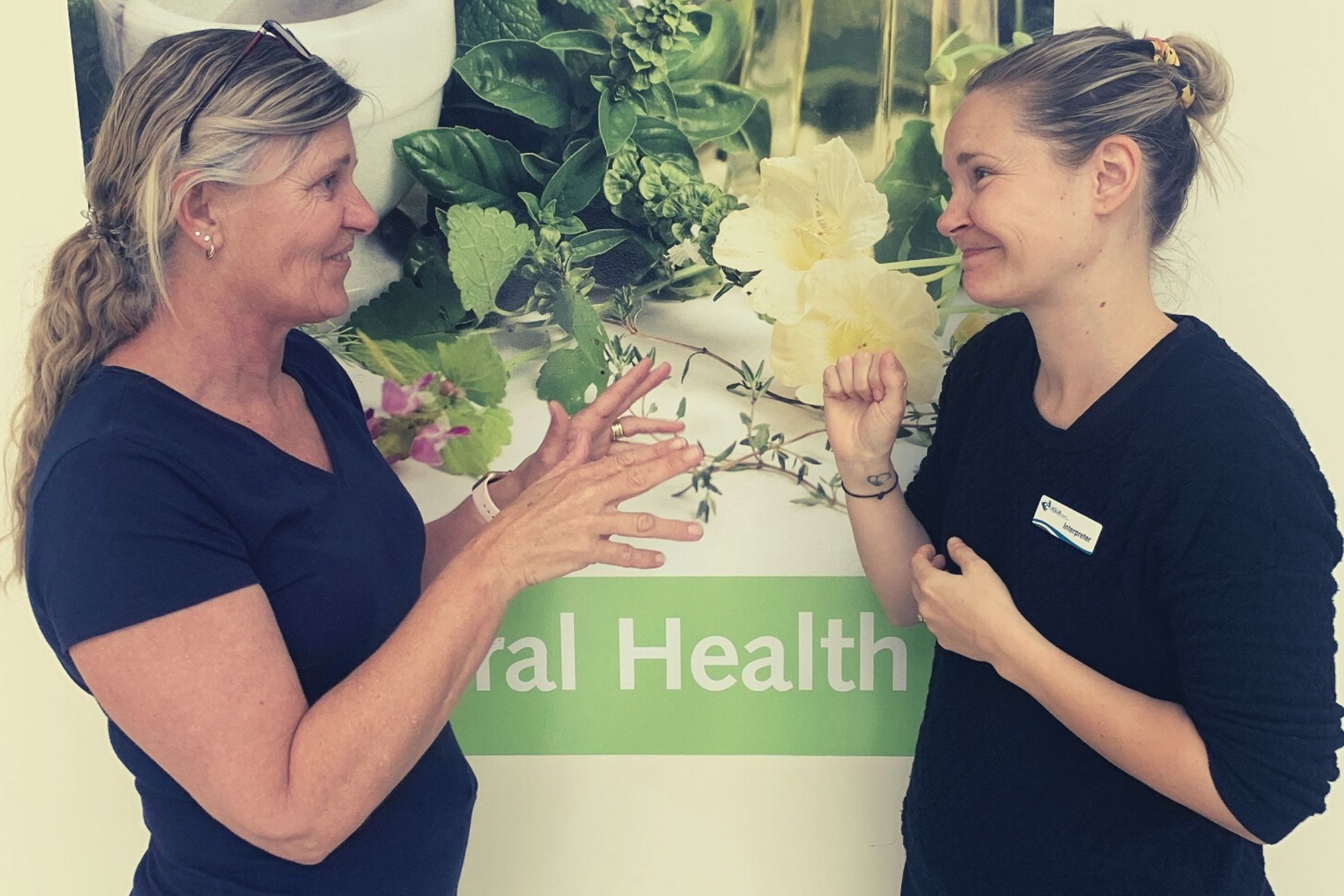
After 22 years as a homemaker, Natalie Nobes did not allow her hearing impairment to stand in the way of taking on a new challenge, and now she is working in aged care helping others overcome some of the hurdles she faced along the way.
When Ms Nobes’ three children reached adulthood, she decided to embark on a new career in aged care. She graduated with a Certificate III in Individual Support, specialising in Ageing and Disability at Macquarie Community College.
Ms Nobes now works as a support worker with deaf participants in and around Blacktown, NSW, helping her clients make meaningful and practical changes in their lives.
Ms Nobes told HelloCare she chose to work in aged care so that she could “support deaf participants”.
Being deaf herself means Ms Nobes has a unique insight into the difficulties her clients face.
While she has learnt to adapt, many of her clients are still learning the skills they need.
“I am a partner in their journey,” she told HelloCare.
“My absolute favourite thing is to see deaf participants successfully complete a task by themselves and smile knowing that they now have the skills to complete it again,” she said.
Last December, Ms Nobes was also recognised at the Blacktown City Council’s International Day of People with Disability Awards and won the Community Advocate of the Year Award.
Ms Nobes’ role involves taking her clients shopping or doing shopping for them, taking them to doctors’ appointments, attending Zoom meetings with Auslan interpreters, helping them read emails, assisting with food preparation and cooking, cleaning, gardening and other day-to-day tasks.
She also provides emotional support and helps clients take part in social activities.
The Certificate III met her training needs, and put her in “an excellent position” to gain experience, knowledge and a greater understanding of the industry.


