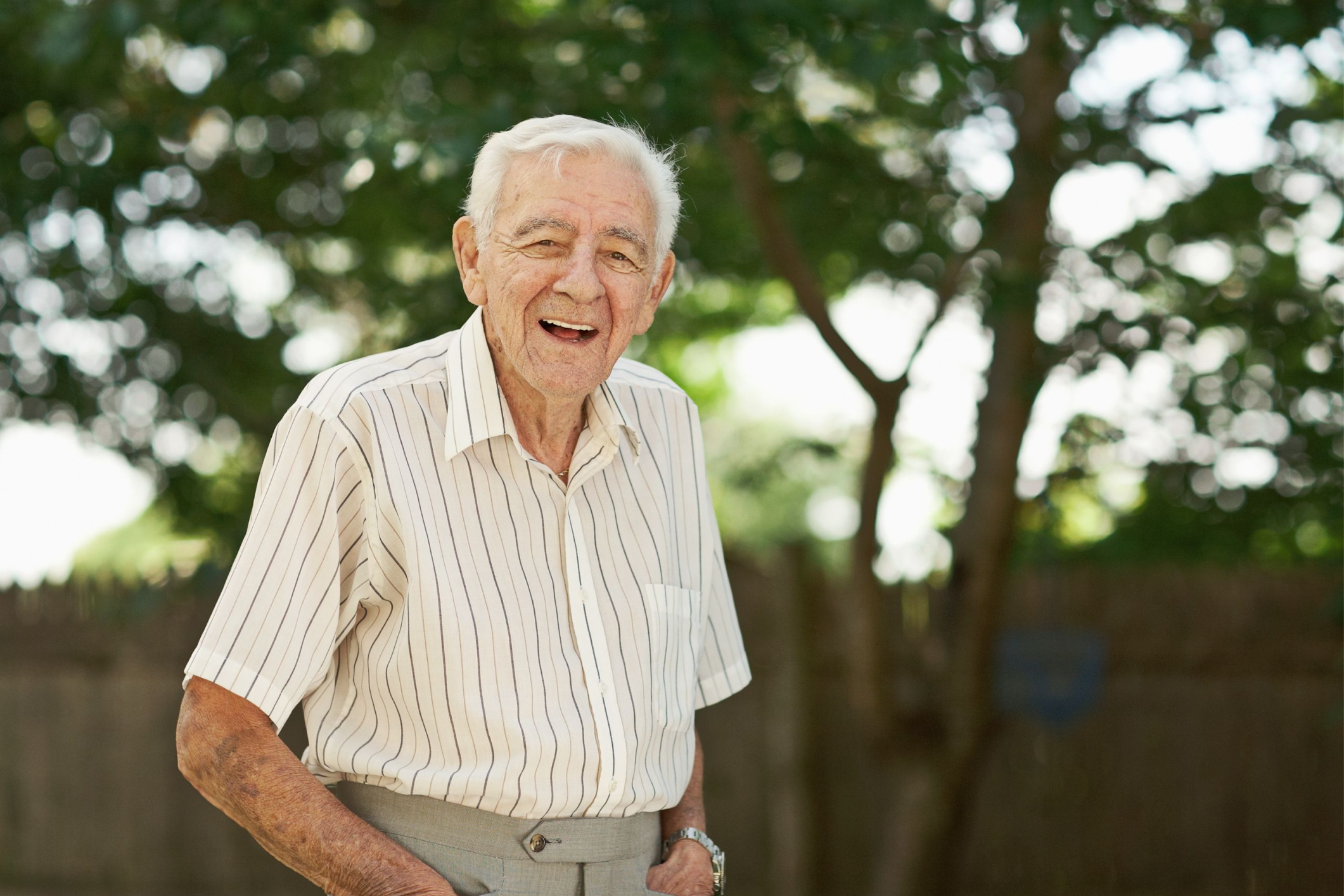
Do you know a ‘SuperAger’, someone who’s over 80 but they’re just as spritely and active as people decades younger? There’s a strong chance you do – or perhaps you are one – and there’s hope that by studying SuperAger genetics scientists could unlock the key to reducing the risk of developing age-related diseases.
American researchers are conducting a large genetic study of people aged 95 and older, aptly called the SuperAgers Study, to learn more about life span and health span. It’s another deep dive into how and why genetics play a part in humans keeping fit and active past 90, or 100.
The research could even lead to a “longevity pill” that would help us live healthier, longer lives – although there’s no reason to think it will come anytime soon.
Doctor Sofiya Milman is the study’s Chief Investigator and she told Fortune Well there are some emerging patterns, such as the presence of an APoE2 gene variant that protects against dementia-related diseases, but other lifestyle factors provide little clarity at times.
“What is it that makes the difference? We know enough to know that this is a very valuable group to study because looking at smaller groups of SuperAgers and centenarians have indicated that there’s definitely heritability for healthy ageing and healthy longevity,” Dr Milman said.
Life expectancy in Australia has increased dramatically over the last 60 years: in 1960 life expectancy at birth for males was 68 years and 74 years for females. A male born in 2021 is now expected to live until 81, and a female 85.
While there are talks of a longevity pill and longer lives in the future, SuperAger research is not focused on extending that lifespan to 120 years for each and every one of us.
Instead, the focus is on a healthier life for ageing individuals, particularly in their 80s and 90s. Dr Milman and her team hope to discover therapeutic treatments that can help everyone benefit from genes that lower the risk of cognitive decline, high blood pressure or macular degeneration.
“Some people age slower because their pathways are more fine-tuned, and there are those who age faster because they’ve inherited pathways that are not as beneficial for ageing,” she added.
“We really need to look for scientifically based evidence. And for most of these things [existing supplements], it just doesn’t exist yet.”
One participant in the SuperAger Study is 100-year-old Madeline Paldo, a Chicago resident who still lives in her home of almost 80 years and loves trips to Dunkin’ Donuts for coffee and chats with her friends.
While her eyesight has declined and Madeline can no longer drive, she remains independent in many other ways and is a true SuperAger. So too was one of her sisters who lived to 103, although two other siblings sadly passed away in their 40s from cancer.
“I think my secret is hard work and a healthy diet. I hope they find out something that contributes to a long life. I mean, I didn’t do anything different. I just went along with the program and just tried to be happy,” Madeline explained.
Once completed, the research and data from the SuperAger Study will be available to qualified researchers to help them develop new treatments and medicines to prevent the onset of life-changing diseases.



I am now 99 tears of age.
I play scrabble and more often than not manage to hold my own by winning many games.
I am still writing history of my family.