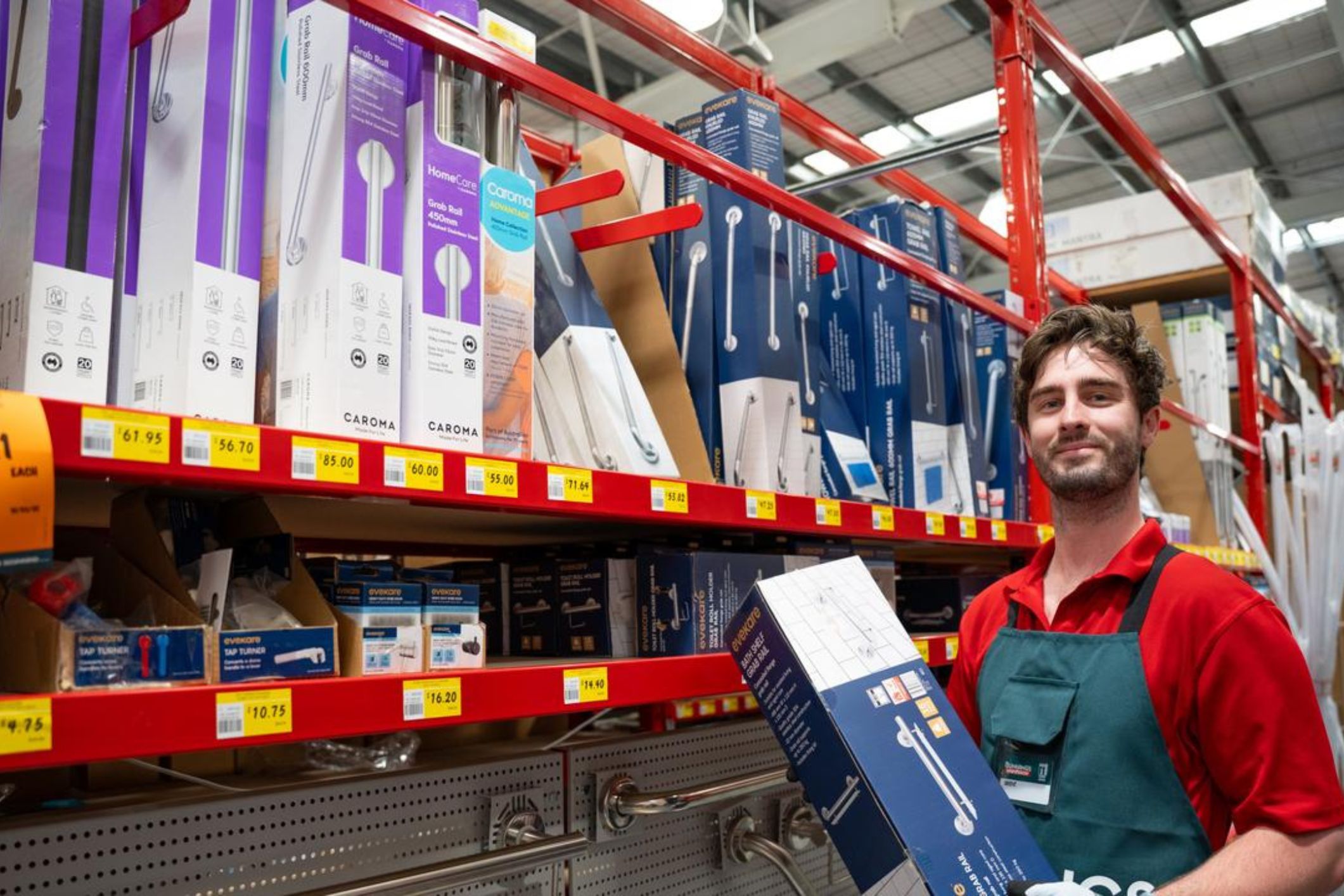
Bunnings, the well-known Australian hardware chain, has expanded its product offering to include a wide range of aged care and disability support products. This move is aimed at meeting the growing demand for assisted living solutions as Australia’s population ages and the number of people living with disabilities continues to rise.
The new Assisted Living range features over 2,500 products across 16 categories, including bathroom and bedroom safety equipment, access ramps, smart home devices, and daily living aids. The initiative is designed to provide practical, affordable, and stylish solutions that help individuals maintain independence in their own homes.
According to the Australian Bureau of Statistics, more than 5.5 million Australians live with a disability, and over one in six Australians are aged 65 and older. With an increasing preference for ageing in place rather than moving into residential aged care, there is a rising need for accessible and adaptable home modifications.
Ryan Baker, Chief Operating Officer at Bunnings, highlighted the importance of the Assisted Living range in addressing these challenges:
“We understand that living with a disability or as an older Australian can present unique challenges. The Assisted Living range seeks to offer solutions to our customers who are looking to make their homes a space that’s tailored to them.”
Bunnings’ entry into this space follows growing recognition of a fragmented market for assisted living products, where finding a one-stop shop for home modifications and support equipment has often been difficult. The new range aims to simplify this process for customers by offering accessible and affordable options under one roof.
Items in the Assisted Living range are available in-store, online, and through Bunnings Marketplace, making it easier for customers to access the products they need. For those receiving government support, proforma invoicing is available, allowing eligible customers to claim expenses through the National Disability Insurance Scheme (NDIS) or other funding programs.
Bunnings’ move into the aged care and disability sector is a strategic response to the growing demand for home support products. With an addressable market estimated to be worth $1.6 billion and expected to grow to $2.1 billion by the end of the decade, the retailer sees significant potential in this space.
“Considering the market size, we see huge potential in applying our proven strategy of combining lowest prices, wide range, and best customer experience to a growing category,” said Baker.
Among the new products available are smart locks, doorbell cameras, toilet safety rails, non-slip mats, mobility scooters, and access ramps. The range focuses on safety, convenience, and aesthetics, ensuring that customers do not have to compromise on style when adapting their homes for accessibility.
With many Australians choosing to remain in their homes for as long as possible, Bunnings’ Assisted Living range is set to play a crucial role in making independent living safer and more comfortable. By leveraging its extensive supply chain and strong retail presence, Bunnings is positioning itself as a key player in the growing aged care and disability support market.



I think this is a great inclusion for the ageing population. Can’t wait to see what you have. In fact I am on my way. , 😁
What an excellent idea and great for the disability, elderly and community. I just hope that the Service Providers do the right thing and pickup on this too. 🫰
wlksd