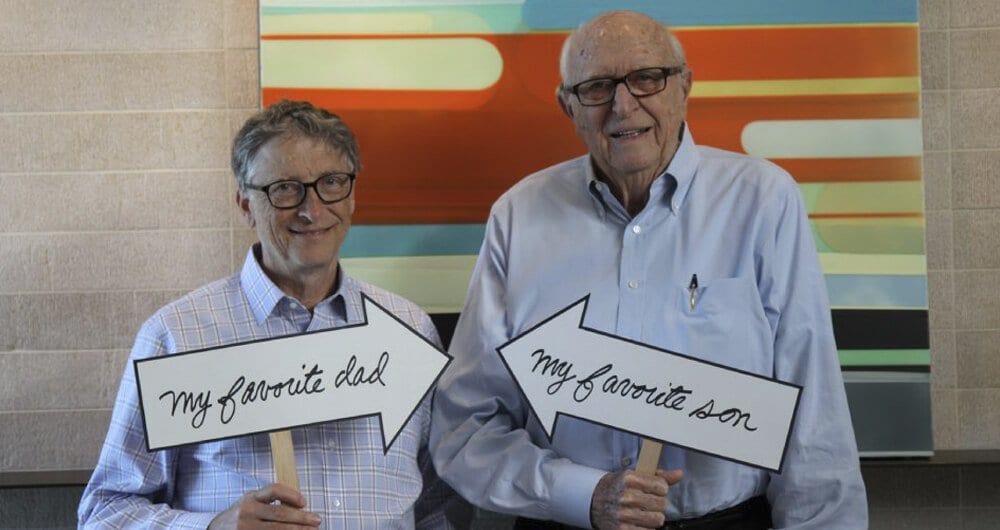
Earlier this week Microsoft Billionaire, Bill Gates, announced that he would be donating $100 million of his own personal money to Alzheimer’s research.
$50 million will go to UK-based Dementia Discovery Fund, a venture capital fund that brings together industry and government to seek treatments for the brain-wasting disease.
The Dementia Discovery Fund, which was launched in 2015 and involves drugmakers GlaxoSmithKline, Johnson & Johnson, Eli Lilly, Pfizer and Biogen Idec as well as the UK government.
This will be followed by another $50 million that will go to start-up ventures working in Alzheimer’s research
Gates made the announcement on his blog, in a post titled “Why I’m Digging Deep Into Alzheimer’s”
“Your risk of getting arthritis, Parkinson’s, or another non-infectious disease that diminishes your quality of life increases with each year. But of all the disorders that plague us late in life, one stands out as a particularly big threat to society: Alzheimer’s disease,” he said.
“It’s a huge problem, a growing problem, and the scale of the tragedy—even for the people who stay alive—is very high”.
“The human cost of Alzheimer’s is much more difficult to put into numbers. It’s a terrible disease that devastates both those who have it and their loved ones.”
“This is something I know a lot about, because men in my family have suffered from Alzheimer’s. I know how awful it is to watch people you love struggle as the disease robs them of their mental capacity, and there is nothing you can do about it.”
Though Gates explains that his experience isn’t his only motivation, “my family history isn’t the sole reason behind my interest in Alzheimer’s. But my personal experience has exposed me to how hopeless it feels when you or a loved one gets the disease.”
“We’ve seen scientific innovation turn once-guaranteed killers like HIV into chronic illnesses that can be held in check with medication. I believe we can do the same (or better) with Alzheimer’s.”
“I hope that in the next 10 years that we have some powerful drugs, but it’s possible that won’t be achieved.”
Though his work and learnings with researchers, academics, funders, and industry experts, Gates believes there are five key areas of progress;
In addition to the $100 million, Gates said that we would like to see a global dementia data platform – and that he was willing to award a grant to anyone willing to build it.
Such a platform would help researched look up previous data and see if there are patterns or new potential pathways for treatment.
What do you have to say? Comment, share and like below.



Am a male aged 60 and diagnosed with Parkinson”s at 59. I had some symptoms for a few years before diagnosis; stiff achy right arm and ankle, right hand tremor when typing, tiredness, body shivers, falls due to tripping. I was always active, bicycle riding to/from work daily and putting in 2 to 3,000 miles on my bicycle per year. i was on Mysoline 250mg in 3 doses for the essential tremor. Madopar 200mgfour times a day. Sifrol 1mg three times a day, I started on Health Herbal Clinic Parkinsons Disease Herbal formula treatment in November 2016, i read alot of positive reviews on their success rate treating Parkinsons disease through their PD Herbal formula and i immediately started on the treatment. Just 8 weeks into the Herbal formula treatment I had great improvements, my hand tremors seized. I am unbelievably back on my feet again, visit Health Herbal Clinic official website .My have reduced my symptoms have so much reduced that now I hardly notice them.