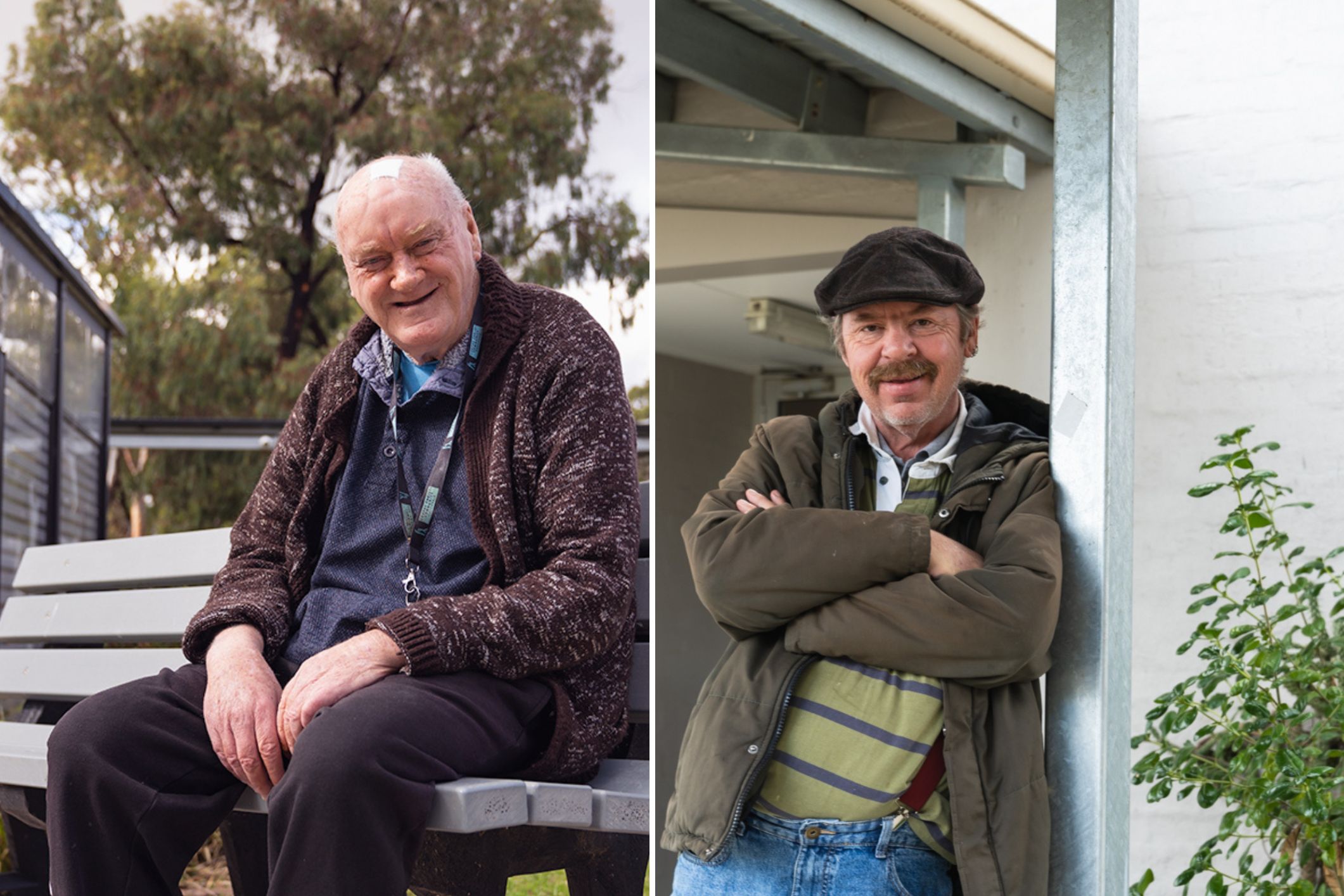
A unique aged care home in Melbourne’s north is filling a vital gap in the health system for marginalised men in Victoria.
Corpus Christi Community Greenvale (CCCG) provides a safe haven for older men with a history of homelessness, complex health needs or addiction. It was founded by Mother Theresea in 1974, and in January this year merged with for-purpose organisation VMCH, ensuring its future for years to come.
June 10-16 is Men’s Health Week, aimed to raise awareness and promote the support of men’s health and wellbeing.
The vital need for specialised homes like CCCG is clear, with one in seven people (16 per cent) aged 55 and over experiencing homelessness (2021 Census). Studies have also shown the duration of substance-use problems is often prolonged in the homeless population, because their social networks may perpetuate alcohol
and other drug problems.
Ray, aged 70, has called CCCG home on and off for the past 15 years. He credits his stay with improved health outcomes after decades of struggling with alcoholism.
“My marriage broke down around 30 years ago because of my drinking problem. My wife used to drink but then joined AA and stopped, she didn’t look back, but I didn’t.
“(Since being here) I don’t drink hardly anything compared to what I used to. It’s helped me a hell of a lot.”
Ray’s also formed some good friendships, which has helped him on his journey. “We have a great pool team! I enjoy the companionship. The staff are fantastic too.”
A recent survey conducted by men’s health organisation Healthy Male found that 43 per cent of Australian men were lonely, with 16 per cent experiencing high levels of loneliness.
Research shows that social isolation and loneliness have a serious impact on older people’s lifespan, affecting their physical and mental health.
Residential Services Manager Donela Perry believes friendships and connections are key to men’s comfort and success at CCCG.
“They make friends they consider family more so than co-residents. If men are younger when they arrive and are successful in moving out independently, often they return when they are older or their health declines for the feeling of coming home.
“CCCG is a space to rest, recover and grow. It helps to stop the turntable of services, hospitalisation and street living, that for many has been the norm.”
Donela cites mental health as a large reason for many residents’ inability to maintain private housing and supports.
“Along with providing them with access to a range of medical professionals, we offer acceptance and understanding, building on their strengths and self-esteem.”
Tom, aged 54, has struggled with mental health issues since he was diagnosed with schizophrenia at age 22.
Along with a safe and comfortable roof over his head for the past 13 years, access to support such as counselling, health services, rehabilitation, art and music therapy, shopping and budgeting education, social activities and community outings, have seen Tom thrive.
“It’s a pretty caring place,” he says. “The staff are great, and the guys (residents) are really good as well – they add to my life. If you need support, this is the perfect place to be.”





