The NSW country town of Bundarra is a tiny rural settlement nestled between the larger and more established towns of Armidale and Inverell.
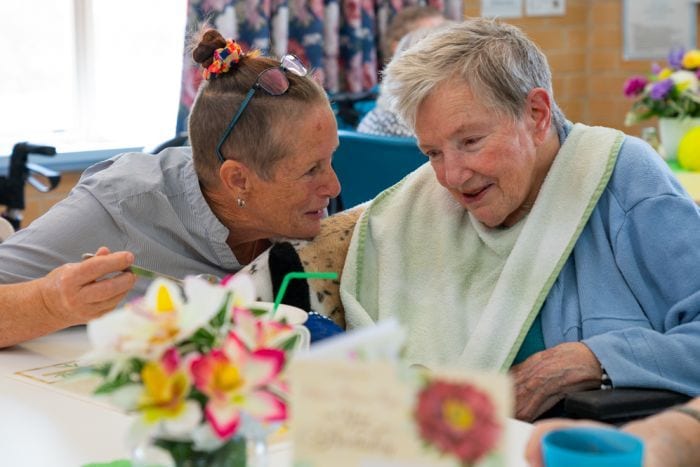
With a population of only 200, this inconspicuous little country stop-over boasts very few public amenities, but unlike many other rural Australian towns, Bundarra is fortunate enough to actually have its own aged care facility.
The Grace Munro Centre has 11 beds, a landscaped garden area where residents can plant their own vegetables, an activity room, and 14 staff members from the local area.
While the fact that such a small town even has an aged care facility is a feat in and of itself, the lengths that the community went to in order to keep the doors of the Grace Munro Center open are a testament to the hardworking and self-sufficient nature of the people of this small town.
Penny Abbington, who is both a Registered Nurse and the Manager of the Facility, sat down with HelloCare to share the story of the town who refused to make their elderly residents move away from home in order to be cared for.
“The original building was the old Bundarra hospital, but then council decided to build an aged care wing in 2004 which was managed by McLean Care, but only five years later, they deemed the facility financially unviable and were set to close,” said Penny.
“It was run on a shoestring budget at the time, but it was very important to the people within our community, so when they announced that it was going to close the people around here decided that they were not going to let that happen.”
“The local community set about with fundraising and eventually gathered enough funds to purchase the facility and run it independently. They set up the home as a proprietary limited company and had the place up and running by 2010, and we have been financially viable every year since then.”
The Grace Munro Centre operated solely as a low-care facility until a government legislation change forced them to adapt and also be able to cater to high-care residents in 2013, but according to Penny changing and adapting was second nature and at the core of the type of care that they wanted to offer.
“We have people that require a high level of care, and we cater to that with excellence. We now care for people all the way through the end of their life journey. We care for people palliatively until they die, which we didn’t have the capability to do before,” said Penny.
We have 14 staff who live in the local area, we have an amazing supportive team and because it’s so small its literally like a family, and everyone has time to spend time with the residents, which really makes a difference to their quality of life.”
“Bundarra doesn’t have an ambulance or chemist or even a doctor. So we drive our residents into the bigger towns for any appointments that they may have, which is normally about 85km’s from our town.”
“Our board talked about this service and decided not to charge residents for the travel to appointments, because some people simply don’t have any family, and some do have family members who have to work, so we feel that it was part of our commitment to providing high-quality care.”
Social isolation is a major issue that is currently plaguing the aged care industry, and nowhere are these problems more prevalent than in rural communities similar to Bundarra.
Providing adequate care to elderly people in these areas is not an easy task, and examples like this highlight the value of being part of a community that rallies to look after one another.
“Prior to working here I worked at a hospital at the Inverell Hospital as the aged care specialist nurse and part of my role was looking for placement for elderly people who came in because they could no longer live at home; but because of a lack of beds they often had to be placed out of their community and away from family, and that was a really hard thing to see,” said Penny.
“Here we have 4 people out of our 11 who are from the immediate community, and there is one more person from the community coming to stay with us shortly, and everyone knows each other.”
“ Running this place is fantastic; Its a balance of financial integrity and making sure that residents receive the care that they should receive, and part of that is making sure staff have the staff to spend the time to give that care and that everyone has a role to play.
“We don’t have a big workforce but ultimately we have exactly what we need to care for the people we have, and it’s not uncommon to see me on hands and knees trying to fix the washing machine.”
Photo courtesy of Donal Shiel (ABC)





Fantastic story of a community taking action to satisfy its own needs. Kudos to Penny, the team and the Bundarra community. Thank you for sharing.
A very heart warming story. Warm Wishes to Penny and your team.