It has been confirmed that a 95-year-old woman who died recently had coronavirus. The woman was a resident at the aged care facility where a staff member also tested positive for the virus.
An 82-year old resident of the same facility, Baptist Care’s Dorothy Henderson Lodge, has been transferred to Ryde Hospital with coronavirus, and a 70-year-old who tested positive for the disease is being cared for on-site.
The facility has kept a team of staff who were in contact with those infected working together in a single unit.
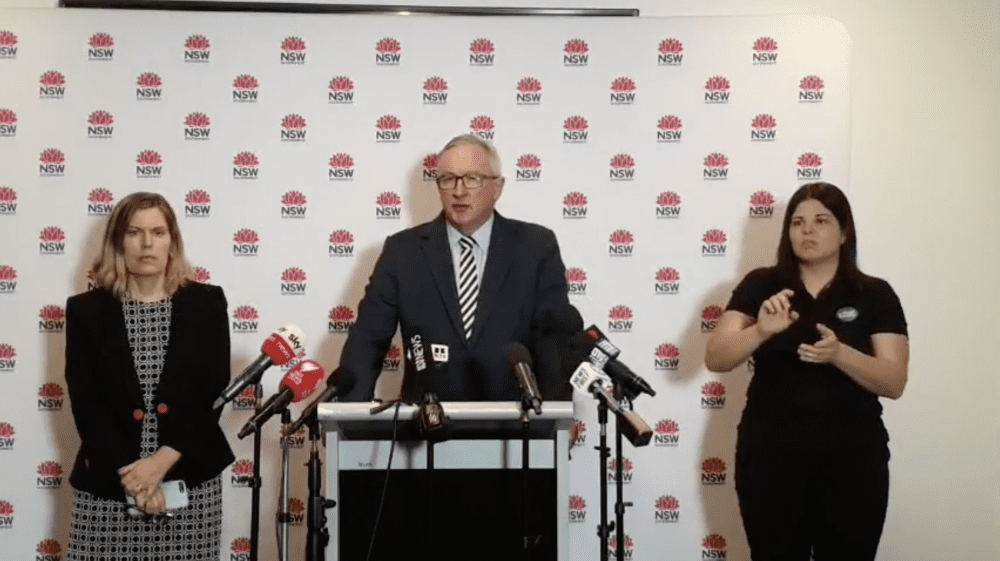
But at a press conference this afternoon, NSW Health Minister Brad Hazzard confirmed the 70-year-old man was not in the quarantine area, presenting a “challenge” as to how he contracted the virus.
Dorothy Henderson Lodge is now in isolation. No visitors are allowed.
Individual residents are being cared for in their rooms. Meals are being delivered to rooms to minimise contact. An expert in infection control is on-site to help with the response. Nurses and AINs are wearing specialised protective clothing.
Health Minister Greg Hunt urged caution, telling the Nine Network aged care facilities are the safest place for elderly Australians who need care, despite fears about the virus taking hold in facilities with poor infection controls.
“For children who have older parents in aged care homes, that remains the safest circumstance for them because they’re under care, they’re under management,” Mr Hunt said.
There are now 22 people in New South Wales who have tested positive, with seven of them contracting the disease locally. There are 52 confirmed cases in Australia, and two now deaths.
Last night, Dorothy Henderson Lodge staff expressed concern about going to work. The Northern Sydney Local Health District was able to provide extra staff, though in the end night staff did return to work.
Concerns were also expressed from staff this morning, and it’s understood that some staff did not come to work today. Their shifts were covered by the extra staff.
“People are frightened,” said Mr Hazzard at a press conference today. “They’re scared of what it can do… It’s understandable.”
“We need to work with staff to make sure they feel safe,” said NSW’s chief medical officer, Dr. Kerry Chant.
The NSW Department of Health is visiting the facility daily.
A group of children from Banksia Childcare Centre recently visited Dorothy Henderson Lodge, and are being tested to see if any contracted the virus.
Since children can be “super spreaders” of infection, NSW’s chief medical officer, Dr. Kerry Chant, recommends these types of visits should be curtailed for the time being.
Mr Hazzard said NSW is “at war” with the coronavirus.
“Containment is an unlikely outcome,” he said. Cooperation from the community is essential, he said.
Mr Hazzard said he wanted to acknowledge the response from Baptist Care and staff at the facility.
The World Health Organisation says 3.4 per cent of people who became infected with the coronavirus have died, meaning it is more deadly than the common flu.





