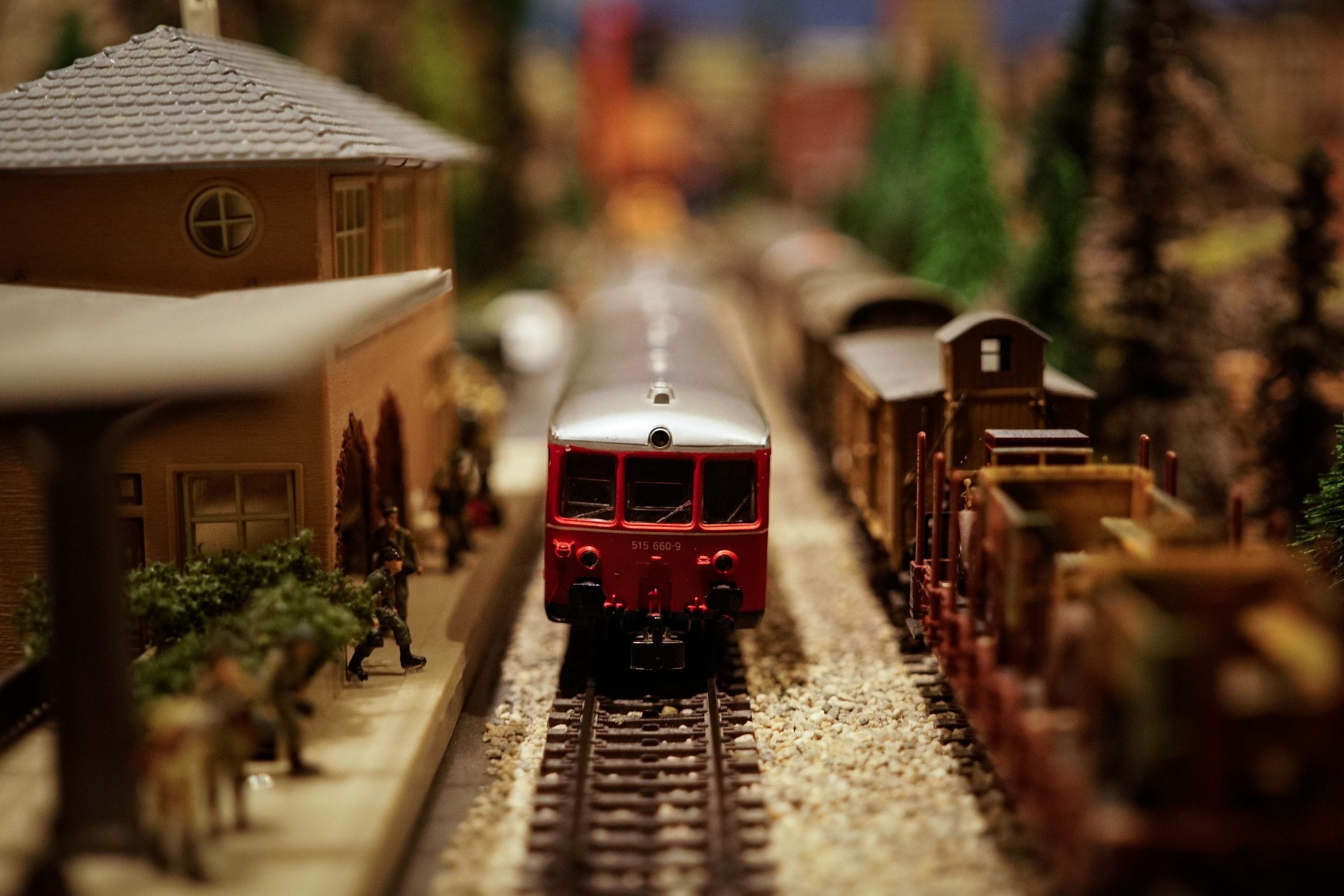
The model railway project has been a life changing experience for many of the men at Sapphire Care’s Grossard Court.
Gathered around a miniature railway set, a group of men beam with pride over the construction that they built themselves.
This model railway project was established to assist the men at the nursing home to maintain their past history and enable them to connect with their pastimes and provide mental stimulation.
The residents met every Monday and Friday afternoon to work on the project. It was able to provide a sense of community participation with residents attending from all areas within the home.
This project even drew in people from outside Grossard Court with the model railway attracting the attention of the local model railway club. Locals came to share their model trains, expertise and volunteer their time in sharing skills with the model railway club.
As well as the local model railway club, there were also collaborations with Alzheimer’s Association, Dementia Training Study Centre (DTSC), Dementia Behaviour Management Advisory Service, local Men’s Shed, Rotary and Probus.
In December 2014, to the delight of those involved, the club were invited to present the railway model that they built at a local railway model exhibition display.
More recently, the model railway club was awarded a Better Practice Award for 2016. The Better Practice Awards is awarded to projects, initiatives and programs that act as exemplars for other aged care service providers.
By recognising better practice and innovation within the sector, the Better Practice Awards aims to encourage continuous improvement. The model railway project was especially awarded for how it encouraged enablement, communication and engagement as well as social participation.
The completed railway model is now located in a corridor within the Grossard Court facility, and has been housed in a specially designed unit where residents, visitors, staff and children can enjoy watching the model railway exhibition.
Since then the club are currently building their second model railway with a purpose built area designated especially for the railway model club.
The initiative of the model railway project can be transferred to other aged care facilities, and upon seeing how well it has been received it has been highly recommended.
Membership to the national railway model club (NRMC) is open to all members of the public and groups. There are a number of community railway model clubs that a home can connect with, as well as railway model exhibitions around the country where residents can attend for ideas.
This project has been a source of happiness and fulfillment for all those involved. The residents are especially proud to see their work go from planks of wood and wires to a final fully functioning electric railway model.


