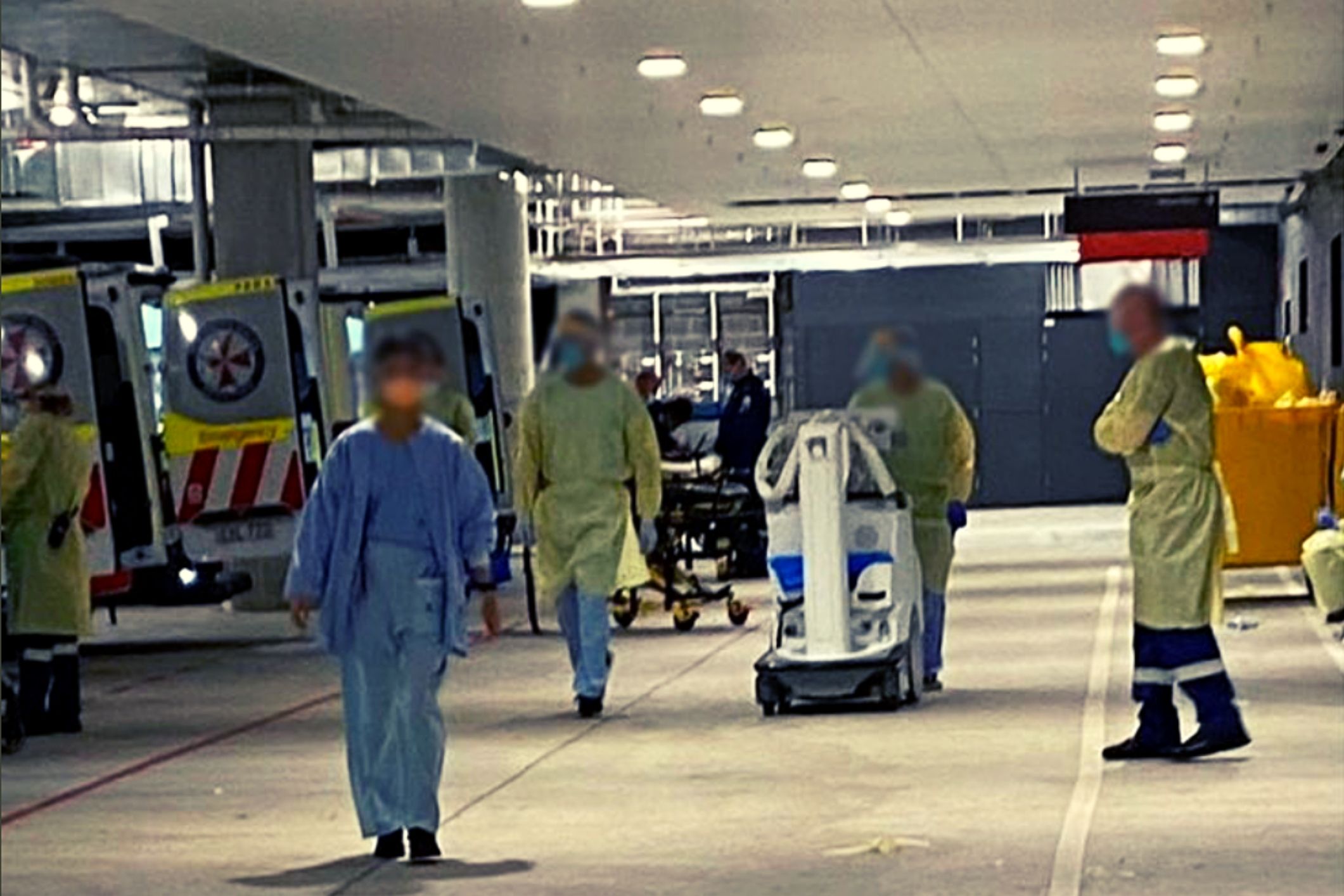
Ambulances containing patients with COVID-19 are being forced to queue for up to five-and-a-half hours outside Westmead Hospital in Sydney’s west, prompting unions to call for more resources.
Earlier this week, 13 ambulances containing patients with COVID-19 were photographed waiting outside Westmead Hospital. The photograph showed medical equipment, such as equipment for chest X-rays, being wheeled outside to the ambulances for triage.
The Australian Paramedics Association NSW President, Christopher Kastelan, told The Guardian that hospitals appear not to have enough space to accept patients with COVID-19, as they need to be kept separate from other patients.
With hospitals under pressure due to the Delta outbreak and ambulances being forced to queue for hours, paramedics are working hours beyond their normal shift end.
Recently, one crew scheduled to finish at 7pm was forced to wait until 2am. Another crew rostered to finish at 8pm was forced to wait at the hospital until 4am. Paramedics have been forced to wait outside, sitting on the ground, because they are concerned about waiting inside the ambulances with the COVID-19 patients.
“I guess it flags concern about an already overloaded healthcare system,” said Kastelan.
“Paramedics are frustrated and exhausted.”
Kastelan continued, “They are also worried about prolonged exposure to COVID-positive cases in confined spaces.”
Brett Simpson from NSW Paramedics Association, told Sunrise, “This is a problem that is widespread right across the Sydney metropolitan area.
“This has been a problem for NSW Health for years, but it’s really just been exacerbated by the current Delta outbreak.”
“We’re already exhausted. We weren’t coping before the Delta outbreak hit Sydney.”
Simpson said morale amongst NSW paramedics is as low as he’s ever seen it.
He said more frontline paramedics are urgently needed, and hospitals need more emergency department infrastructure.
Chief Health Officer Brad Hazzard said the queues were “not unusual”.





