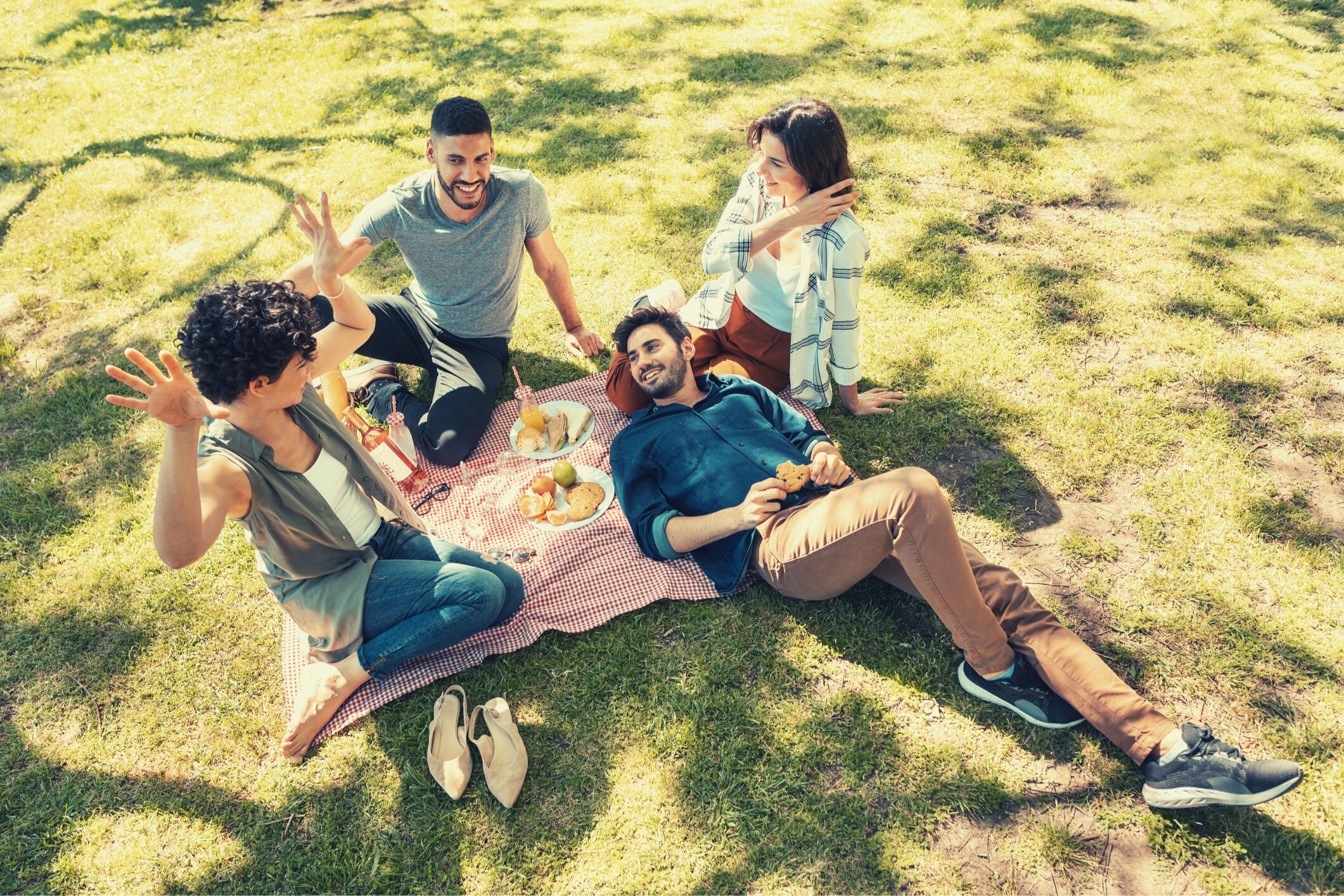
These new rules, coming into effect in New South Wales and Victoria, place the responsibility for policing vaccination on individuals. Vaccine passports may eventually allow businesses to check people’s vaccination status on entry, but there is no app to scan before gathering for a picnic or home event.
So how do you find out who’s vaccinated, and what do you do with that information?
Vaccination can feel like a loaded topic, something you might not want to discuss if you can avoid it. But it doesn’t have to be a minefield. We can actually take some tips about approaching tricky personal topics from the field of sexual health.
First, try to talk about vaccination before you’ve confirmed plans with someone, and before you’ve communicated the plans to others. Once you’re already at the picnic, the stakes are much higher. You’re more likely to either go along with something that doesn’t feel right to you or end up in an argument.
Offer your own vaccination status first. You could say something like:
FYI, I got my second dose last month. These new rules mean everyone coming will have to be vaccinated. Have you had both doses? I want to make sure we’re OK to go ahead.
Keep the question casual. Asking someone’s vaccination status is reasonable in these circumstances – it isn’t because you don’t trust the person.
Don’t jump to conclusions. Depending on your relationship with the person, you may want to find out more. When approaching a conversation about COVID-19 vaccines, start with an open mind and be ready to listen.
Ask them if they’d like to talk about why they aren’t vaccinated. Maybe they have some specific concerns, maybe they’re waiting for an appointment or for a different vaccine to the one available to them now.
Let them share all their concerns before you jump in and try to answer or correct them.
If they’re open to it, you can help them weigh up the risks and benefits of the vaccines, share some facts about safety and effectiveness, or tell them what convinced you to get vaccinated.
Talking about your own experience can help normalise vaccination.
The person you’re talking to might not be on the fence about the vaccine – they might be strongly opposed to it.
If that’s the case, your best strategy may be to establish your position and close the conversation. You could say:
OK, that’s not what I believe. But either way, we have to follow the rules.
Arguing with people who strongly oppose vaccination is rarely – if ever – effective, and it could ruin your relationship.
While rules are in place that exclude unvaccinated people for the time being, it’s not necessary to cut someone out of your life because they aren’t vaccinated.
As those rules are relaxed and we move from suppressing COVID-19 to living with COVID-19, we will need to re-calibrate our risk assessments.
Of course, these decisions are personal, but if you and your family are fully vaccinated, the risk of catching COVID-19, particularly in an outdoor environment, is significantly reduced.
If you have children too young to currently get vaccinated, the risks from COVID-19 are low except in certain circumstances, so you’ll need to weigh health risks against social benefits.
Social exclusion leads to more conspiratorial thinking – in other words, cutting people off when they believe in conspiracy theories often leaves them to go further down the rabbit hole, unchallenged by alternative views.
You may have more positive impact by maintaining a relationship, within your boundaries, and role modelling the behaviour you believe in.
If your friend is a bit hesitant or firmly against getting the vaccine, your picnic with them will have to wait.
When you explain this, you may want to distance yourself from the rules. For example, you could say:
The new rules say… Unfortunately, it sounds like we can’t get together for now. It’s only a temporary thing – we should all be able to get back to normal in a few more weeks.
You didn’t make the rules, but we’re all living with them for now. If relevant, convey how important the relationship is.
From the beginning, managing COVID-19 well has required us to take the evidence, abide by public health orders and, when we can choose, weigh the risks of an activity against the benefits.
For these sensitive social negotiations around vaccines, masks and other measures, we will need to communicate with care to keep connecting with each other as safely as possible.
Jessica Kaufman, Research Fellow, Vaccine Uptake Group, Murdoch Children’s Research Institute and Julie Leask, Professor, University of Sydney
This article is republished from The Conversation under a Creative Commons license. Read the original article.



If anyone of your friends denies you the right to see them or socialise with them in a family/ friendship situation because you are not vaccinated then they are not your friends.
If you are unvaccinated be careful of your vaccinated friends. They are the ones that are shedding the Covid -19 because they have been vaccinated with it.
There is no law in legislation that can deny unvaccinated people the right to enter any public place.