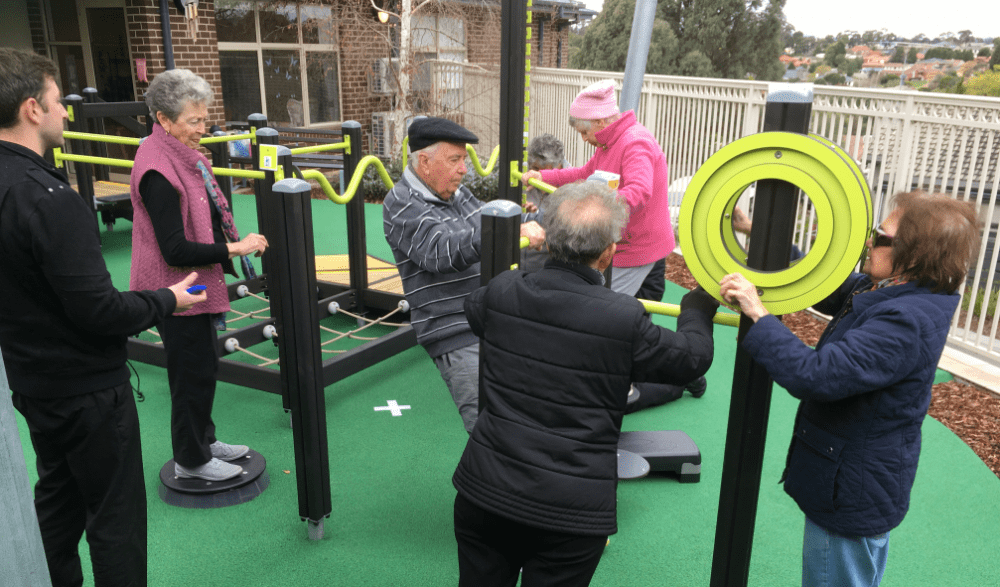
A new outdoor exercise park has been opened at a Melbourne retirement village, giving residents a healthy – and fun – opportunity to get active and socialise.
The equipment has been specially designed for older users, and has been installed in the grounds of Old Colonists’ Association of Victoria’s Leith Park retirement village.
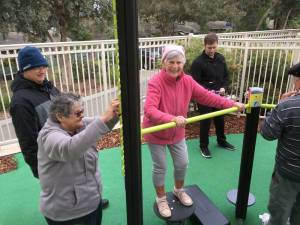
“They’re absolutely loving it,” OCAV’s chief executive officer, Phillip Wohlers told HelloCare.
“Residents are not only enjoying the physical exercise but also the social aspects of if are making a huge difference to their lives.
“We’ve got a whole mix of residents involved, both from our independent living units in our village, also within our aged care facility.
“What we are hoping is that the exercise park and program will begin to make sure all of our residents incorporate regular exercise into their lives,” Mr Wohlers said.
The exercise park is central to a trial conducted by the National Ageing Research Institute to see if senior outdoor parks help reduce feelings of loneliness and isolation, as well as improving physical health.
“It’s great to be collaborating with an organisation like NARI because it will provide demonstrated evidence of how this type of program can enhance the wellbeing of the elderly,” Mr Wohlers said.
Participants will receive an initial assessment, and their progress will be monitored by NARI.
Mr Wohler said, “This is an exciting first step in a two-year research program called ENJOY which will determine whether older people get as much out of play as pre-schoolers in terms of physical and mental health.”
NARI Project leader, Associate Professor Pazit Levinger, said findings from a past study revealed participants improved muscle strength, balance, and physical function.
Physical activity is strongly recommended for older people to reduce health problems, but less than 25 per cent of older Australians do enough physical activity to achieve health benefits.
Mr Wohlers hopes the concept will be rolled out to other facilities, and also to public areas.
“This is the only one (exercise park) in a retirement village in Australia, but I can see this being rolled out to retirement villages and aged care facilities, and also to the general public,” he said.
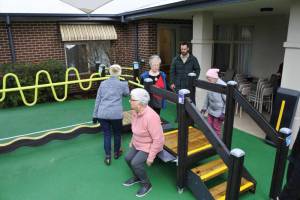
The residents are given guidance about how to use the equipment, depending on their needs.
“For the residents in residential aged care we have our physio team there to help them. For our independent living residents, we take them through a training program to make sure they can utilise them (the equipment) on their own,” Mr Wohler said.
Physiotherapists have trained volunteers and will be on hand for support if needed.
The park has been installed in partnership with NARI with funding from Perpetual’s 2018 IMPACT Philanthropy Program and Gandel Philanthropy.





There are already 2 of these in Ballarat. Arranged by council.