




The current shortage of sterile intravenous (IV) fluids is a serious ongoing concern for doctors across Australia. During surgery, these sterile fluids are essential to administer drugs and hydrate patients intravenously (via the veins).
But supplies of two of the most common solutions are critically low.
The Australian government has recently moved to coordinate supplies of IV fluids to increase manufacturing and ensure distribution. Despite this, supplies are not expected to return to normal levels until the end of the year.
So, what will this mean for surgery in Australia? And are there any alternatives?
Why do we need IV fluids for surgery?
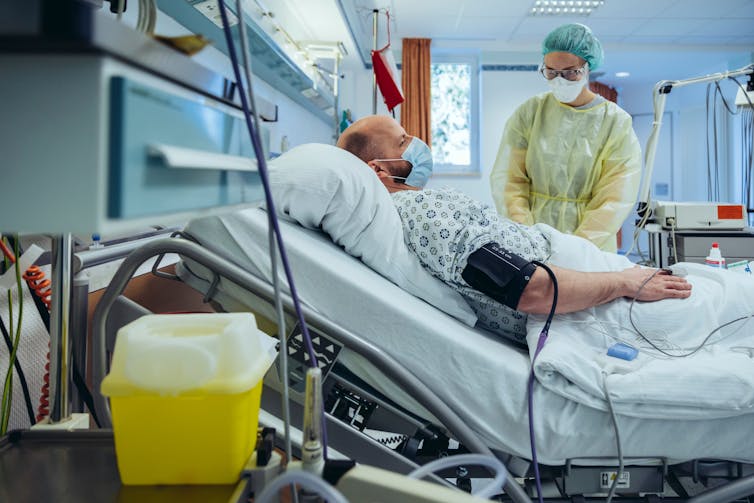
IV fluids are used before, during and after surgery to maintain blood volume and the body’s normal functions. They also combat dehydration, which can happen in a number of ways.
Before surgery, patients may become dehydrated from illnesses that cause vomiting or diarrhoea. They are also asked to stop eating and drinking for several hours before surgery. This is to minimise the risk of stomach contents being regurgitated and inhaled into the lungs – a complication that can cause injury or death. But it can also make them more dehydrated.
During surgery, the body continues to lose fluid through normal processes such as sweating and making urine. But some aspects of surgery also exacerbate dehydration, for example, through blood loss or when internal organs are exposed and lose more fluid through evaporation.
After the operation, IV fluids may be required for some days. Many patients may still be unable to eat and drink until the function of the gut returns to normal.
TunedIn by Westend61/Shutterstock
Multiple research studies, including a trial of 3,000 patients who underwent major abdominal surgery, have demonstrated the importance of adequate fluid therapy throughout all stages of surgery to avoid kidney damage.
Apart from hydration, these sterile fluids – prepared under strict conditions so they contain no bacteria or viruses – are used in surgery for other reasons.
Anaesthetists commonly use fluid infusions to slowly deliver medications into the bloodstream. There is some evidence this method of maintaining anaesthesia, compared to inhalation, can improve patients’ experience of “waking up” after the procedure, such as being clearer headed and having less nausea and vomiting.
Surgeons also use sterile fluids to flush out wounds and surgical sites to prevent infection.
Are there workarounds?
Fluid given intravenously needs to closely resemble the salts in the blood to prevent additional problems. The safest and cheapest options are:
- isotonic saline, a solution of water with 0.9% table salt
- Hartmann’s solution (compound sodium lactate), which combines a range of salts such as potassium and calcium.
Both are in short supply.
One way to work around the shortage is to minimise how much IV fluid is used during the procedure. This can be achieved by ensuring those admitted to surgery are as well hydrated as possible.
Many people presenting for minor surgery can safely drink water up until an hour or so before their operation. A recent initiative termed “sip ‘til send” has shown it is safe for patients to drink small amounts of fluid until the operating theatre team “sends” for them from the waiting room or hospital ward.
However, this may not be appropriate for those at higher risk of inhaling stomach contents, or patients who take medications including Ozempic, which delay the stomach emptying. Patients should follow their anaesthetist’s advice about how to prepare for surgery and when to stop eating and drinking.
Large research trials have also helped establish protocols called “enhanced recovery after surgery”. They show that using special hydrating, carbohydrate-rich drinks before surgery can improve patients’ comfort and speed up healing.
These protocols are common in major bowel surgery in Australia but not used universally. Widespread adoption of these processes may reduce the amount of IV fluids needed during and after large operations, and help patients return to normal eating and drinking earlier. Medications reducing nausea and vomiting are now also routinely administered after surgery to help with this.
What will the shortage mean for surgeries?
The Australian and New Zealand College of Anaesthetists has advised anaesthetists to reduce the consumption of fluid during operations where there might be limited or minimal benefit. This means that the fluid will only be used for people who need it, without a change to the quality and safety of anaesthetic care for any patient.
Even with these actions, there is still a chance that some planned surgeries may need to be postponed in the coming months.
If needed, these cancelled operations will likely be ones requiring large volumes of fluid and ones that would not cause unacceptable risks if delayed. Similar to cancellations during the height of the COVID pandemic, emergency operations and surgery for cancers are unlikely to be affected.
Monitoring of the supplies and ongoing honest and open dialogue between senior health managers and clinicians will be crucial in minimising the disruption to surgical services.
Stuart Marshall, Associate Professor, Department of Critical Care, The University of Melbourne
This article is republished from The Conversation under a Creative Commons license. Read the original article.


