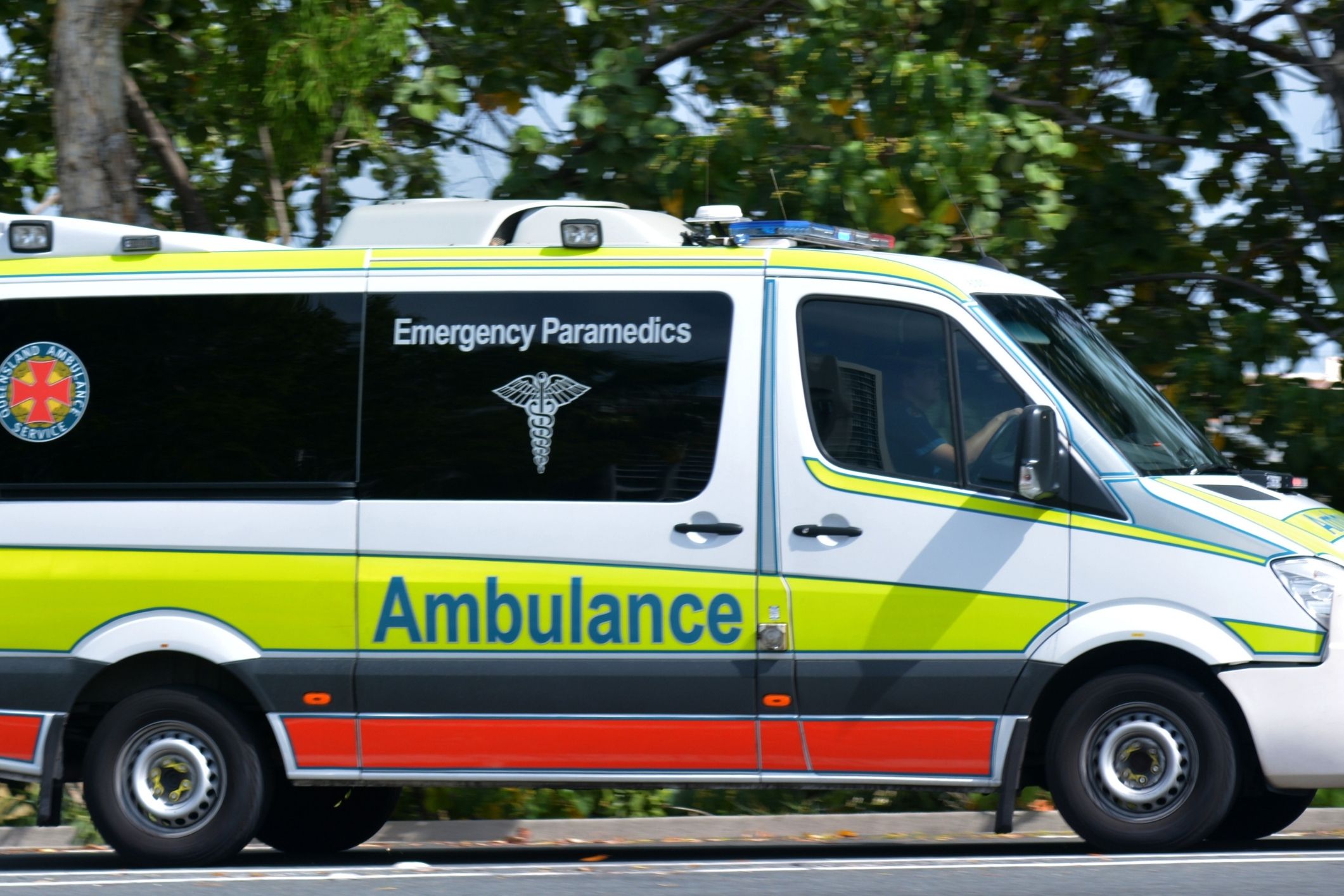
Derek Dewitt, who was 77, began suffering shortness of breath and heart attack-like symptoms at about midnight on January 6, according to a report in Daily Mail Australia.
When he collapsed on the floor and could not get up, his wife immediately called 000.
Tragically Mr Dewitt, who was fully vaccinated, died before paramedics arrived.
The couple lived only five kilometres from the nearest hospital, a drive of only a matter of minutes.
When paramedics had not arrived 45 minutes after Mr Dewitt’s wife’s call, she called again, but was put on hold four times.
Eventually she got through to the Queensland Ambulance Service and the case was upgraded from 1B (potential time critical) to 1A (actual time critical) – signifying an emergency.
Tragically, Mr Dewitt was already deceased by that time.
Mr Dewitt’s heartbroken daughters, Lisa Carmichael and Mareta Dewitt, have filed a complaint with Redlands Hospital, claiming their father’s death could have been avoided if his case had been given a higher priority.
If they had known how long the ambulance would take, they would have made alternate arrangements to get him to hospital, they said.
“He was a gentle man with a big heart, a kind soul with a humble nature,“ Ms Dewitt told Daily Mail Australia.
“He was revered and loved by all that knew him.”
Ms Carmichael told Nine News, “He got COVID, he did everything right. He went and got tested, he quarantined, he did everything he was supposed to do but when he needed help, there was no help for him.”
The sisters have also written an open letter to Premier Annastacia Palaszczuk, arguing against her government’s claims the Queensland health system is coping with the Omicron outbreak.
A Queensland Ambulance Service spokesperson told Daily Mail Australia that it has “undertaken a comprehensive review of the clinical and operational aspects of its response”.
A spokesperson from the Department of Premier and Cabinet said, “We offer our deepest sympathies to the gentleman’s family and friends, but while the case is under review it would be inappropriate to comment.”
Queensland has recorded more than 150 deaths from COVID-19 since the start of the pandemic, with more than 100 having occurred in the past week.
The most recent data shows there were 11,600 new cases reported in Queensland in the past 24 hours, and 15 deaths.
There are currently 829 people in hospital in Queensland, with 48 in ICU.
Ms Palaszczuk said utilisation of hospital beds is lower than expected.
“I just want to see how the peak goes … but at the moment where we’re tracking, we will be able to cope,” she said.
Mr Dewitt’s family have a different view.





What family and elderly don’t matter. You can’t even supply RAT Test for aged care workers. What a joke. Get your shit together. The government expects us to work for tuppence and yet they say say the elderly r vulnerable to COVID-19 and yet don’t give a shit what a joke. If it was there family member things would change.