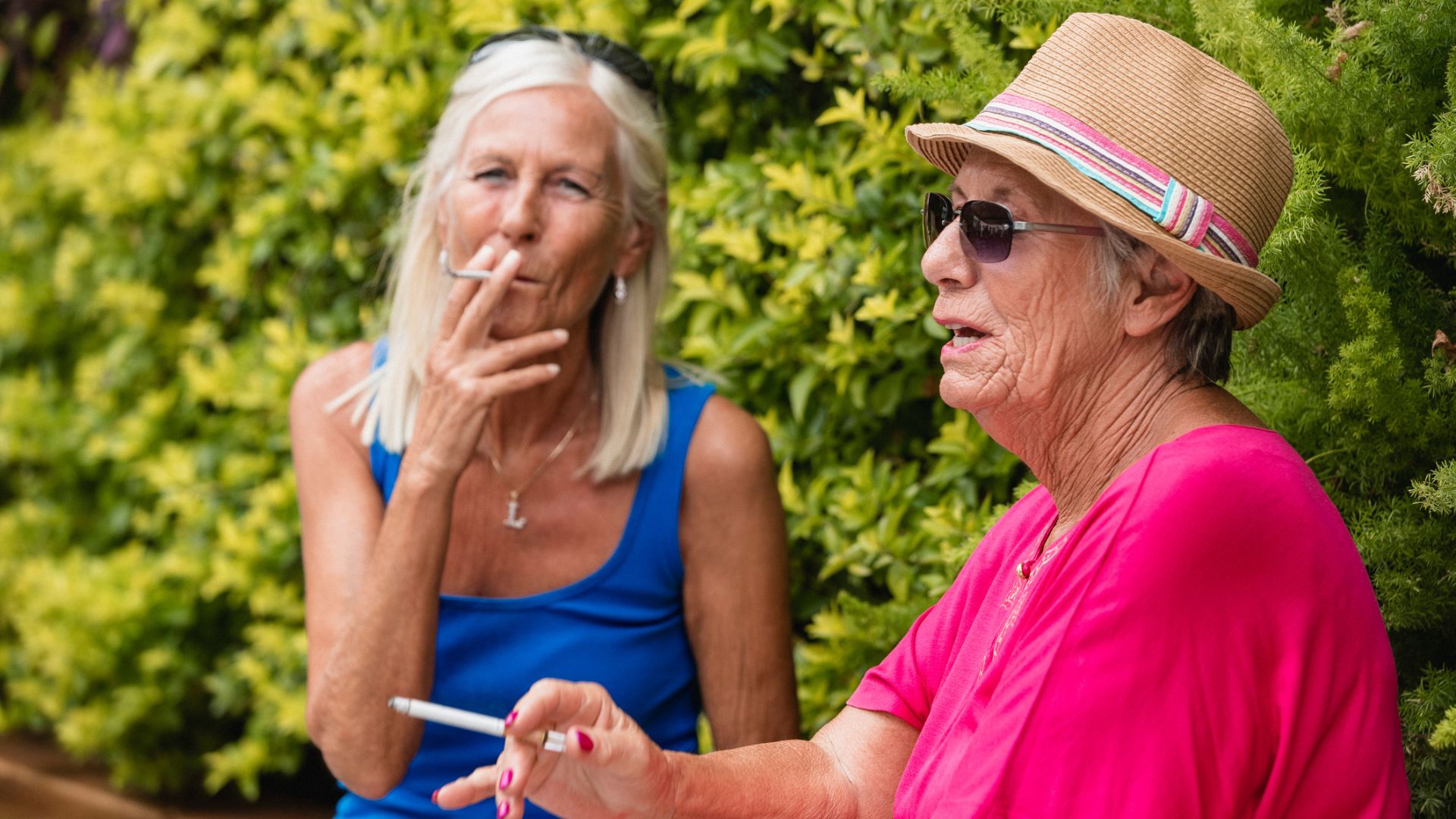
With South Australia’s new smoking restrictions weeks away, families of older smokers are asking a simple question with a complicated answer: can a residential aged care home refuse to take them?
For an 86-year-old man who has smoked since childhood and is now living with early-stage dementia, the answer has meant being stuck at home. His daughter says no residential aged care home near them will accept a smoker. His home care funding covers about two hours a day, while his needs are around the clock.
Her story, shared in a busy online aged care forum, drew well over a hundred replies from families and aged care workers. Some insisted homes “have to” take smokers and that refusing them is discrimination. Others were just as sure that “nobody takes smokers anymore”. The truth sits somewhere in between, and it is about to get more complicated.
The short answer: a home can usually turn down a smoker, but it can’t refuse someone because of a disability such as dementia. And while the new Aged Care Act protects a person’s right to take risks, it doesn’t guarantee anyone a bed.
Smoking is not a protected attribute under Australian anti-discrimination law, so a home can usually say no to a smoker. Disability is different. Dementia counts as a disability, and refusing someone because they have it could amount to discrimination.
Providers don’t have to accept every applicant. They are expected to consider whether they can safely meet a person’s needs, but that discretion has limits where a protected ground such as disability is involved.
The distinction is important. A provider refusing someone because they have dementia, for example, may raise different legal questions from a provider deciding it cannot safely accommodate the supervision and support requirements associated with that person’s smoking.
Last year, a report from the Older Persons Advocacy Network (OPAN) highlighted concerns about residential aged care providers informally screening out applicants considered difficult or costly to support, including people living with dementia, mental health conditions and complex disabilities.
In one case, a team of hospital social workers contacted 21 residential aged care providers about finding a placement for an older person. All 21 enquiries were rejected, with concerns about the person’s mental health history and complex care needs reportedly influencing decisions.
Aged care advocates have described this as a serious problem for people whose needs are too complex for some facilities to accommodate but who can no longer safely remain at home.
The confusion around smokers has been compounded by the new Aged Care Act, which took effect on 1 November 2025.
Its Statement of Rights gives older people the right to “take personal risks, including in pursuit of the individual’s quality of life”, as well as the right to dignity, respect and non-discriminatory treatment.
Importantly, these rights apply not only to people already living in residential aged care, but also to those seeking access to funded aged care services.
However, the rights do not guarantee someone a place in a particular facility. Providers must take reasonable and proportionate steps to act compatibly with the Statement of Rights, while balancing the rights and safety of other residents and workers, as well as their obligations under other laws.
The Act recognises a person’s right to make decisions involving personal risk. It does not remove a provider’s responsibility to maintain a safe environment for everyone.
Smoke-free laws are largely determined by the states, and they are a big reason smokers are finding fewer doors open.
In Queensland, smoking and vaping are already banned on the land of all public and private residential aged care facilities and within five metres beyond their boundaries.
A facility can designate part of its outdoor area as a nominated smoking place, where smoking is permitted. However, it is not required to provide one.
The restrictions apply at all times and cover staff and resident areas, including the use of vapes.
South Australia is next, with new restrictions commencing on 7 December 2026.
From that date, smoking and vaping will be banned in public areas within five metres of any part of a building comprising a residential aged care facility.
The wording matters. Under the South Australian law, a “public area” is one the public can use or that is open to the public. Private areas, such as spaces used only by residents, are not covered, so the ban will not automatically reach every part of a facility’s grounds.
Individuals caught breaching the restrictions can face maximum fines of $5,000, while corporate occupiers can face penalties of up to $10,000 for failing to display the required signage.
An earlier draft of the South Australian rules went further, proposing an indoor ban and a 10-metre buffer from the property boundary. The final version was narrowed, although the 10-metre figure is still widely repeated.
For providers, the changes mean reviewing smoking policies, identifying affected areas and making sure residents, visitors and staff understand where smoking will be permitted.
Aged care workers responding to the forum post were blunt: a smoke is never just a smoke in a care home.
Workers describe supervising each cigarette, often while call bells ring for other residents. Lighters must be secured so residents with dementia cannot pick them up unsupervised. Some residents need fire-retardant smoking aprons to reduce the risk of burns from dropped ash.
One worker said a resident who sets off a smoke detector by lighting up in their room can trigger a fire brigade call-out costing the facility thousands of dollars.
Actual false-alarm charges vary depending on the state, fire service and circumstances, and a smoke detector activating does not necessarily mean an emergency service will automatically be dispatched. However, the potential financial and operational consequences are another concern for providers.
Workplace health and safety obligations create a further complication. Employers must identify and eliminate or minimise risks to workers, including exposure to second-hand smoke.
Safe Work Australia’s guidance on work environment hazards uses an aged care example to illustrate the tension. In it, a home allows residents to smoke in a designated outdoor area, but health and safety representatives raise concerns that staff supervising them are being exposed to second-hand smoke and the risk of lung cancer.
After weighing up the risk, the home in the example decides to go smoke-free, phasing smoking out and offering residents support to quit. Some residents object and move elsewhere, but most come to accept the change.
Then comes the paperwork: smoking risk assessments, care plans, signage and complaints from other residents about the smell. One aged care worker in the forum, who said their home stopped accepting smokers last year, summed it up: “So much easier to say no.”
Dementia is where it gets hardest. Plenty of homes still have smoking areas for residents who can get there and smoke safely on their own. In a locked memory support unit, every cigarette may need a staff member, and a resident with dementia may forget they smoked 20 minutes ago and ask to go again.
Not every provider has closed the door. Workers from Victoria, New South Wales, Western Australia and parts of Queensland said their homes still accept smokers, some escorting residents with dementia to a smoking area with staff holding the cigarettes and lighter.
The difference often comes down to whether a facility has the staff, space and policies to manage the risks.
For smokers who cannot find a bed, the fallback is home care, and it was never designed to provide continuous one-to-one support.
The highest level of the Support at Home program, Classification 8, is worth $80,294 a year as of 1 October 2026.
However, 10 per cent of the budget is allocated to care management, leaving approximately $72,265 for services. How much assistance that buys depends on provider pricing, the type of support required and any applicable participant contributions.
There has been another significant change under Support at Home. From 1 October 2026, the Australian Government fully funds approved personal care services, meaning eligible participants no longer pay an out-of-pocket contribution for services such as showering and dressing.
Contributions can still apply to other services, including domestic assistance and gardening.
Even with these changes, arranging sufficient support to cover someone’s needs around the clock can be extremely difficult. Families say the available funding can stretch to roughly two or three hours of assistance a day, depending on the services and provider rates.
Covering nights privately is out of reach for most. One forum member put the cost of a private overnight carer at about $500 a night.
Another noted that genuine 24-hour, one-to-one care requires more than four full-time equivalent workers, even before accounting for annual leave, sick leave and roster gaps.
“No one gets 24/7 care under Support at Home,” one commenter wrote. “Family will need to provide most of the care.”
That leaves families of older smokers in a bind. Their loved one’s assessed needs point to residential care, but the homes that could meet those needs may not be willing or able to accommodate them.
There is no easy fix, but families and workers in the discussion pointed to a few steps that can make the search less painful.
The first is to ask early and ask directly. Smoking status is not a search filter on My Aged Care, so families can spend months applying to homes that were never going to say yes. Raising the question in the first phone call saves time and heartache.
What families shouldn’t do is hide it. Some admit to concealing a parent’s smoking to secure a bed, but workers say this often backfires once the cigarettes come out, souring the relationship with staff and putting the placement at risk.
A conversation with the GP about nicotine replacement is worth having, even for someone who has smoked for 70 years. Options include patches, gum, lozenges and inhalers, although the most appropriate approach will depend on the person’s health and circumstances.
Hospitals routinely use nicotine replacement therapy for patients who cannot smoke during their stay, and several workers said residents settled better than their families expected.
A short respite stay may also help families and providers work out whether a home’s care arrangements are suitable, including whether the resident can access a smoking area safely and what level of supervision is required.
It can also pay to look further afield. Policies vary between providers, and some regional homes still maintain smoking areas.
Families who feel a provider has treated them unfairly can seek free, independent help from the Older Persons Advocacy Network (OPAN), or raise concerns with the Aged Care Quality and Safety Commission.
Finally, the person doing the caring needs support too. Carer Gateway offers counselling, coaching and emergency respite, while Dementia Australia can advise on how smoking habits and behaviours may change as dementia progresses.
As one aged care worker put it, the issue is rarely the cigarette itself. It is everything a cigarette sets in motion in a care home that is already stretched.


