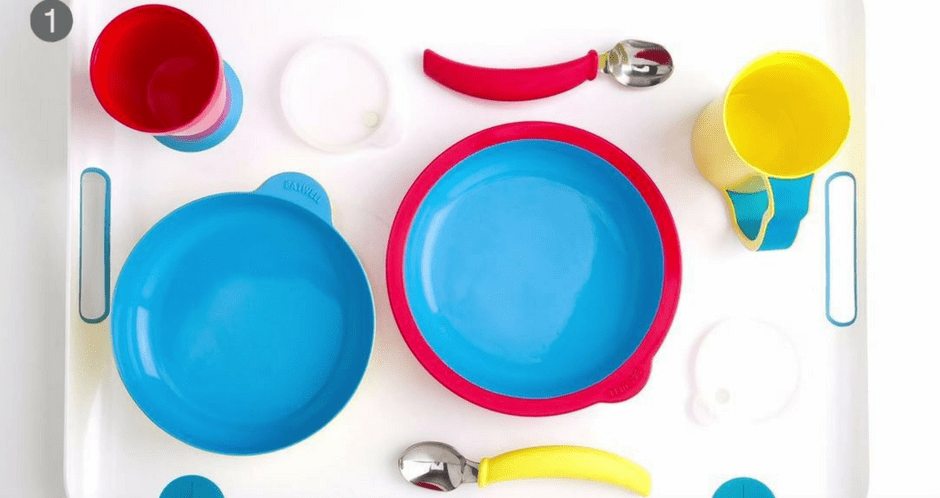
If you couldn’t see your food on the plate, then it would be no wonder that you wouldn’t eat it. Researchers believe that the visual-cognitive deficiencies caused by Alzheimer’s are due to people with the diagnosis not being able to process visual data—such as depth perception and contrast.
There have been a number of studies over the years that have looked into the benefits of contrasting coloured plates and more recently a trial found that using the bright canary-yellow plates and crockery at mealtimes made patients more likely to finish their food and put on weight. Experts believe making a simple change to the crockery can actually boost nutrition rates amongst patients, many of whom are elderly and frail.
Three hospitals in United Kingdom are piloting a scheme which uses the advanced colour psychology to encourage eating.
A previous study by Boston University Bio-psychologist Alice Cronin-Golomb looked at a “red plate study”. Similarly, research was undertaken to see if seniors with advanced Alzheimer’s would eat more food from red plates than they did from white ones. It’s believed 40% of individuals with a severe diagnosis of dementia can lose an unhealthy amount of weight and therefore the need to find solution. The researchers in the Vision & Cognition Lab of the Centre for Clinical Biopsychology, had high hopes that their experiment would be successful and therefore the positive results did not come as a surprise. With a 25% increase in food consumption for people with dementia that ate from red plates, instead of the control that ate from white plates.
If you are interested in buying these coloured plates, we came across this company called Eat Well, that appears to have great quality plates. The founder was inspired by her grandmother that had Alzheimer’s, watch the video below to learn more.





Three years ago when my mother was still alive I contacted Eatwell by email. I wanted to buy a set for my mother who had advanced Alzheimers. At the time I wondered if they were available in Australia. What a let down. I had absolutely no response. I was very very very disappointed as I felt this product would have made life easier for both my mum and me.
Hi I am looking at these products fro an aged care in voctoria. Do you have an australian outlet