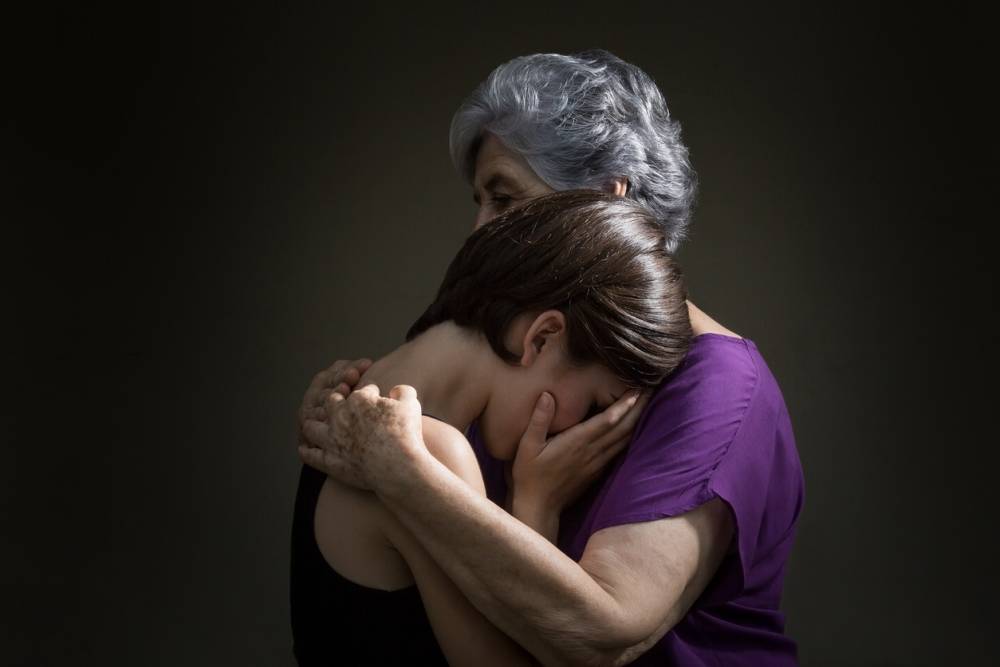
There are a number of reasons why a person or their family may not complain when they are unsatisfied with the care they receive.
Whilst some families have no problems with raising issues as they occur, others will simply wait until their loved one dies before they complain. In my previous position where I would visit aged care homes I would see this happen on a number of occasions.
Which at the time never really made much sense to “wait until they die” – what about now? How can a facility improve if they aren’t told what the issue is?
My thoughts however changed when my grandmother was dying – from working in the profession I didn’t want to be that “difficult” family member that I’ve seen health professionals label families from time-to-time. And most of all I didn’t want anyone to treat my grandmother differently. Which now looking back seems unwarranted and something I perhaps regret, but I was wanting to protect her.
This fear I felt is something families struggle with and like me are too concerned to speak up. They are fearful that the complaints will fall on deaf ears, fear that they will be thrown out of the facility, or even fear that the quality of care with drastically decrease.
These fears may not be justified in some instances, but in facilities where the culture is not geared to accept complaints and where aged care workers do not respond well to criticism – these fears may become reality.
So what happens when the elderly person does die? Theoretically there is nothing to fear, and no perceived harm can be done to your loved one.
And despite families’ intentions at the time to make a complaint – these complaints often don’t get made. And in my experience, there is a number of reasons why this happens.
The most obvious one is grief – the family are going through a hard time and the last thing they want to think about is what went wrong and following up on their complaints. In the heat of the moment when their loved one is dying the emotion it evokes to ‘advocate’ for your love one is so strong and when they die you put your energy into the grieving process.
After all no amount of complaining will bring them back.
And once the family have passed the grieving process, they return to their normal everyday lives, which can be another reason why feedback isn’t given to the facility.
It’s not that the families have forgotten, if anything the families will never forget their loved one’s struggles and the challenging experience they had to go through at the final stages of life.
For those who do want to give feedback – regardless of whether it is good or bad – they may find that they simply do not know who to give it to.
I’ve come across many facilities where they didn’t even know who the manager was, and in those situations, would an anonymous email have had any impact at all? Others had tried to find a place to post it on the facilities website – but struggled here too.
When a resident dies, it can become a “grey area” in terms of the relationship between the family and the facility.
The family may think, “well Mum is gone now, we don’t have anything to do with the facility”.
And the facility may feel like once a resident dies there is no need to “bother the family” – as they maybe grieving.
That said I have heard recently of a number of aged care facilities that send cards, attend funerals (for some residents) and have memorial days to pay respect to residents.
And in reality no-one is really at fault of the family or of the aged care facility. There are no set rules or guidelines that say how they should act after a resident dies.
And for the families, everyone grieves in different ways.
I think that we, as families and loved ones, should be giving feedback to the aged care home that our loved one was in. But I understand the fears and it may not always be something people are comfortable with.
I believe that facilities should check up on the grieving family just to see how they are coping and say their farewells, which also would give families the opportunity to air any grievances.
The feedback that is given may not help their loved one specifically, but it will help another family living in the facility. And if you can help someone to go through a better experience than what you went through, then isn’t that worth it?
What do you have to say? Comment, share and like below.



My mother was in an aged care facility in South Australia (Christian based) for 6 months. During that time I queried my concerns on the “lack of care” to both nursing staff & facility manager. My concerns were acknowledged but completely ignored. My mother had the worst case of “nappy rash” ~ red raw and bleeding that I have ever seen. Her bed was wet to the edges of the bottom sheet from urine. She had deep seated bruising and ulcerations on her thighs from the nylon webbing on the lifter and a pressure sore on her calf which was putrid. All I was told was that it’s to be “expected” as skin breaks down as people age. She died 18 days after her 80th birthday 🙁