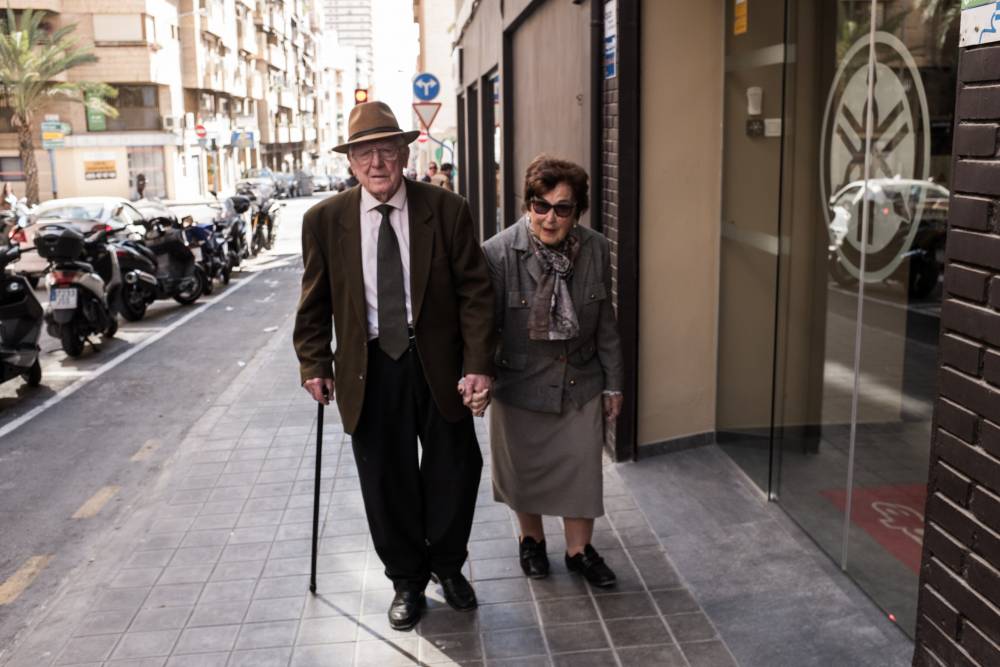
Older people are at greater risk of falling, and when that happens our ageing bodies are more likely to suffer more severe consequences. There is a lot being written about this from various perspectives. These include reasons for increased falls, ranging from domestic hazards to various physical conditions, and ways of preventing falls, ranging from fall-proofing homes to a variety of balance-improving exercises.
But in scanning the sorts of advices available I haven’t found the approach that is working for me, and so I’d like to share that here. I’m writing as a fortunately healthy 77-year-old, whose major physical condition is growing older and so, possibly slightly frailer. As such, I am not immune to falls, and those that I’ve had remind me of my childhood, with faded scars on my knees from an assortment of falls at that time. But now, if I fall, I know that I’m vulnerable to more serious fallouts than that, as demonstrated by my last fall, just before my 70th birthday.
Then, we were on a very pleasant coastal walk, and I didn’t notice an unevenness in the path, and tripped forward with full force along the length of my body, but with most of the damage in my right hand and wrist. The result – in addition to the immediate pain and shock, which were not inconsiderable – was a broken bone in the latter, and two fingers which still curl slightly differently from the others. As well as a smashed pair of spectacles.
Since then, I am happy to report, I haven’t had another fall. Doing regular balance exercises has helped. But I am sure that what has been equally important are some changes in the ways that I walk, and as I was walking the other day, a description for that popped into my head: that it is conscious walking. In two ways.
On the one hand, I became aware that – like many older people – I was not lifting my feet as much when walking. So, I was unconsciously moving towards what has somewhat cruelly been described as an elderly shuffle. And on the other, I was not looking at where I was walking, to spot potential hazards. While, after seven years, that big fall should by now be fading in my memory, it was unpleasant enough to keep reminding me that I really, really do not want to have another one like that.
So, I now consciously lift my feet slightly higher when walking; and while not obsessed, I do habitually give the pathways ahead of me a periodic scan to make sure that I circumnavigate or step over any small but potentially significant bumps in my way. And since those strategies have proved to be so good so far, I can recommend giving conscious walking a go.



Wonderful advice. I see my patients regularly falling into the ‘aged shuffle’ and wonder where and why it has happened. Then I look around scan and pick my feet up. Thank you for such a succinct reminder.
I am 72. I recently had a fall, not from any of the usual or regular ways. Instead, as I walked around the edge of the bed, I caught my toe in the corner of the doona cover (I hadn’t made the bed so it was near the floor).
I fell heavily foreward ending up flat. There was no “slow motion” fall, no vision of my life before my eyes, I was up then down, no sense of falling.
Never fell before, but I now realise that I have to be very careful with everything, like walking, lifting objects, turning fast, carrying heavy shopping bags, even getting into cars, buses, bed showers.
Hi Ellenora,
Through your fall, you raise a very interesting point, something that I sort of stumbled across myself the other day, and could be labelled conscious placement. I was preparing a picnic, and thought that I could leave the half-filled esky on the floor of the kitchen, and then suddenly realised that my husband, not knowing it was there, might trip over it. And moved it up onto a chair.
We do need to be aware that most falls do occur in the home, and work on making sure that it is as safe and trip-proof as possible.