One of the reasons why I keep coming back to Japan to learn about their eldercare models is that each time I visit, I learn about new innovations and ideas, and new interpretations of old concepts.
The country is moving forward all the time.
On the first day of Ageing Asia’s Conference On-the-Go in Tokyo, I visited our friends at Team SOMPO Care to learn about the secret sauce behind training a workforce that looks after 80,000 customers across their nursing care, assisted living, senior living, home care and day care services – a US$1.1 billion business in Japan.
Since 2017, SOMPO Care University was established to support each employee’s learning and growth and also to be the research and development platform of the nursing care industry.
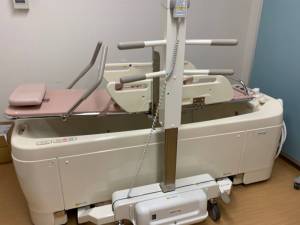
The most impressive part of SOMPO Care University is the commitment to detail. To build an environment that is built to scale of key facilities, from bathrooms with bathtubs, to robotic bathtub areas, to rooms across premium and budget categories, as well as a mock up of a home care visit to a traditional tatami style house. This allows staff training to be realistic to actual work conditions.
Also, staff who are unable to attend can also watch via remote teleconferencing. All is consolidated in a detailed syllabus across group training, e-learning and web based training for part time staff, new employees, caregiver and manager.
In an era where competition for care workforce is very high, as such, SOMPO Care has put in place an education system to support the medium to long term career path of employees.
Training is customised according to job title and experience for care professionals, management staff and headquarters staff. Each staff receives 3-4 years of upskill training to ensure they are ready to move up the career path.
The clear methodology and structured syllabus allows SOMPO Care University to also develop training programmes for other operators, corporate and local government.
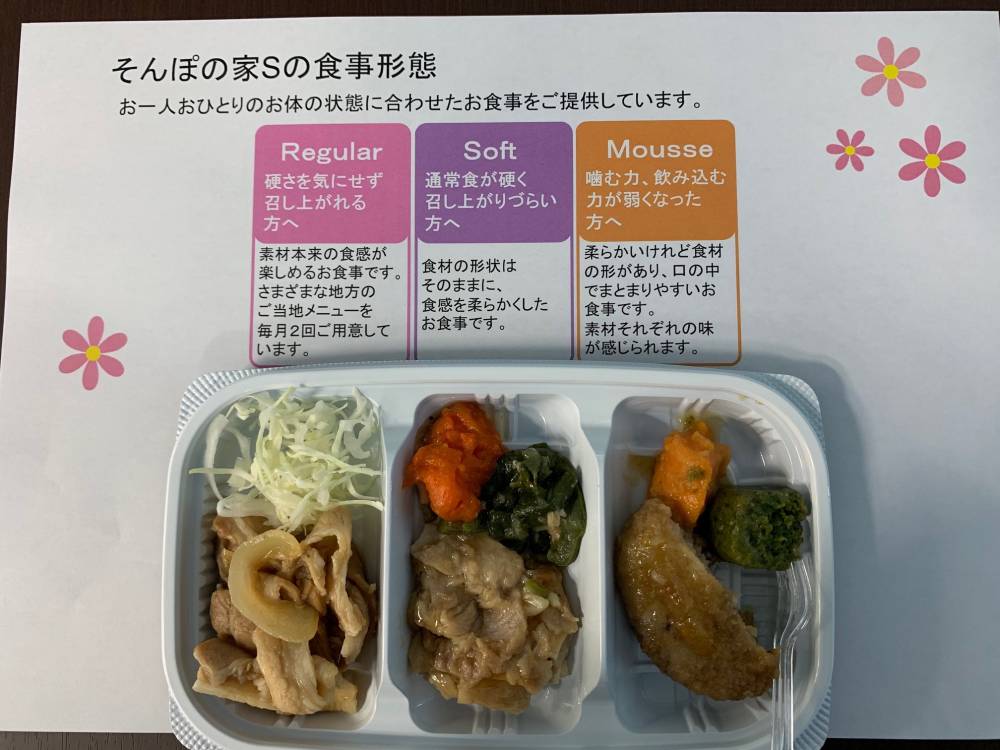
Winner of the 2018 Asia Pacific Eldercare Innovation Awards for Best product to support ageing-in-place – wellness, the SOMPO Food Lab has about 10 professional members who develop menu plans and meals and about 100 clinical nutritionists who provide nutritional care for the elderly at the facilities. The food prepared is used across all their facilities and also home care delivery.
Our day one programme concluded with a visit to SOMPO Future Care Lab with insights to over 20 technologies curated and enhanced by SOMPO to suit the care needs observed in their nursing homes. It’s really about being able to take away more from each technology, building on the foundations and enhancing existing products to suit changing needs.
The highlight was a presentation on the company’s vision on how technology innovations would create a very different Future 2040 for elders in nursing homes – one that focuses on enablement, technologies and independence.


