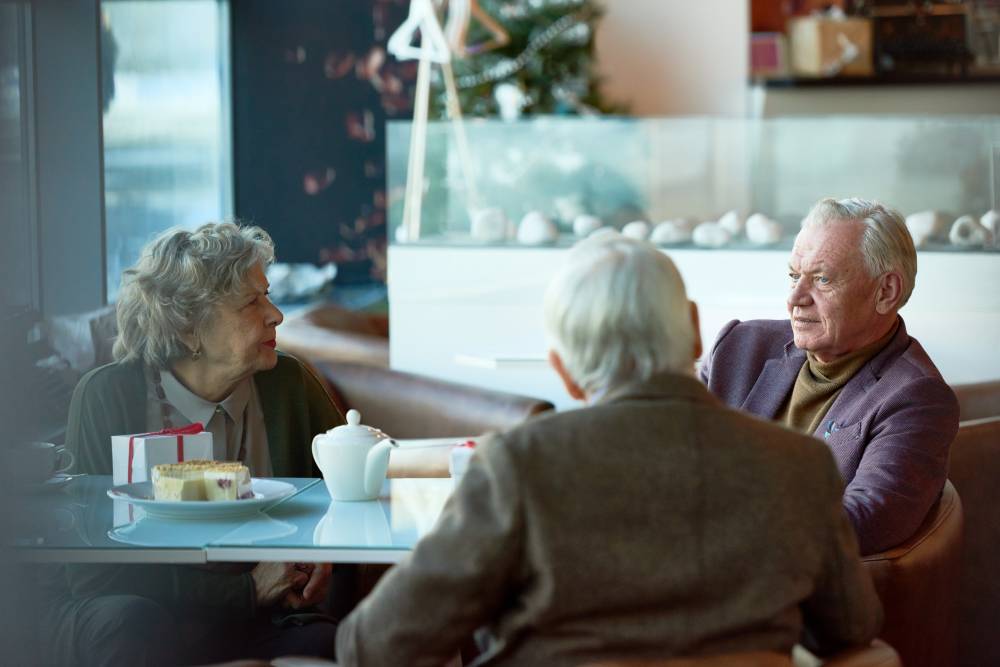
MidCoast Council is hosting a series of ‘death cafes’ in the lead up to ‘Dying to know’ day on 8 August, giving the community the opportunity to ask questions and discuss a topic that is still often considered taboo.
When three councils amalgamated in 2016 to form MidCoast Council, one of the biggest issues for them was uncertainty about where to go to find information. There were a particularly large number of questions about cemeteries, memorials, and burials.
“People were coming to us before someone had passed away, and asking us what they should do,” Kimm Christie, team leader cemeteries and memorials, MidCoast Council, told HelloCare.
With a shift away from traditional rituals around death, there was more interest in the area that ever before.
With the council fielding questions daily, the council decided to get together with businesses in the area to share information with the public and to give the community an opportunity to ask questions in an open forum.
The council decided to host a series of death cafes around the region to provide an opportunity to talk and ask questions, but also to acknowledge ‘Dying to know day’, which is held in August each year and as a day to encourage conversations about death, dying and bereavement.
The death cafes are also intended to break down the barriers around talking about death, which is still often considered a taboo topic in our society.
Grief counsellors, funeral directors, palliative care providers, celebrants and others are available to provide their perspectives, but there’s also an opportunity to gather practical information about death and loss, such as end-of-life care, who to contact when someone passes away, coping with loss, or how to go about organising a memorial for a loved one in a favourite place such as a park or reserve.
With rituals around death and grieving changing, Ms Christie said the death cafes are an excellent opportunity to let the community know what is available, what’s possible, and what’s not.
The sessions also provide guidance for MidCoast Council.
“We have the largest aging population in the state,” she said, “so we need to have those conversations so we can plan for the community.”
MidCoast Council held a successful series of death cafes for dying to know day last year, and the response was so positive, they are now holding sessions quarterly around the region.
Death cafes are held on council premises, such as in libraries or art galleries, and tea, coffee and homemade cakes are served to encourage a relaxed atmosphere that allows people to open up.
“It’s not as structured as a meeting would be if it was held in a council building,” Ms Christie said.
Generally, a death cafe session begins with guest speakers, and then the session is opened up to a panel for questions. Anyone is welcome to ask questions.
“It’s about opening up the conversation,” Ms Christie said.
Men’s groups have been particularly supportive of the initiative, Ms Christie said. “They open up and ask so many questions – I was blown away.”
The council is in part encouraging families to talk about death so that every person’s wishes are clear to loved ones. She said council can sometimes be sandwiched in the middle of two disputing families over matters such as whether or not a family member will be buried or cremated.
“We’re trying to get everybody to have that conversation so everybody knows (the person’s wishes),” she said.
All are encouraged to attend. “We’ve had young and old, it’s a mixed bag – which is good!” Ms Christie said.
Death cafes are free to attend and do not require a booking. MidCoast Council will hold death cafes at:
Death cafes are now held all around the world with the aim of encouraging people to ask questions about death and loss, and to help them gather the information they need to plan to reduce the burden for their loved ones.



Do they have any of these places in West Melbourne Victoria at all?