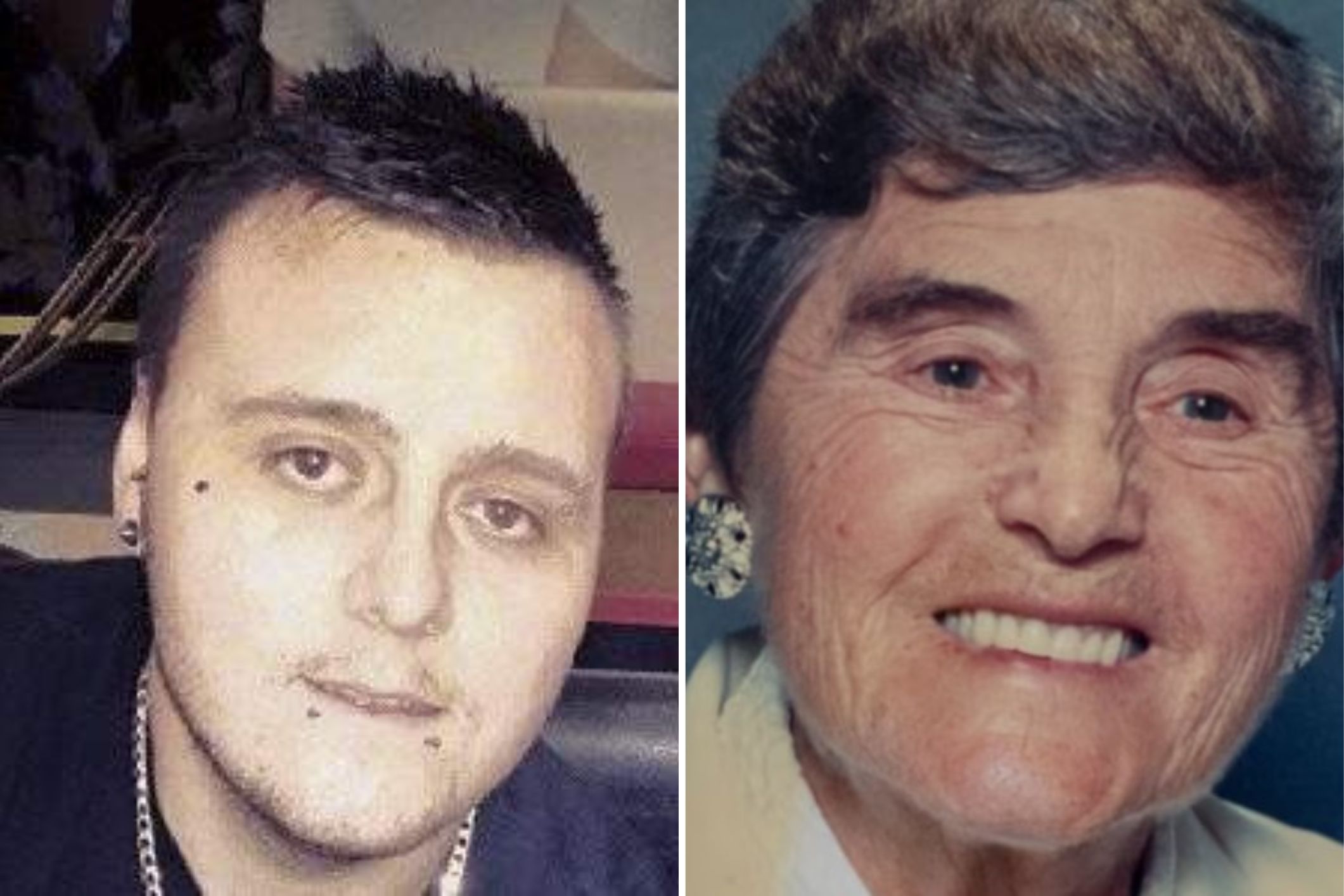
In a chilling revelation, an ABC investigation has unearthed evidence suggesting that Garry Davis, a convicted healthcare worker serving a 40-year sentence for murdering two nursing home residents and attempting to kill a third, may have been responsible for additional undetected deaths.
Davis, who carried out his crimes by administering lethal doses of insulin at SummitCare Wallsend in Newcastle in October 2013, is now at the centre of questions surrounding the death of 86-year-old Elizabeth Eifler – a resident under his care who died within the same 48-hour period as his confirmed victims.
Davis was sentenced in 2016 for the murders of Gwen Fowler, 83, and Ryan Kelly, 80, as well as the attempted murder of 91-year-old Audrey Manuel.
His method was insidious: injecting vulnerable elderly residents with insulin, a drug that can kill silently when misused. Yet, the case of Mrs Eifler, who passed away in the same wing of the facility during the same timeframe, raises troubling doubts about the thoroughness of the original police investigation.
Unlike the other victims, no autopsy or insulin tests were conducted following her death, despite her proximity to Davis’s known crimes.
Elizabeth Eifler’s daughter, Ingrid, who has since passed away, repeatedly urged police to investigate her mother’s death, suspecting foul play.
On the morning of 18 October 2013, Ingrid found her mother unconscious, sweating profusely around her arms and neck – symptoms eerily similar to those exhibited by Davis’s confirmed victims.
Mrs Eifler died later that afternoon, just two hours before Gwen Fowler was found in a comparable state. While tests later confirmed Fowler’s death was due to an insulin overdose, no such examination was performed for Mrs Eifler.
Ingrid’s pleas to the police went largely unheeded, with authorities later informing her that her mother’s blood tests were “clear” – a claim based on hospital records from three days prior to her death, not a post-mortem analysis.
This apparent oversight has sparked outrage and disbelief. Graeme Parker, a retired chief detective who oversaw operations in Newcastle during the SummitCare investigation, expressed alarm when informed of the case by the ABC.
He described the failure to order forensic tests as potential “negligence,” stressing that any death occurring in close proximity to the known murders should have prompted immediate scrutiny.
“The first thing you do is ask, ‘Have there been any other deaths recently?’” Parker remarked. “The day before? We probably need to see whether there’s any forensic evidence there.”
The New South Wales Police have defended their actions, stating that Mrs Eifler’s death was not deemed “reportable” at the time, as her treating doctor issued a death certificate attributing it to natural causes – a plausible conclusion given her palliative care status.
They also noted that “inquiries” were made, including a review of toxicology results, but confirmed these were limited to pre-existing hospital records rather than new tests. For Mrs Eifler’s family, this explanation rings hollow. Her son, Peter Eifler, believes the police “overlooked things” and failed in their duty to investigate properly.
“That should have been done straight away, not left to go,” he said, lamenting the lack of communication from both the police and SummitCare.
SummitCare, the facility where Davis committed his crimes, has remained tight-lipped, citing privacy laws when pressed about whether they flagged Mrs Eifler’s death to authorities or considered her a potential victim.
The company expressed devastation over Davis’s actions but offered no clarity on this specific case. Meanwhile, Davis himself, speaking from Goulburn prison as part of the ABC’s Background Briefing’s true crime series, The Invisible Killer, has denied any involvement in Mrs Eifler’s death.
The implications of this case are profound. With Mrs Eifler’s body still at the funeral home when the investigation into the other deaths began, police had a narrow window to act – yet they didn’t. The absence of an autopsy or insulin testing means the truth may never be known, leaving her family in a painful limbo.
Could Garry Davis, already a proven killer, have struck more times than the courts have recognised? The ABC’s findings suggest it’s a possibility that cannot be dismissed, exposing potential flaws in how suspicious deaths in aged care settings are handled.
For now, the Eifler family’s quest for answers continues, a haunting reminder of the fragility of trust in those tasked with caring for society’s most vulnerable—and the devastating cost when that trust is betrayed.


