When my father died, my mother spent years going through his possessions. She would spend a few hours going through a cupboard, and then months later sort out a box of odds and ends. She only recently – 10 years after he died – gave away some of his old cameras. And the job is not done yet; it may never be.
When someone dies, going through their possessions is one of the inevitable, and sometimes distressing, tasks that families must perform.
But now, Swedish artist, Margareta Magnusson, has written a book designed to make it easier for families when a loved one dies.
Ms Magnusson’s book ‘The Gentle Art of Swedish Death Cleaning’ explains how to remove unnecessary items from your home, simplify clutter, and how to make your home orderly and easier for your family to sort out after you die.
These days, with people living longer, we have more and more opportunity to accumulate stuff. But we also have more time to sort through our stuff – and this is Ms Magnusson’s goal.
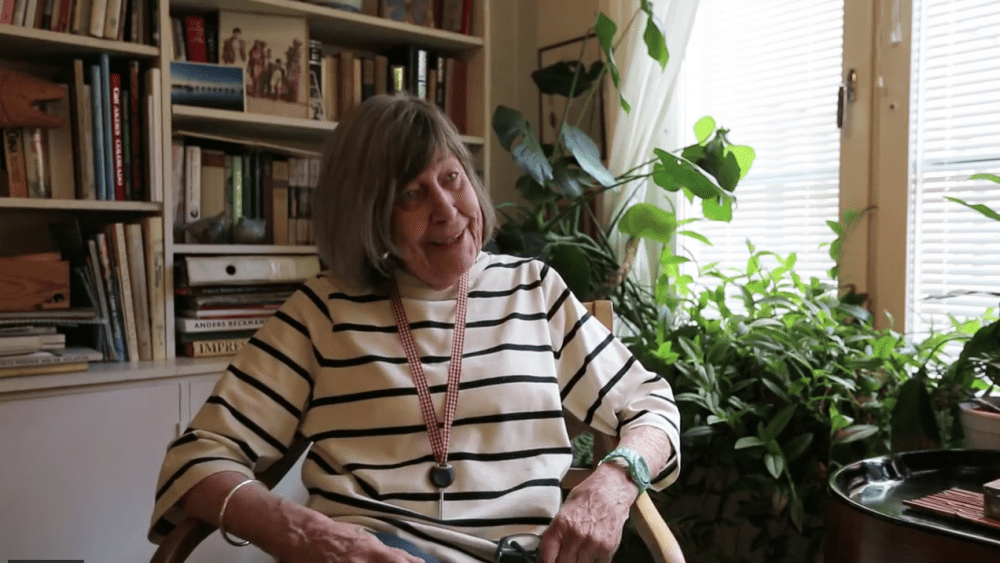
Ms Magnusson, who says she is somewhere between 80 and 100, explains her philosophy in a video filmed by her daughter, Jane Magnusson.
She says that the things you collect over your life, your family will have to deal with after you die.
“One day when you’re not around anymore, your family will have to take care of all that stuff, and I don’t think that’s fair really,” she says.
“Generally people have too many things in their homes. I think it’s good to be rid of things you don’t need,” she says.
For Ms Magnusson, Thursday is her death cleaning day.
Ms Magnusson says she thinks she has always death cleaned. “Because I want it to look nice around me and keep some order,” she says.
Does she feel sad throwing away some items, like photos?
“Photos can be sad, but if you’ve had a good life it’s just the memories. You’re feeling this is not going to happen again. That’s maybe why it feels sad,” she says.
Ms Magnusson recommends beginning death cleaning as soon as you start thinking about your mortality, and she says it’s a good way to talk about death if it’s a difficult subject to broach with your family.
“Death cleaning can be a great way to start the conversation,” she says.
You don’t have to throw everything away, she says.
“I have saved quite a few things.”
Ms Magnusson also has a ‘throw away box’ that contains items that are of importance to her that she wants to keep while she’s alive, but that her family can just throw out after she dies.
“Who’s going to take care of all this crap?,” she asks her daughter when she sees her stuffed full storage cage. Ms Magnusson only has a shining red bike in her cage.
So when is death cleaning complete?
“You’re never ready with your death cleaning because you don’t know when you’re going to die. So it goes on and on. Then it stops. Finally.”



This article has really hit home with me. I have recently been diagnosed with dementia at 64. I have boxes of photos and other items that I know that my children will not want. I have the memories so there really is no sense of holding on to them. Thank you for giving me the sense to let go and making it easier to keep what really makes me happy.
Please don’t throw out photos. They are historical documents. Label them on the back and leave them for descendants to know about their forebears. Anyway, I don’t want to become an old person in a Spartan environment. I want evidence of all my living, all the activities, travels, hobbies, books, of a full life around me.