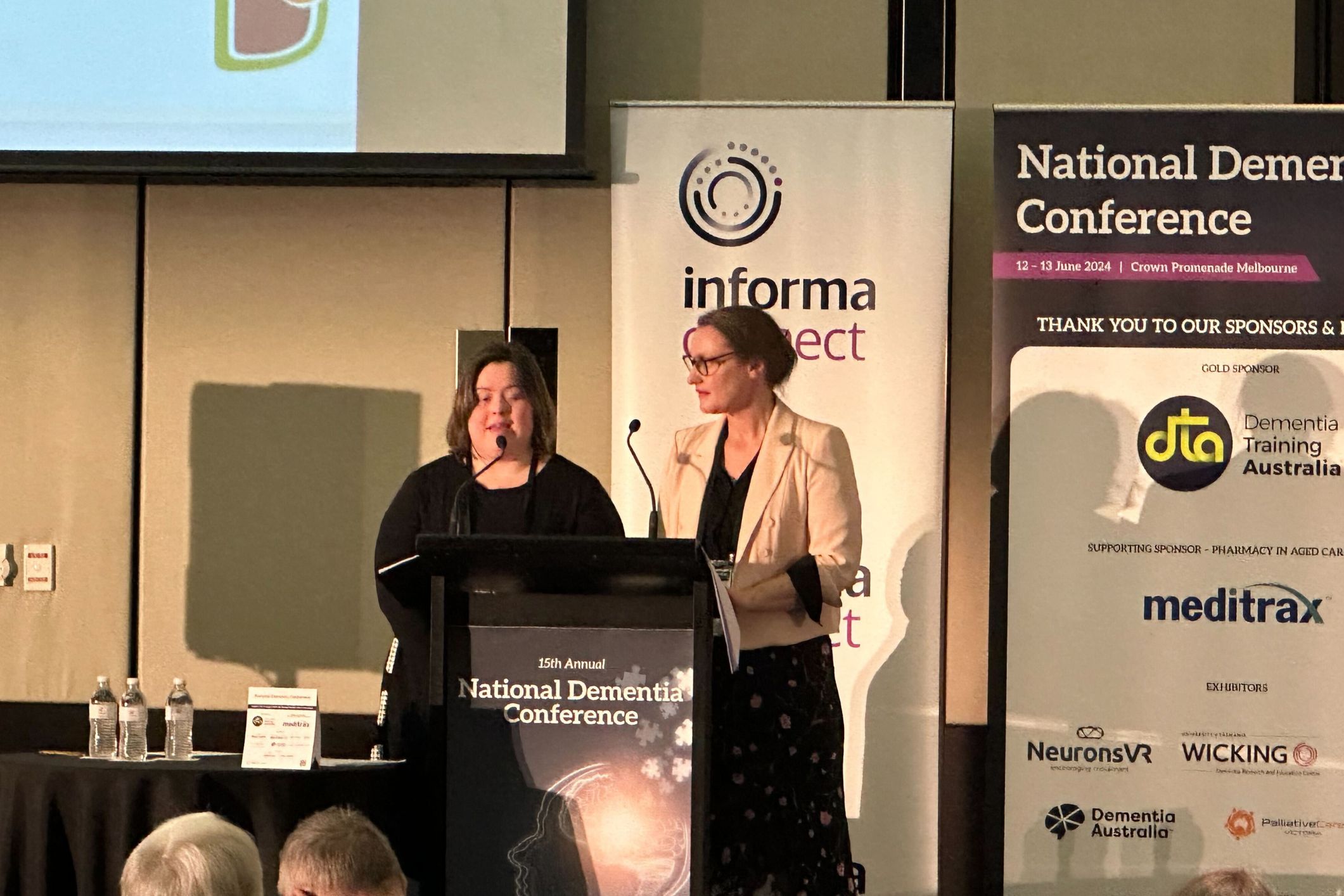
This year’s National Dementia Conference is underway in Melbourne, providing invaluable insights into dementia research, treatment and care. One of the first topics discussed is something rarely spoken about in the disability and aged care scene, yet it’s impact is growing, and that’s the prevalence of dementia in people living with Down Syndrome.
Dr Rebecca Kelly, Chair of Down Syndrome Australia, told HelloCare that roughly half of the people aged over 60 with Down Syndrome will get a form of dementia and that all people with Down Syndrome are genetically predisposed to cognitive decline.
“By the time they’re 50, all people with Down Syndrome will show signs of the amyloid plaques that are associated with dementia and that’s because they have that third copy of the chromosome 21 where that particular gene is located,” Dr Kelly explained.
“Because people with Down Syndrome are now living longer – we’ve had a change in life expectancy from eight years old in the 1950s to 60s and 70s now – which is a great change, but it also means our community is now dealing with age-related conditions like Alzheimer’s and dementia.”
With these increasing rates of dementia for people living with Down Syndrome, Dr Kelly said it’s essential to have good quality healthcare and preventative tools available to help. One of the ways to better prevent and manage dementia is also something we often take for granted, and that’s clear and inclusive communication.
Amelia Sloan, a Health Ambassador with Down Syndrome Australia, lives with Down Syndrome. She also experienced a stroke and as a result, spent ten days in the hospital where a nurse named Ella helped her clearly understand what was going on.
“She explained things to me,” Amelia told HelloCare, before saying that a shared love of the Richmond Football Club helped strengthen their bond as it made her “feel excited and not nervous” about staying in the hospital.
With a love of Elton John’s I’m Still Standing and The Beatles Here Comes the Sun, Amelia radiates positivity despite the challenges. Her creative pursuits also extend well beyond singing as she volunteers at fortyfivedownstairs, a Melbourne-based theatre and gallery, and ACMI, a museum of screen culture.
Amelia added that she feels included in society and her own healthcare journey. Through her job as a health ambassador at Down Syndrome Australia, she educates health professionals about better ways to engage with a diverse range of patients.
These simple moments where healthcare workers focus on the human, and not just the patient, highlight how much personal connection can enhance long-term health outcomes.
“It means that Amelia’s got social connections and meaningful work, all the things that we know help prevent dementia and they actually improve people’s lives. That’s a big social change from previously in history where segregation was the norm and unfortunately, is still the norm in pockets of our society,” Dr Kelly added.
When it comes to dementia diagnosis in people living with Down Syndrome, Dr Kelly said there are still barriers to early prevention and management.
“Often we have diagnostic overshadowing. When people go in because they have a change in their health it’s often written off as normal for Down Syndrome,” she said.
“We hear words like that but it’s not normal for Down Syndrome to have a sudden behaviour change. It means something’s going on. It might be dementia or it might not be but it’s important that medical professionals assess people carefully when the person with Down Syndrome themselves notice changes or when their support people and families notice changes.”
Ms Kelly said to always communicate directly with the person with Down Syndrome, and not just their parents or support people. This is sound advice for anyone working in personal care or aged care to ensure they always recognise the individual they’re supporting.
“Like Amelia found when nurse Ella actually talked to her directly, it made her feel more comfortable and it gave her a chance to understand what was going on and that’s so important,” she added.
Down Syndrome Australia has produced a free online course for anyone interested in learning more about Down Syndrome. Meanwhile, they have a range of impactful apps and resources to help people living with Down Syndrome manage their health and wellbeing.


