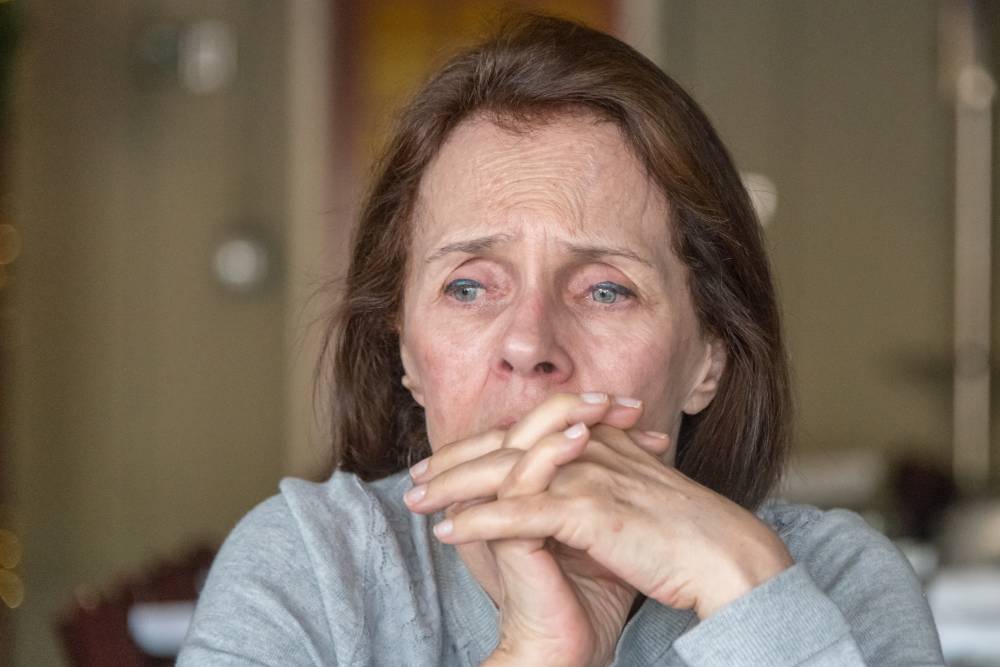
Tammy Miles was her mother’s primary carer for 13 years, but when her mother’s condition began to deteriorate, she struggled to cope.
Feeling alone, depressed and exhausted, the situation eventually became unsustainable.
For many, the first people they reach out to for support will be family. But local council may also be able to help, and it’s also worth speaking to your regular GP.
A friend told Ms Miles to contact Carers Queensland, who put her in touch with their program, Empower Care. Empower Care were immediately empathic to her situation, and were able to provide her with the care and support she needed.
Ms Miles is now encouraging those caring for loved ones at home not to be afraid to ask for help.
With understanding and support, the burden of caring can be lifted. “Get all the help you can – don’t try to do it all on your own,” Ms Miles says.
Reaching out meant Ms Miles was able to keep her mother, Patricia Locke, living independently at home for another year, holding onto her independence and remaining in a familiar environment and community.
There are 2.7 million unpaid carers in Australia performing the essential, but all-to-often underappreciated work of caring for a loved one at home.
The replacement value of their care is estimated to be more than $60 billion every year.
Despite its immense value to the community, the difficulties of caring for a loved one at home are often not acknowledged or widely appreciated.
Caring can be lonely. It is usually performed in isolation, without colleagues or other family members, and conducted behind closed doors. It can also be physically and emotionally demanding, often requiring around-the-clock attention, heavy lifting, and patience. Caring can also place a significant financial burden on carers, and impacts almost every aspect of their life.
After a particularly challenging period, Ms Miles began to suffer emotionally and physically.
“My mother wasn’t doing well on her own,” Ms Miles said, and she herself began to feel isolated, tired and depressed.
With Ms Locke unwell, she was no longer able to support herself, get herself around, or attend the social gatherings that had once been so important to her.
When a friend suggested Ms Miles speak to Carers Queensland, she took the first step.
At their first meeting, Ms Miles explained her situation in detail. One of Carers Queensland’s advisors listened carefully, and suggested Ms Miles contact their home care service, Empower Care.
Empower Care was able to help Ms Miles immediately. They knew what needed to be done to support Ms Locke, and also to relieve some of the pressure on Ms Miles.
“Empower Care was very empathetic to my situation and understood how I was feeling,” Ms Miles said. “They didn’t waste any time to come out to see mum and to see how they could help us.”
They helped Ms Miles use the online systems to access home care.
“They helped me navigate the My Aged Care Home Care Package system and, once it was approved and the funds were released, they helped put all the services in place for mum’s needs,” she said.
Empower Care also organised support workers to go to Ms Locke’s home to help her with cleaning, they took her shopping, showered her, and took her to doctor’s appointments.
“She also got home repairs, modifications to her home, and equipment to assist her, such as a wheelchair and electric scooter.”
Ms Miles said the service was extremely helpful. “It helped to relieve the pressure off myself,” she said.
The staff were also extremely kind.
“They have been very supportive, caring and respectful through the whole process, and were always there to help,” Ms Miles said.
“They were great with mum. They understood her conditions, especially (carer) Annie, as she is a registered nurse and has been helping people for years.”
They were easy to communicate with too, which made the whole process easy.
“I communicated with them via email, mobile and their work phone. They always got back to me in reasonable time frames,” Ms Miles explained.
With the support of Empower Care, Ms Locke was able to stay in her home for another year.
Using home care meant she had taken the step of accepting care in the comfort and familiarity of her own home, and was able to hold onto the skills that allowed her to be independent for as long as possible.
She was also able to build a close and trusting relationship with her carer in her home environment.
Having care in the home also meant when circumstances changed and a move into residential aged care became necessary, the move was less disruptive. Some of the adjustment to accepting care had already been made.
As so, just over 12 months ago, when Ms Locke moved into an aged care facility after a serious fall, the transition was relatively smooth.
“Mum is doing well in the nursing home,” Ms Miles said. “She loves it there. She has made friends, loves the food and likes being waited on hand a foot.”
Ms Miles strongly encourages anyone in a caring role to reach out as soon as signs begin to emerge that more help is needed and it’s becoming difficult to cope. Don’t wait for the situation to escalate.
For her, Empower Care was able to help her immediately and in meaningful ways. “I didn’t feel so alone and I was around people that really understood how I was feeling,” she said.
Ms Miles suggests, “Get the support of a great organisation – such as Empower Care.”
For more information about Empower Care, you can visit their website or contact them on 07 3900 8100 or empowercare@carersqld.com.au.





