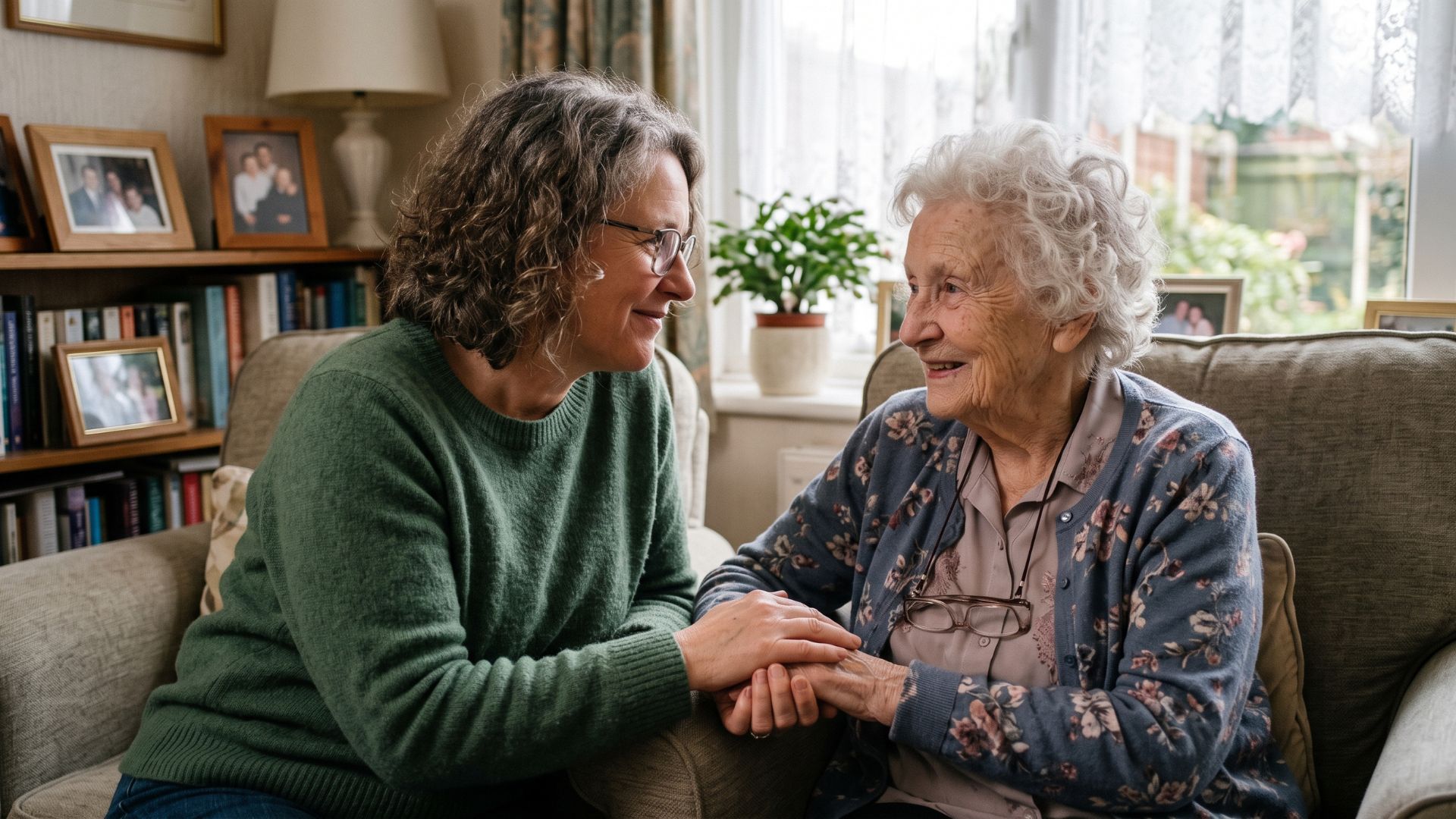
Florence, a woman I cared for, told me that she believed we all turned into our parents. Often, unwittingly and reluctantly, we start saying and doing exactly what our parents said and did to us. We would hope that many of the sayings and actions were out of pure love for their child.
She suggested that this transformation often occurs without our conscious awareness, almost as if it were a natural progression we cannot resist. It can be surprising how, in moments of frustration or joy, we find ourselves echoing the very phrases or adopting the habits that once characterised our parents’ approach to life.
This phenomenon, she noted, is typically accompanied by a sense of hesitancy; we might catch ourselves in the act and feel a flash of humour or even dismay at our resemblance to them.
Despite this duality of experience, Florence emphasised that most of these expressions and actions were rooted in a deep, unconditional love that our parents had for us, shaped by their own experiences and values. As we acknowledge this pattern, we might come to realise that it reflects both the legacies they imparted to us and the warmth of their intentions behind those lessons.
Florence often reflects on the daily reminders from her own mother, who frequently acknowledged the undeniable transformation she was undergoing, becoming more and more like her own mother.
This observation resonated deeply with young Florence, instilling in her a cautious mindset regarding the potential patterns of generational behaviour. She realised that each parent-child dynamic might follow a similar trajectory, as parents serve as our primary role models, shaping our identities and influencing our choices in profound ways.
This intricate web of familial relationships became a tapestry of lessons and reflections that Florence found both illuminating and a bit daunting.
Phrases we hear echoing our parents when we say them include, “Were you born in a barn?” when leaving a door open, “Money doesn’t grow on trees” when asking for money, and “Act your age, not your shoe size.” “Stop crying, or I’ll give you something to cry about.” All culminate in the distant words and actions of our mothers and fathers.
They serve as explanations for the cause-and-effect relationships in our lives and examples of how we should behave or respond in various situations. The lessons we learn from our parents often guide our actions, reflecting the values and principles they had instilled in us.
These sayings and behaviours become a framework for understanding the world and navigating our own experiences, shaping how we interact with others and approach challenges. Ultimately, they highlight the continuity of wisdom passed down through generations, influencing not just our choices but also our identities.
Parents serve as profound reflections of our future selves; they contribute 50% of our genetic makeup, shaping various aspects of our physical appearance, personality traits, and even certain predispositions.
It is a compelling notion that, as we mature, we often find ourselves exhibiting qualities or behaviours reminiscent of our parents, almost as if we are mirroring their characteristics. However, it is essential to recognise that while genetics play a significant role in our development, we are not merely products of our heredity.
We possess the invaluable gift of free will, granting us the ability to consciously alter and refine our behaviours, thoughts, and actions. This capacity allows us to adapt and respond to our unique life circumstances and experiences, empowering us to forge our own paths while still acknowledging the influence of our familial backgrounds.
Wisdom is a treasure trove passed down from one generation to the next, intricately shaping the individuals we evolve into. Florence’s eyes sparkled as she spoke, a warm smile lighting up her face as she recalled her mother’s unique blend of humour and insight.
She fondly believed that her mother was right most of the time, often imparting quirky remarks that lingered in her mind. Each piece of wisdom we gather becomes a thread in the rich tapestry of family history, woven together with our own interpretations and experiences.
As we share these insights with our children and grandchildren, we not only preserve the lessons of the past but also infuse them with our own modified versions, continuing the beautiful cycle of life and learning.


