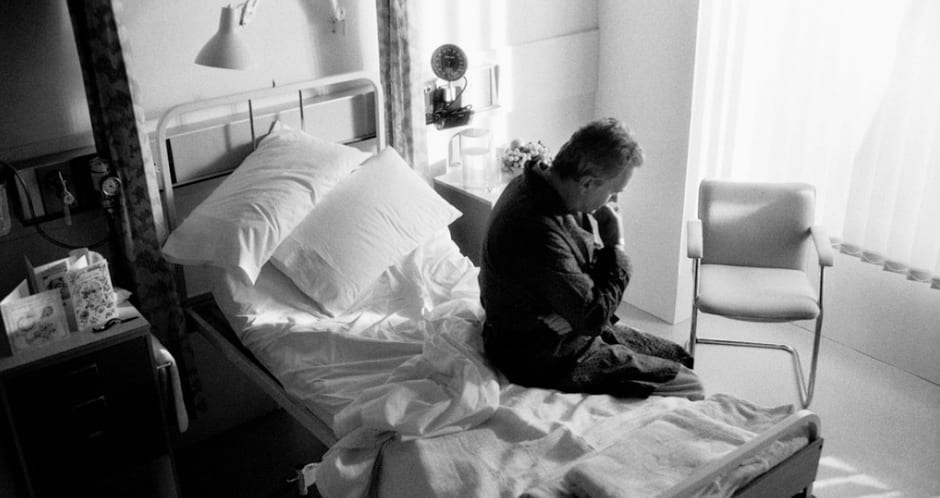
As the loved one of an older person – whether you are their son, daughter, niece, nephew, or just a friend or neighbour – it can be incredibly scary if they suddenly become ill or have a fall.
As people who care for them, we want them to recover and get better. But is that delaying the inevitable?
That’s not to say you shouldn’t help them and let them be. Not at all. Should something happen to a loved one it is imperative to seek medical help.
But there are cases when the doctor gives you the cold hard reality – they can undergo treatment and buy themselves more time, or the other option is to do nothing and try to remain comfortable.
It seems like an obvious choice for most children – of course they want their parent to undergo treatment and get better. But how many people picture treatment, isn’t always the case.
Treatment can help, yes, but the older person ends up with added time that severely compromises the quality of life for the elderly.
It’s also important to consider what the older person wants.
An interesting story was that of a man whose father developed a cirrhotic liver – where the only treatment option was a transplant.
“[My father] decided that a young person who has a family to support should make use of the scarce organ available for implant, rather than him at the age of 70,” the son said.
The father was cared for by a specialist through the last four years of life, with the objective of keeping him comfortable and in minimal pain. In the end, he passed away at home – as per his wishes – cared for by his loving wife.
What happened to the “loving wife” was the opposite of what the father experienced. She developed a chronic condition that did not respond well to medication.
While the children were all focused on her treatment, all she wanted to do was return to her hometown where the remainder of her relatives lived. She wanted to value the time she had left by spending it with people she loved.
“Even as we admitted her to a corporate hospital with top quality care, her focus was on her visitors and the conversations. She did not care for anything else,” said the son.
The doctors continued to provide the family with information about her condition, and they signed up each time an alternate course of action was advocated.
And after three weeks in the ICU of which the last three days were on a ventilator, she passed away.
This raises the question: at what point does treatment stop, and helping them be happy and comfortable begin? What does the older person want? and how does the wishes of the family factor into that?
While the children and younger family members scramble to get their loved one to medical appointments, tests, screening and treatments – you may find that the older people have already accepted that the end is near for them.
And instead of seeking treatments to prolong what may be a difficult and possibly painful condition – many older people wish to spend the remainder of their time with loved ones, eating food they like and doing simple things that they enjoy.
Instead of focusing on financial planning for retirement as the only way to fund the mounting hospital expenses for the aged, it might be humane to relook at conditions that come with age as those that must be managed with the best possible choices for preserving the quality of life.
What do you have to say? Comment, share and like below.


