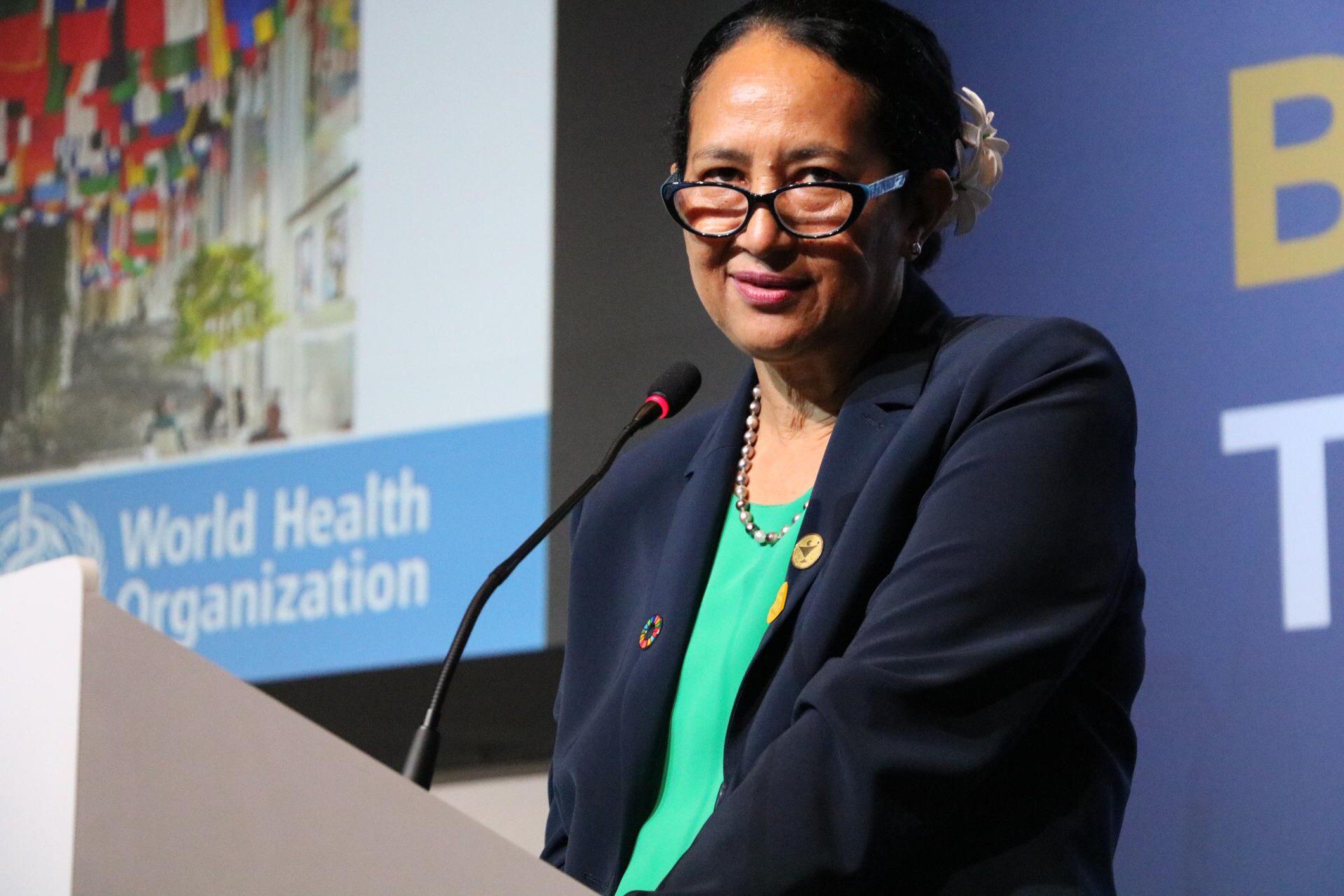
The World Health Organisation’s (WHO) Chief Nursing Officer (CNO) has called on wealthier nations to invest in their local workforces instead of just recruiting foreign workers, as this recruitment of workers could impact other countries’ healthcare systems.
Speaking at the Queen’s Nursing Institute’s (QNI) annual conference last week, CNO Elizabeth Iro warned national governments to be wary of “short-term band-aid” approaches to nursing workforce shortages and to instead “make the investment in nursing and grow your own workforce”.
“As you know, it takes three to four years to train a nurse, so I’m really all about growing your own,” Ms Iro said.
“Look to the long-term benefits. Look to retaining the nurses you have, and really to understand why nurses are leaving.”
Australia could lose up to half of its nursing workforce in the next three years as low wages, a lack of confidence in Government reforms and burdensome work expectations take their toll on the stretched healthcare sector.
The Government has been looking at getting more overseas workers into Australia to assist with current shortages, recently lifting Australia’s skilled migrant cap by 35,000 per year up to 195,000, and there is a chance this cohort could begin work without a full degree or qualification.
Chief Executive of the International Council of Nurses (ICN), Howard Catton, echoed Ms Iro’s concerns.
Mr Catton put the blame of workforce shortages onto wealthier nations due to their “lack of investment” in domestic workforces.
“In the UK, the last time that I looked, the reliance on foreign educated nurses is around 15% and that is not by accident,” Mr Catton said.
“That is the result of a decision to not educate enough nurses.”
Various nursing education initiatives have recently been introduced in Australia with the Victorian Government providing free nursing education to more than 10,000 students.
The Australian Bureau of Statistics (ABS) revealed there is an increasing number of foreign nurses in Australia, with over 40% of Australia’s Registered Nurses and Aged and Disabled Carers born overseas, according to the 2021 Census.
Of the 260,000 Registered Nurses counted by the 2021 Census, close to 40,000 have arrived in Australia since 2016, as the number of Australia’s foreign-born Nurses increased by 7% since 2011.
There is a risk that international recruitment harms the country of origin, particularly poorer countries where fewer resources and nurses are available, explained Ms Iro.
“We know there are already countries where there is a shortage of nurses,” Ms Iro said.
“An aggressive approach to recruitment from other countries goes a long way to depleting that staffing level even further.”
Mr Catton focused on the United Kingdom’s partnership with Nepal as one example where there is no “hard evidence” to show sending nurses overseas benefits a country like Nepal.
“I think there is much more that can be done to shine a light, bring forward the evidence on this, because, frankly, the recruitment practices we are seeing [in some high-income countries] is not a good look,” Mr Catton said.
“A lot of recruiters target people with advanced and specialist skills and the impact of even one or two of them going [to another country] can be catastrophic on the delivery of health services.”
Mr Catton said it is important that focused international recruitment can “offset the detrimental negative impacts” placed on any country sending qualified workers overseas.



There are tens of thousands of very experienced Nurses around Australia who were dumped for not taking the experimental C19 jabs. Many of them would return if the mandates were lifted. No need to recruit so many overseas staff or wait for junior trainees to gain experience. Sadly though, many of them will not return, due in part to the way they were treated, and also to the fact that they have had enough of the stress and pressures of Nursing.
Given that the jabs have been proven and declared not to be able to prevent transmission of the virus, it is ludicrous that the mandates continue. It would seem to merely be a punitive measure now to refuse to bring these nurses back, sadly.