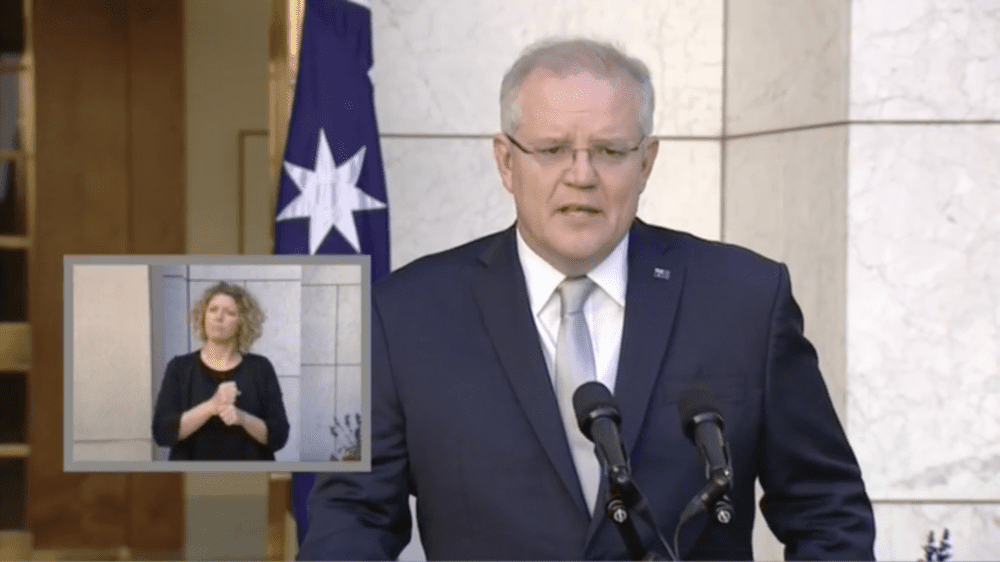
The prime minister has unveiled a raft of new restrictions on Australians in an effort to stem the spread of coronavirus, including tougher measures for aged care facilities.
The following visits and staff will continue to be banned from aged care facilities:
Aged-care facilities must keep aged care visits short, and visits will be limited to two at any one time.
“Visits should be conducted in a resident’s room, outdoors or in a specific area designated by the facility, rather than communal areas where the risk of transmission to other residents is greater,” Mr Morrison said.
No large gatherings or visits by large groups will be permitted. Social distancing measures must be observed.
Mr Morrison appeared emotional as he said he “totally understands” people will want to see their loved ones at the end of their life, and exceptions can be made for end of life care recipients. Mr Morrison’s father only passed away in January.
“In cases of end of life, I know that people will want to see their elderly parents or relatives or others. I totally understand that. Aged care facilities will have the discretion to put in very strict arrangements to enable people to visit their loved ones if that is the situation that that resident finds themselves in,” Mr Morrison said.
No schools of any sort should be visiting aged care facilities, Mr Morrison said.
“No school groups of any size should be allowed to visit aged care facilities,” the prime minister said.
“Children aged 16 years or less should be visiting (aged care facilities) only by exception,” he said.
“Kids won’t necessarily follow the hygiene measures all the time like adults will, any parent will understand that, but also children can be asymptomatic and so there may be no knowledge of whether the child has been exposed to the virus or has the virus or not.”
Around 20,000 international student nurses will be made available to help support health efforts.
A ban has been placed on travelling overseas.
Mr Morrison announced a ban on non-essential gatherings of more than 100 people in indoor areas. The outdoor gathering limit of 500 still applies.
Mr Morrison said 80,000 coronavirus tests have been completed.
Mr Morrison said hoarding of household items and food must stop.
“Stop doing it. It’s ridiculous! It’s un-Australian, and it must stop,” he said.
Mr Morrison said rumours of a lockdown are false.
“Don’t believe it – it’s rubbish,” Mr Morrison.
“There’s a lot of ridiculous stuff that’s circulating.”


