



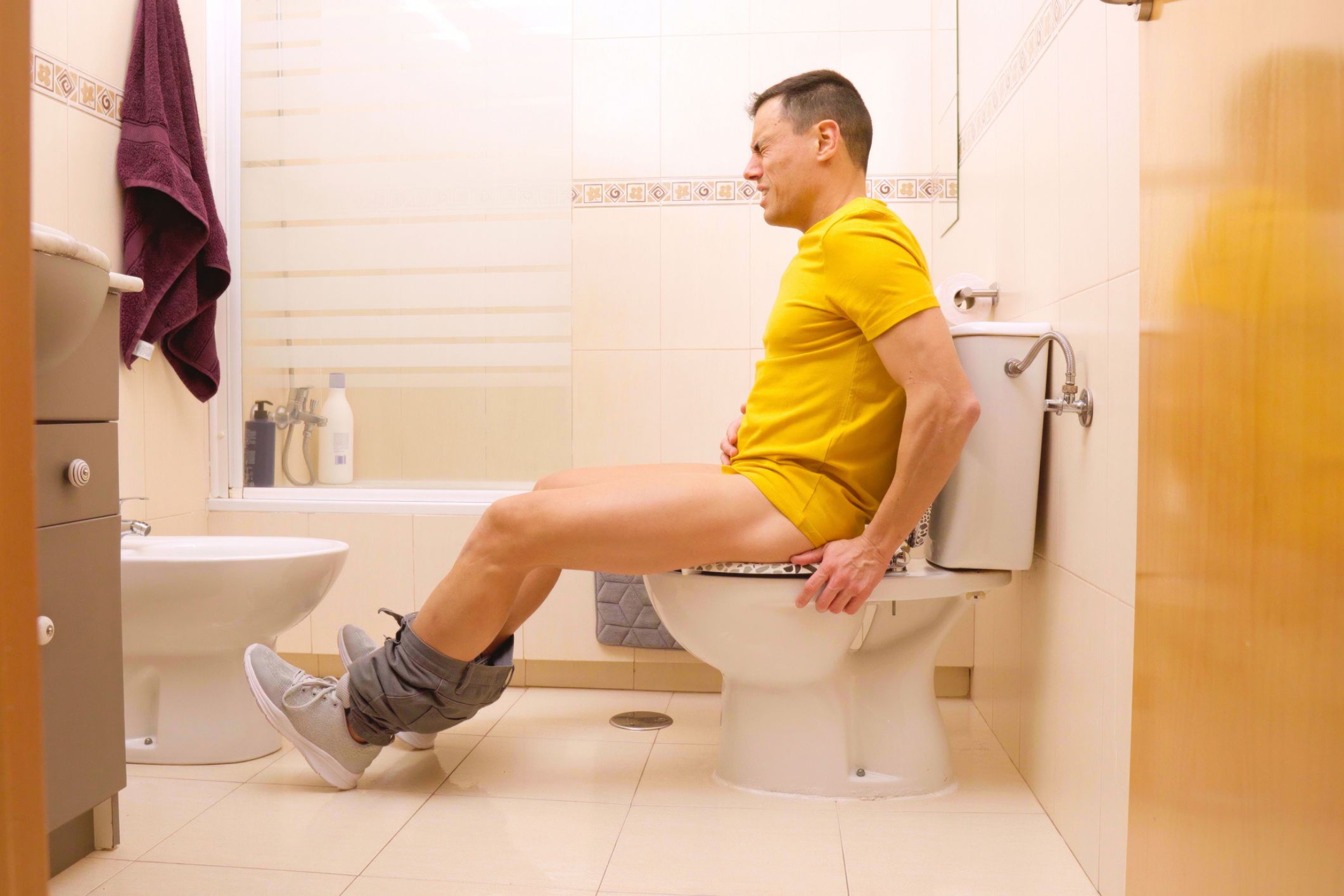
The humble toilet seems like the least likely setting for drama. Yet throughout history, it has claimed kings, toppled celebrities and served as the scene of untimely deaths ranging from the tragic to the downright bizarre. What is it about the smallest room that makes it, occasionally, the most dangerous?
At the heart of this peril lies the Valsalva manoeuvre – the act of forcibly exhaling against a closed airway while straining, such as during defecation. This puts pressure on your chest, which reduces blood flow back to the heart. For most people, it’s harmless. But for those with heart problems, this strain can lead to “defecation syncope” (fainting), irregular heart rhythms and even sudden death.
The vagus nerve is a key player here. It helps control your heart rate, and when it becomes overstimulated – through intense straining or pressure in the rectum – it can cause bradycardia (a dangerously slow heartbeat), low blood pressure and loss of consciousness. This makes defecation a surprisingly high-stakes event for those with underlying heart conditions.
Get your news from actual experts, straight to your inbox. Sign up to our daily newsletter to receive all The Conversation UK’s latest coverage of news and research, from politics and business to the arts and sciences.
Two of history’s most frequently cited examples of toilet-related deaths – Elvis Presley and King George II – offer sobering case studies in the hidden dangers of defecation.
Presley, aged just 42, was found collapsed on the bathroom floor of Graceland on August 16, 1977. Though fans speculated about drug overdose – and it’s worth noting that the full report is withheld until 2027 – the post-mortem narrative reveals a more complex and tragic medical picture.
Presley had suffered from chronic constipation, possibly exacerbated by a high-fat, low-fibre diet, prolonged opiate use and a “megacolon” – a pathologically enlarged colon. On the morning of his death, he was reportedly straining forcefully. The Valsalva manoeuvre may have triggered a fatal arrhythmia in a heart already compromised by years of prescription drug abuse and poor health.
A more aristocratic death occurred in 1760 when King George II of Great Britain died suddenly after visiting his privy. His physician, Dr Frank Nicholls, performed a rare royal autopsy and found that the king had suffered a ruptured thoracic aortic aneurysm – a ballooning of the body’s main artery.
The event probably occurred as George stood up from the toilet, at a moment when blood pressure fluctuated dramatically. Historians and physicians now believe that the effort of defecation or the sudden change in posture may have been the trigger.
The king’s heart was also notably diseased, with significant calcification of the aortic valve, further compounding the risks posed by even minor circulatory strain.
Deaths by drowning (and worse)
While fainting on the toilet poses risks today, historical toilet use came with even deadlier consequences, particularly for those using privies and cesspits before the advent of modern plumbing.
In the 18th and 19th centuries, many households relied on outdoor privies built over deep pits designed to collect human waste. These structures were often unstable, poorly maintained and perilously constructed.
Falling into a cesspit wasn’t just revolting, it could be deadly. People who lost their footing, especially in the dark or while drunk, sometimes drowned in the filth or were overcome by toxic gases like methane and hydrogen sulphide, which are released as waste breaks down.
Newspapers and coroners’ reports from the time reveal a grim pattern: people – especially children and the elderly – regularly died after falling into night soil pits. In his 1851 classic London Labour and the London Poor, Henry Mayhew vividly describes the deadly risks faced by night soil men, including suffocation by toxic cesspit gases.
These grim accidents helped drive 19th-century public health reforms and campaigns for better sewage infrastructure, eventually paving the way for the modern sewers we rely on today.
But the danger hasn’t disappeared. In some parts of the world, pit latrines are still common, and toilet-related falls and drownings still occur, particularly where facilities are poorly built or inadequately maintained.
The dangers of sitting too long
Modern habits add new risks. Bringing your smartphone to the toilet often means longer sitting times. This increases pressure on the rectal venous plexus (the network of veins around the rectum), raising the risk of haemorrhoids and anal fissures.
The “toilet scroll” also poses microbial dangers. Studies have found that phones used in the bathroom can carry harmful germs from the toilet to your hands – and eventually, your mouth. They can harbour E coli and other pathogens long after you’ve finished washing your hands.
There’s also the issue of toilet posture. The western-style sitting toilet, unlike the squatting toilets common in parts of Asia and Africa, places the rectum at an angle that makes defecation more effortful and hence more likely to provoke straining. This is why some people use footstools or “toilet squat platforms” to adjust their position and reduce the risk of complications.
Whether it’s sudden cardiac death, fainting and falls or microbial exposure, the toilet is not always the sanctuary we imagine. It’s a space where anatomy, privacy and risk intersect – often unnoticed until something goes terribly wrong.
So the next time nature calls, think twice before settling in with your phone. Sit smart, don’t strain and remember: even in the smallest room, your body could be handling some surprisingly high-stakes business.
Michelle Spear, Professor of Anatomy, University of Bristol
This article is republished from The Conversation under a Creative Commons license. Read the original article.


That’s interesting as I had an Uncle that died on the toilet, have heard of a number of people, that happening to.