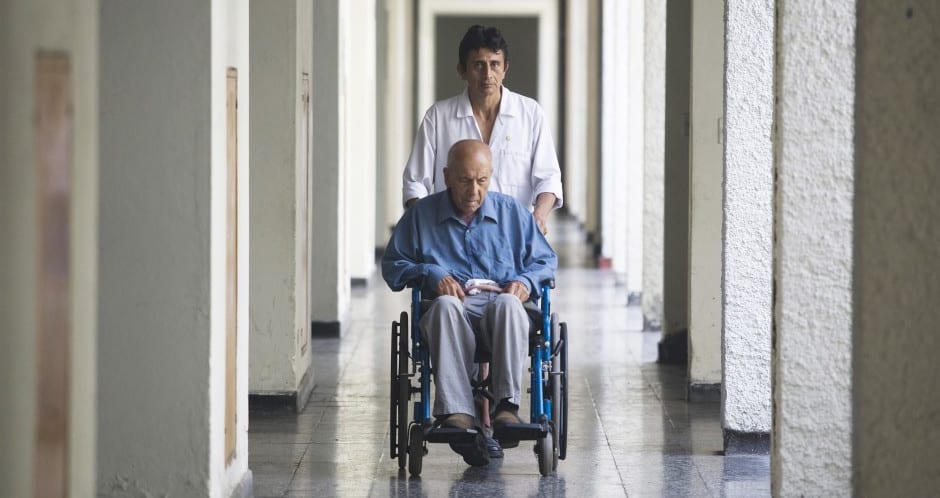
There are extra considerations that need to be considered when an older person is admitted to hospital.
Regardless of whether the reason for admission to hospital is due to a fall, complications from an existing condition or dementia related symptoms, the hope is always that the patient will recover enough to be able to return home.
That home can either be their own family home or that of an aged care facility.
If the move from the hospital to the home is poorly managed and planned, it can actually be quite harmful for the older person.
What people may not realise is that when an older person gets admitted into hospital, they can actually lose a substantial amount of muscle.
In as little as 12 hours, an older person admitted to hospital can lose the ability and confidence to stand unaided. Once lost, that muscle and confidence is hard to recover.
And it’s not ideal to send a person who could stand before they went to hospital, but is not unable to now, back home as it may deteriorate their health even more.
The reason this may occur is simply due to a lack of communication and cohesion – the hospital lack information about the patient, the is little communication between the hospital and the aged care or home care service.
That is why it is so vital to ensure that the transfer process is well communicated, that prioritises the needs of the patient.
There are a number of potential solutions to improve the transfer process.
The Transition Care Program (TCP) is generally for people over the age of 65 years who have been in hospital, but need more help to recover and time to make a decision about the best place for them to live in the longer term. The purpose of this partially government funded program is to help give older people an extended period of time to recover after discharge from hospital, the program usually lasts 12 weeks and maybe extended to 18 weeks.
A similar program in the UK, Intermediate Care, is playing a part in helping a patients regain their strength, after it was found that delayed transfers of care were causing older people to stay in a hospital bed longer than necessary.
The “stabilise and make safe” scheme saw seen 70% of people achieving full independence.
In the transfer to aged care, facility managers and managers of home care services play a key role in ensuring a transfer goes smoothly.
They need to be a part of every step – that includes at admission – during the hospital stay – and after discharge – to ensure they are assisted safely back into the community.
The National Institute for Health and Care Excellence have created a useful guide regarding this.
Making sure the clients/residents care plan is up to date.
By planning in advance with your clients or residents before they become unwell on what there wishes are should they become unwell.
This can be done in the form of an advance care directive.
Make sure the admitting team have all the information they need about the person. This might include:
Keep in touch with the hospital team and share any information that might affect discharge planning. Work with the discharge coordinator to help develop the discharge plan. Provide input and let them know if the person is not back to the function they were before admission.
When a resident has to be admitted to hospital, aged care staff can make sure the hospital has their care plans – this includes details of any preferred routines or communication and accessibility needs, and any medication the patient is taking.
Closely monitor a client when they return home after an extended admission. The Royal Australasian College of Physicians reported in 2013, that ‘unplanned readmissions effect up to 25% of acutely hospitalised older patients, and many may be potentially preventable’. Congestive Heart Failure patients are likely to experience multiple readmissions to hospital.
It’s important to remember the whole journey and always putting the elderly patient at the centre of this. Imagine being in their shoes and what they have to go through – from being moved from the community setting, to hospital, and back again – and to care for them accordingly.
What do you have to say? Comment, share and like below.


