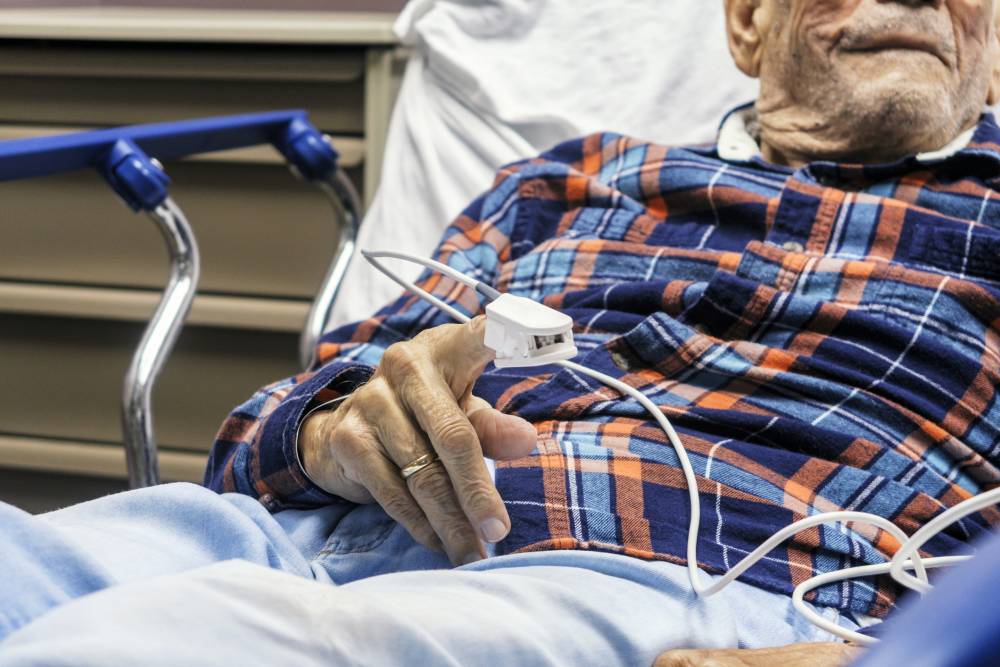
Australia has an ageing population – and yet our hospitals, where a high proportion of patients are elderly, are often unprepared to cope with the unique challenges of caring for seniors.
In 2017 in Australia, there were 3.8 million people aged 65 and over, or 15 per cent of the total population.
That number is expected to grow to 8.8 million by 2057, and will comprise 22 per cent of the population.
Not surprisingly, older people make up a significant share of hospital admissions.
In 2016-17, one in five emergency department presentations were for people aged 65 and over – that amounts to 1.6 million presentations.
For presentations among people aged between 65 and 84, the most common reason for admission was ‘Pain in throat and chest’.
For those aged 85 and over, the most common reason for admission was ‘Other symptoms and signs involving the nervous and musculoskeletal systems’. The second most common reason for admission was pneumonia
Because such a large share of hospital admissions is for seniors, and that share is growing, we must ask ourselves if hospitals are prepared to deal with the unique challenges that this older section of the population present.
For example, many hospital staff will not have the training and experience to appropriately care for people with a cognitive impairment, such as dementia.
Nurses may find it challenging managing hospital patients who are living with dementia, often due to their lack of training in this specialty area. Sometimes hospital staff have these patients sitting for hours in hospital corridors, or even wheel the bed out into common areas, so the patient can be observed by staff at all times.
This approach may seem an undignified way to care for the elderly. It doesn’t take the individual’s needs and desires into account. And it doesn’t require much imagination to appreciate it could cause some embarrassment for the patient. But often, due to the environment and set-up of the hospital ward, nurses have very little choice.
With hospital staff often not specifically trained to care for older patients, or only with minimal training, there are a number of things that can be done in hospitals to improve the care of older patients.



Myself i find it scary being at the age 83yrs . I know what its like to have a fall and end up in hospital one Doctor says one thing and another comes along and says something else . I said i and fine and i wish to go home . They let me out i caught a taxi home. I had another fall last week i was hurt no one was around i crawled myself up got home and cleaned my own wounds. I admit one is infected. I had no wish to go to a public hospital. I am not happy at all .I went into hospital with pnemonia i had a wonderful nurse she saw to all my treament. The hospital was bursting at the seams with sick people no beds .I was sent home by doctor next morning as no room. Still very sick. My own Doctor had to see to me for next 3 weeks with alot of medication.I would rather take my own life than be treated by hospital Doctors. Just because i am are aged.
A Brisbane trial has found that geriatrician-led medical outreach to residential aged care facilities (RACFs) improves quality of patient care and dramatically reduces preventable Emergency Department presentations and hospitalisations. http://bit.ly/2zsqT8x
Hospital is the last place an elderly person wants to be. Elderly patients deteriorate rapidly in this environment. Where nursing homes manage behaviours hospitals medicate aggressively. Hospitals are able to use drugs, antisycotics, that nursing homes can’t and that causes additional problems when they are returned to the nursing home.