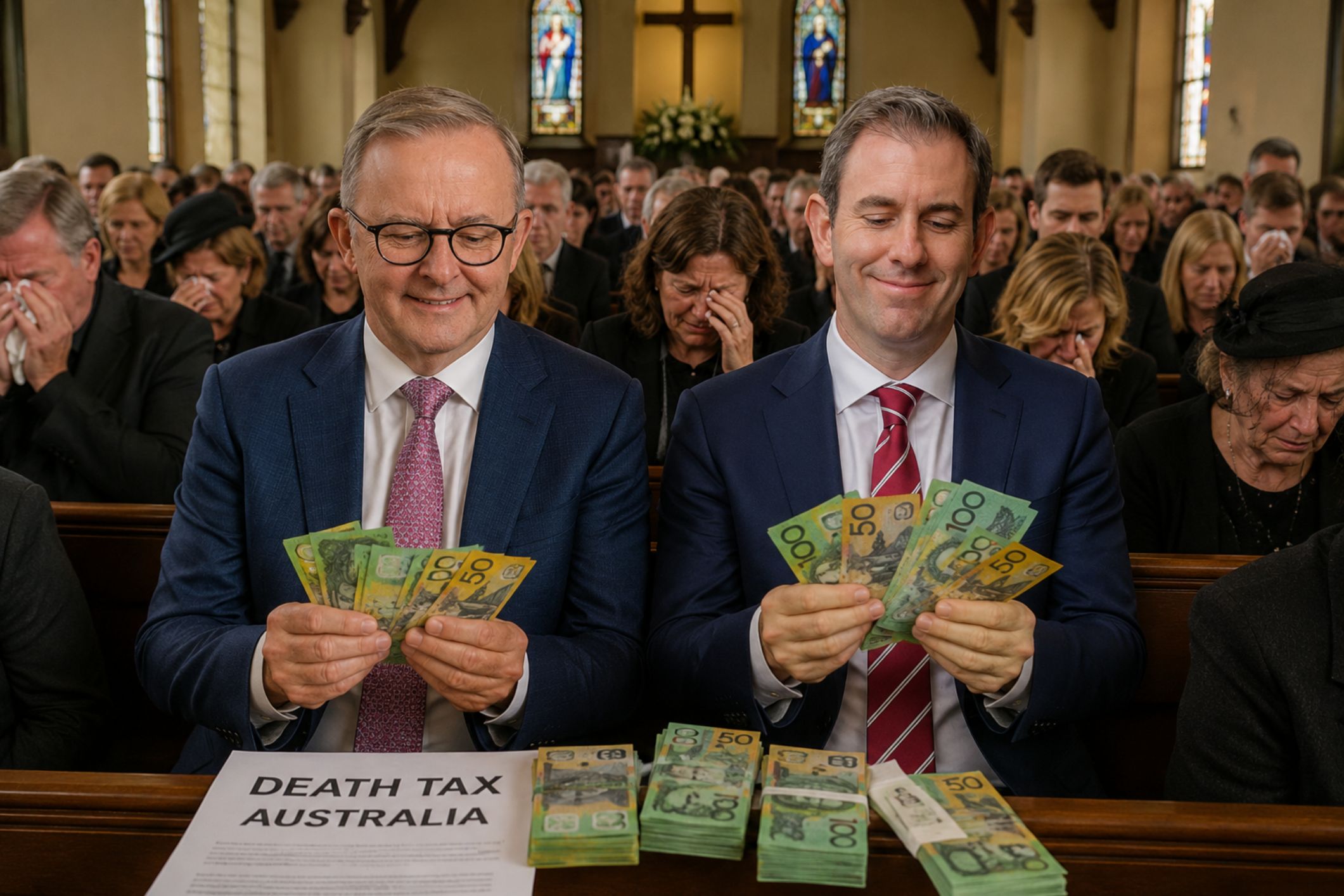
The Albanese government has a talent for telling Australians one thing and doing another.
Having broken its promise not to touch negative gearing or the capital gains tax discount, the government is now insisting with a straight face that its new tax on testamentary discretionary trusts is absolutely, definitely, categorically not a death tax.
You will forgive ordinary Australians for being a little sceptical.
Here is what is actually happening. From July 1, 2028, any testamentary discretionary trust established after that date will face a minimum 30 per cent tax rate on income.
These trusts, which sit inside the wills of everyday Australians, not just the wealthy, are used by families to protect inheritances from divorce, bankruptcy and creditors, and to distribute income tax-effectively after someone dies. Estate lawyers say they appear in roughly 90 per cent of wills they draft.
The government expects the changes to rake in around $40 billion over the next decade, which tells you something about just how narrowly targeted this measure really is.
Treasurer Jim Chalmers has waved away critics by pointing out that fixed testamentary trusts will remain exempt. What he is less forthcoming about is that fixed trusts offer considerably fewer protections. They lock beneficiaries into predetermined distributions, meaning a family cannot shield an inheritance from a child going through a messy divorce or a beneficiary dealing with bankruptcy. Legal experts describe them as a lesser instrument, and the government knows it.
Then there is the Prime Minister’s performance last weekend, which would be comical if the stakes were not so high. Speaking ito press yesterday, Anthony Albanese told reporters that testamentary trusts were “not included” in the reforms at all, flatly insisting the premise of journalists’ questions was “completely wrong.”
His office later explained he was referring only to pre-existing trusts already in operation before budget night, which is a rather significant distinction to omit. By the afternoon in Tasmania, the Prime Minister had changed tack entirely, pivoting to accusing “right-wing parties and some of their allies” of spreading misinformation. A clean pivot, if not a particularly convincing one.
Wealth transfer lawyers are far less sanguine about the government’s assurances than the government itself. The concern is not simply this single measure but the direction of travel.
Australia already taxes superannuation death benefits paid to non-dependants, imposes the new Division 296 tax on super balances above $3 million (which can generate a tax bill settled from a deceased person’s estate), and now proposes this minimum rate on discretionary trusts.
No single measure is labelled a death tax. Taken together, they function as precisely that, a series of levies triggered by the transfer of wealth at death.
The people most exposed are not the ultra-wealthy, who have the resources and advisers to restructure accordingly. They are retirees, surviving spouses caring for children, adults with disabilities who fall outside existing exemptions, and carers who cannot work.
Professionals advising these clients are in a difficult position given the government has promised consultation before legislating, leaving families in limbo about how to plan their estates for the next two years.
There are also unresolved questions that the government has not yet bothered to answer. Will the 30 per cent minimum rate apply to distributions made to minor children?
Currently, children receiving income from a testamentary discretionary trust are taxed at adult rates, a deliberate policy recognition that someone had to die for the trust to exist in the first place. Whether that protection survives remains unclear, and the silence from Treasury is not reassuring.
Chartered Accountants ANZ has noted that the number of testamentary trusts is expected to grow considerably as the baby boomer generation transfers an estimated $3.5 trillion to younger Australians over the coming decades.
The government has timed its intervention well, from its own revenue perspective.



I consider this article to be promoting generational selfishness, and highly partisan. One could argue that a Death Tax is the fairest way to raise revenue to fund essential government services, and most western democracies impose them. Boomers (of which I’m one) have had the best run in history. Taxing their wealth at death is painless. As for the broken promises argument, governments should not be elected with their hands tied. That is a recipe for a stagnant bureaucracy. If a majority of voters are so opposed to these policies, take it to the next election and vote accordingly. However, I guarantee no subsequent government will reverse them. They’ll be grateful the hard decision was made for them.
I’ve never heard so much bullshit in my life.
– 50% of Federal Government expenditure is wasted.
– The top 10% of taxpayers already pay 60% of all taxes.
– the only Western countries that are great success stories worth talking about are the ones with the lowest tax imposts
Our assets are our personal property and we should not be egregiously punished by our Government when we wish to pass on whatever we have when we die to our family and loved ones in a way which affords them the maximum protection from all of life’s threats.
If you want to give all your money to the Canberra bureaucracy, go for it.
I’ve never heard so much crap in my life.
– 50% of Federal Government expenditure is wasted.
– The top 10% of taxpayers already pay 60% of all taxes.
– the only Western countries that are great success stories worth talking about are the ones with the lowest tax imposts
Our assets are our personal property and we should not be egregiously punished by our Government when we wish to pass on whatever we have when we die to our family and loved ones in a way which affords them the maximum protection from all of life’s threats.
If you want to give all your money to the Canberra bureaucracy, go for it.
To the Editor.
I posted a comment about the above article criticising it as partisan and my reasons why I thought that was so. It was relevant opinion (as was your article), and totally inoffensive.
I saw it on the reply page after I had posted it with a note saying it would be reviewed before inclusion.
Could I respectfully ask why you have (apparently) chosen to reject my post.
If you are going to stray into partisan political comment, I suggest you have an obligation to allow free speech which doesn’t coincide with your own views.
Your reply (to my email address) regarding this matter would be appreciated.
the Albanese or whichever comes into power this election,should have funeral expenses of pensioner should and must be paid and claimed by next of kin as they have spent a lot on that person.
Really do not understand death tax, it should be for very very rich people who leave tons of money,wealth and assets for their children etc.Yes they should be taxed immediately no way about it.
we poor pensioners live alone should be paid for all expenses rather then tax our children who are facing difficult times.
Please take action.
Thanks
A>dsouza