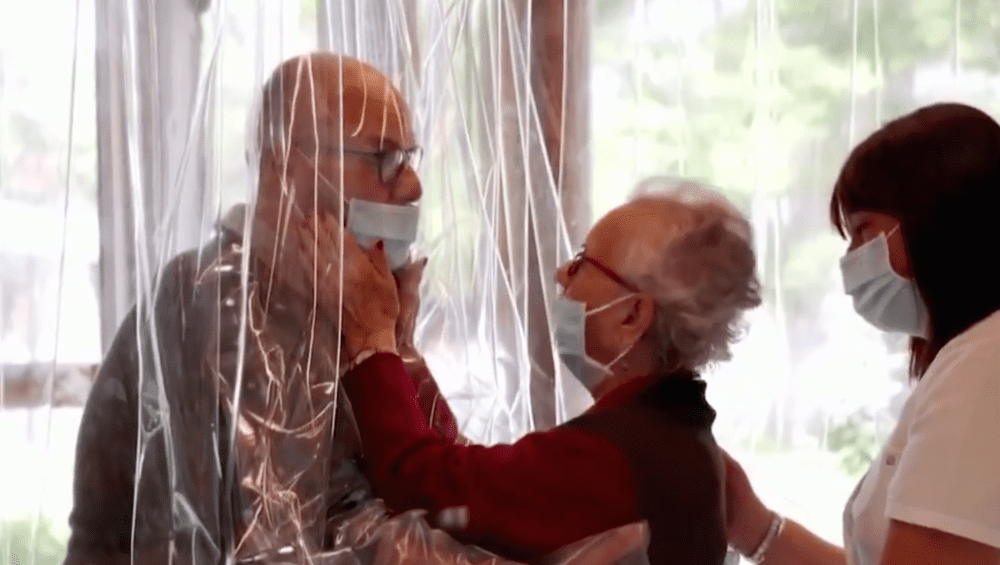
In Italy, one of the countries most affected by COVID-19, aged care workers have put in specially designed spaces called “hug rooms”, so residents can touch with their loved ones for the first time in months.
Hug rooms at the Domenico Sartor home in Castelfranco, Veneto include glass walls with special gloved holes for hand holding, and a flexible plastic space for full hugs. They allow residents and their visitors to embrace in a COVID-safe way.
HUG OVERDOSE: After over six months of going without human contact, elderly care home residents are beaming with happiness after getting to embrace their relatives again thanks to a special COVID-safe ‘hug room’ in northern Italy. https://t.co/SFCMP7P2cE pic.twitter.com/0Exx8rttL5
— ABC News (@ABC) November 12, 2020
Visitors to the hug room, or ‘stanza degli abbracci’, are required to pass several health and hygiene protocols before they can enter the space. Once passed, they can enter the space in small groups, put their arms through specially designed gloves attached to a see-through plastic curtain, and then cuddle and hold their loved one.
With plenty of tears and smiles all around, this is one initiative that has been a rousing success.
#Italy
The Hug Room allows guests and their families to embrace each other, while remaining separate and protected from the contagious disease, still guaranteeing physical contact for mental and emotional wellbeing.📷 @pcruciatti
#AFP pic.twitter.com/jNjTzWk0X7— AFP Photo (@AFPphoto) November 11, 2020
“I was finally able to hug my daughter again. After weeks of video calls, it seemed like a mirage. It was a contact that I had been missing for too long,” a resident said, tearily speaking to Italian news company TGcom24.
Paolo Polidori, Deputy Mayor of Trieste, Italy, has recommended that the hug room be considered in homes all over Europe as a second wave makes its way around the continent, isolating people once again.
“For months, relatives have not been able to visit their loved ones and who knows how long this will continue for,” he said.
“We will work to find funds, in collaboration with the health agency, the government and all the parties involved to give relief to our loved ones as they find themselves in a devastating situation.”


