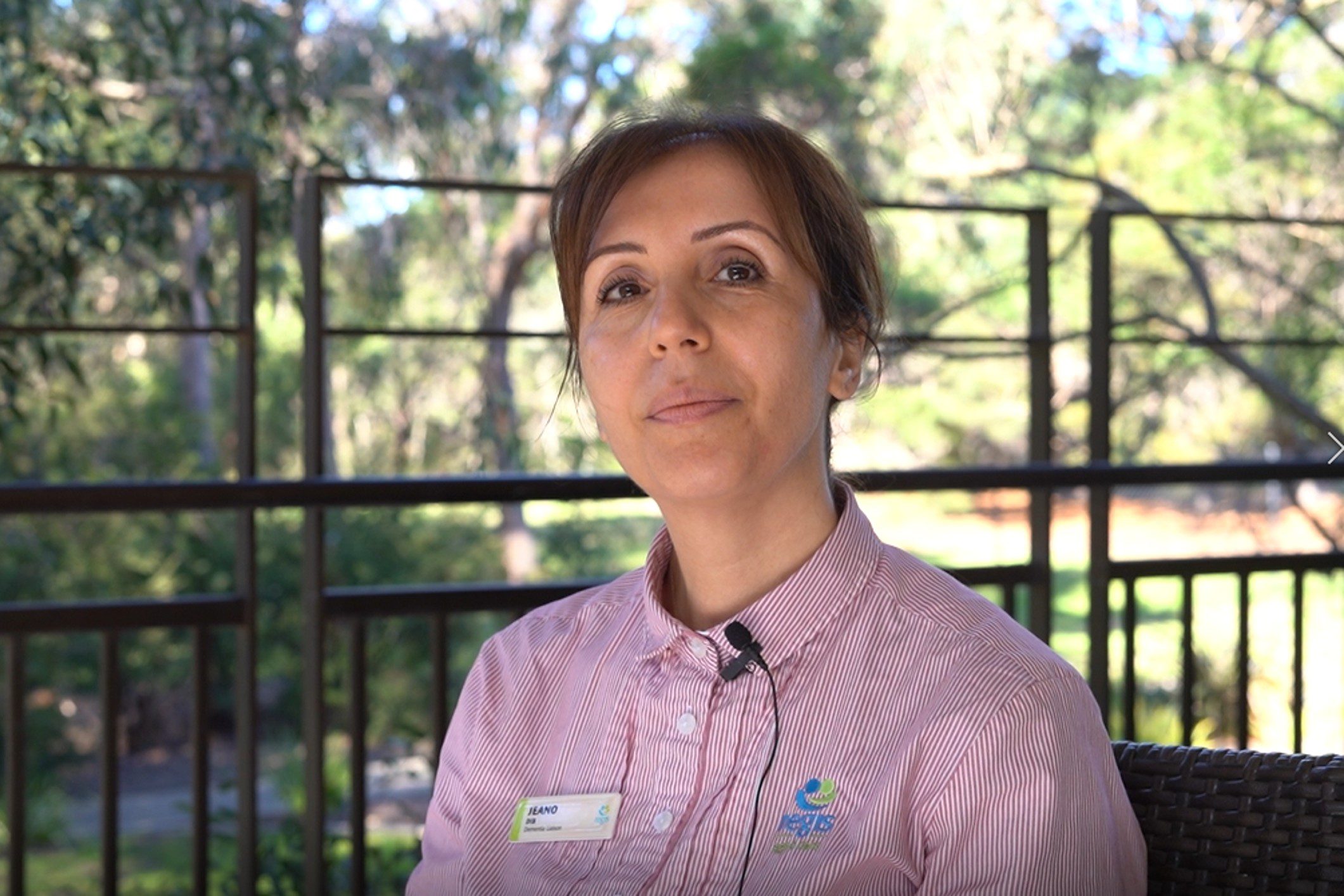
Jeano Dib, Lifestyle Assistant and Dementia Liaison at Regis Aged Care facility in Blackburn, Victoria had a change of career when she realised she wanted to help older people and fell in love with helping patients living with dementia.
Eight years ago, Ms Dib left her job in hospitality and started taking a few shifts in the Regis Blackburn facility’s Medical Support Unit. She found she had a soft spot for the residents living with dementia in the Memory Support Unit.
Reflecting on her time working with people with dementia during this Dementia Action Week, running from September 19 – 25, Ms Dib can’t imagine doing anything else.
“I feel happy when I see the residents happy… I feel a connection with them and I feel for them,” she said.
“I really like it and enjoy coming to work.”
Ms Dib also organises activities for patients living in the Memory Support Unit, which encourages good mental health and offers a chance for socialisation.
“It’s not good to be stuck in a room watching TV all day or doing nothing,” she said.
“When I see [the dementia residents] happy, dancing, singing, interacting well with others, and doing what they like, it makes my day.
“You go with what their interests are and keep them comfortable, and it makes me feel happy to come to work every morning.”
An advocate of aged care staff engaging with further specialised training for dementia, Ms Dib said education can offer a better understanding of the condition, which makes caring for people with dementia more efficient.
Ms Dib added that training can provide the answers to the different behaviours of people with dementia and what can cause these behaviours to arise.
Having that understanding of dementia can help you assist people with dementia who may be acting strangely, for example, due to pain they are experiencing but are unable to tell you about.
“If you are not sure [how to help], ask the nurse or at least try to tell someone, don’t just ignore it because they are human beings and have feelings,” said Ms Dib.
Ms Dib takes pride in treating her patients with dignity and respect, acknowledging dementia is a condition that could affect anyone.
“One day that could be me, and that’s how I look at it,” she said.


