A former nurse and hospital executive says he watched safeguards fail his father during a long hospital stay. He argues the problem isn’t what most people assume.
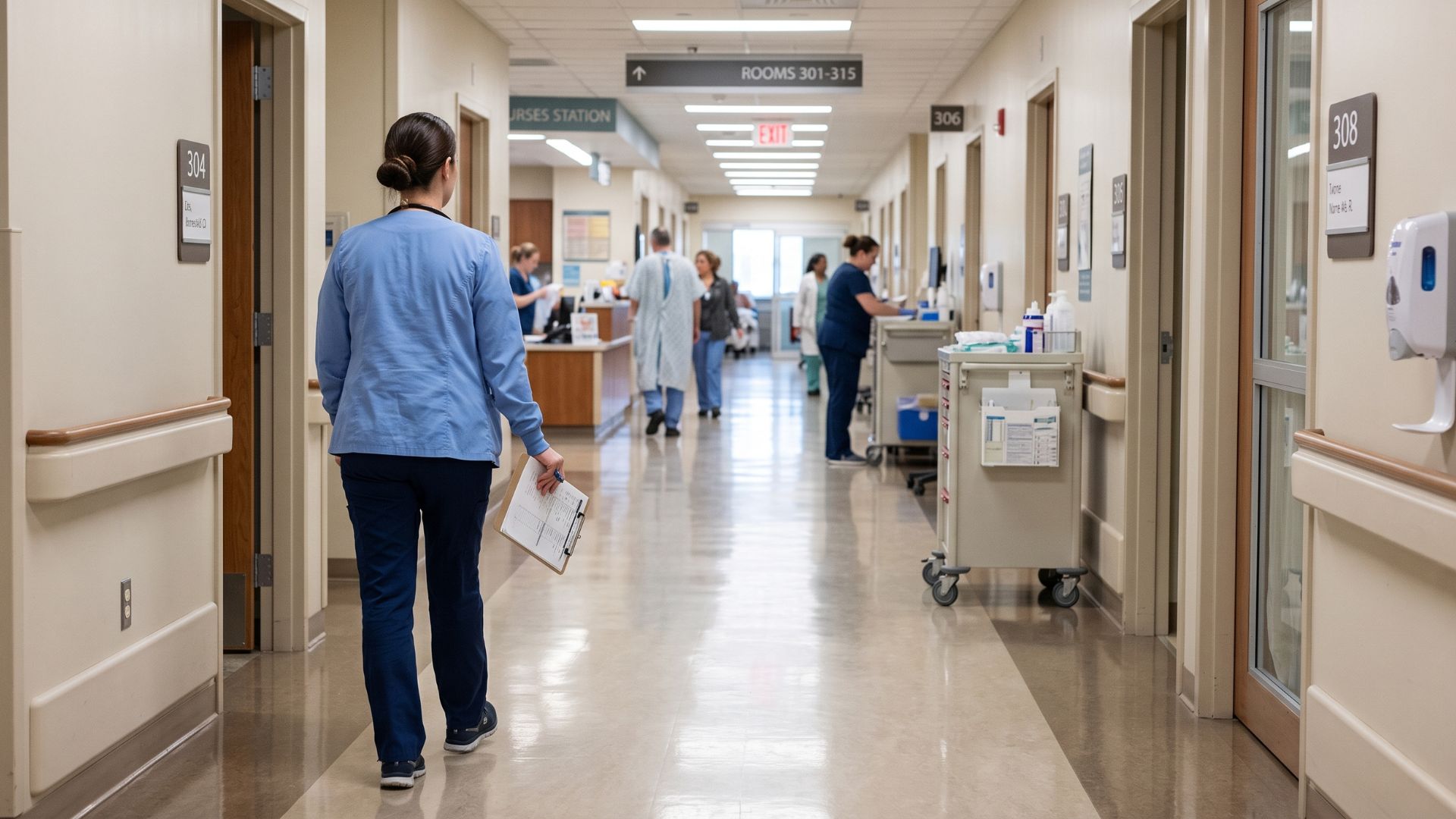
Dale Wakefield knows what a hospital is supposed to look like. He trained as a registered nurse, has run hospitals and large health organisations, and has read the NSW Health policies closely. When his father, who is in his 70s, spent weeks in hospital, he says he noticed what was going wrong.
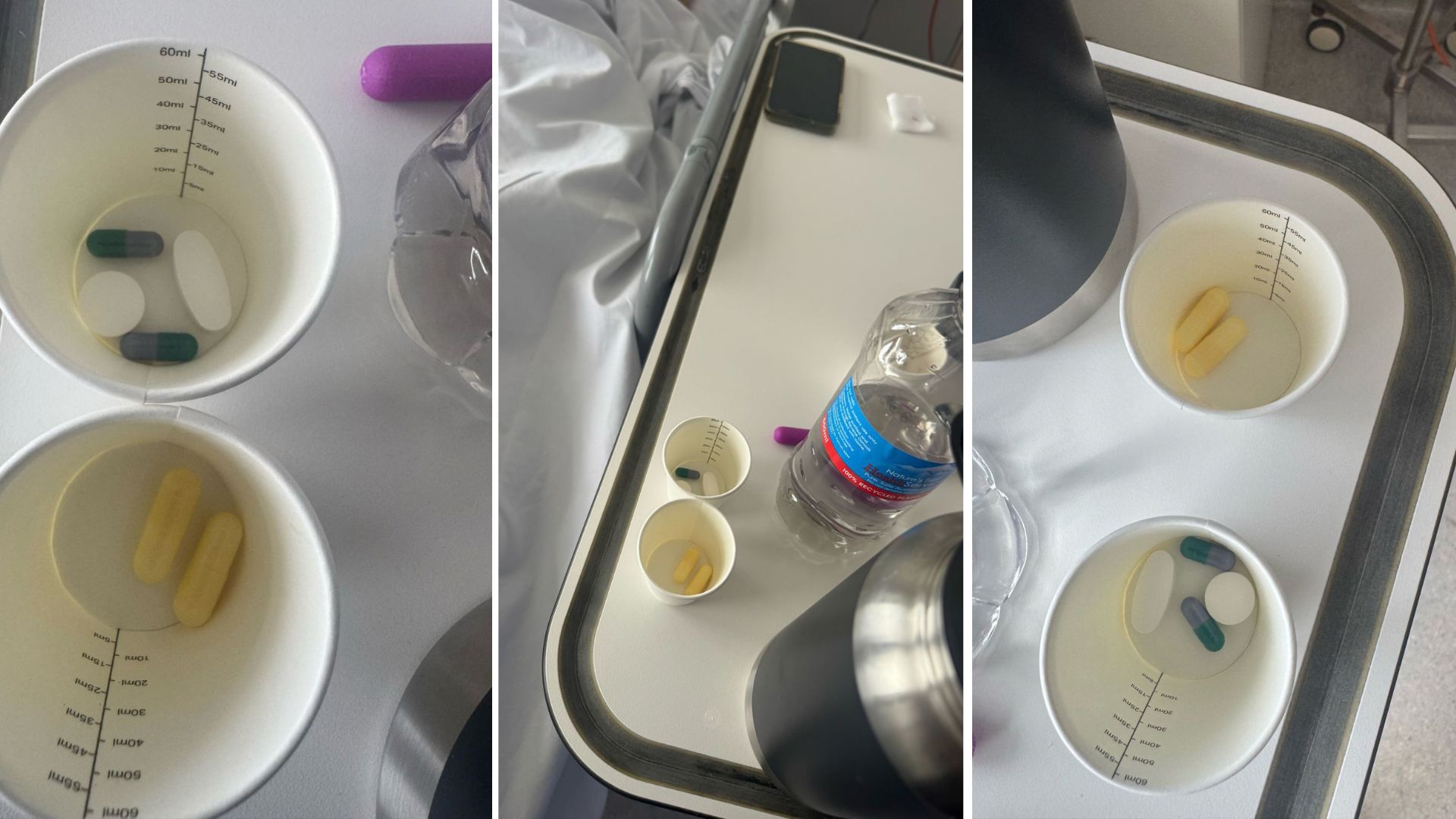
“Almost every day, nurses would walk in and just dump pills on his bedside table, and he wasn’t in a medical condition where he could actually help himself,” he says.
Some afternoons, he says, he would arrive to find the morning’s tablets still there. More than once, an afternoon nurse told him his father still needed to take them.
“I’m like, well, did you give those to him? She’s like, no, no, the morning nurse would have left it there for him. I’m like, you can’t do that. You don’t know what they are. You don’t know who put them there. You’re putting your registration or licence on the line.”
He says he put the tablets in the bin, then asked whether his father had had his morning medication. The chart said yes.
“I’m like, how can he have had them when they’re sitting on the table and they’re now in the bin?”
Wakefield says he raised it with a unit manager, who he describes as lovely and candid. “Her response was basically, yeah, that’s an issue. It happens a bit, I’ll let the educator know.”
To Wakefield, that response misses the point. “It’s not that they don’t know they shouldn’t be doing it. No one’s accountable for it.”
He says the manager also told him that staff can’t be pulled up on it any more, because the hospital struggles to fill shifts and anyone challenged might stop taking them. “And I’m like, well, that’s a vicious circle, isn’t it? You can’t pull up staff for doing the wrong thing to make them accountable, because they might leave, putting you in a worse position.”
He says he took his photographs of his father’s medication to the hospital’s complaints department. Weeks later he asked whether any incident had been logged on the day he reported it. “The answer was, no.”
There’s little research on this specific practice. The closest is a 2015 study in which researchers observed more than 7,000 doses given at two Sydney teaching hospitals.
Errors occurred in more than a quarter, and none had an incident report. Most were procedural, such as skipped ID checks, and the study did not look at tablets left at the bedside, so it can’t say how common Wakefield’s experience is.
But anecdotally evidence suggests that this is not an isolated experience.
Wakefield also revealed that medication going unadministered and left by his father’s bedside happened constantly throughout his father’s stay, even after bringing the problem to light.
Wakefield doesn’t accept that holding staff to account will drive them away. He thinks it’s backwards.
“I could argue and show a fair bit of research that says, let’s say I went into that hospital to become a manager, and I replaced someone that was like that. And I did it in the right way, and I said, this is the standard that I accept, this is the culture that I’m curating. Here’s how we’re helping people, this is the vision for the ward that I’m managing. I would argue that I would actually attract more people because of that positive culture, quality stance than I would deter.”
In his view, people who care want to work somewhere that cares. “I’d actually have the better people in the hospital saying, I actually want to work with that guy on that ward because of the standards they uphold.”
A ward without standards, he says, goes the other way. “I actually think it creates quite a bit of apathy when you don’t have standards, and then it’s a spiral, really, like a race to the bottom in standards. A self-fulfilling prophecy.”
He remembers a time when the unit manager was someone you were a little afraid of, and says that firmness was part of how he learned. “When you’re dealing with people’s lives, you should be pretty damn firm.”
What he’s calling for, he says, is someone willing to decide what’s acceptable.
“It takes a particularly strong leader of either a unit, a hospital, a ward, to actually put a flag in and say that we’re not gonna stand for that, we’re gonna do this differently.” He puts the cause bluntly: “It’s just weak leadership for accountability.”
Wakefield says the pills were one example. He says his father was repeatedly served food his condition meant he shouldn’t eat, and that a nurse told him she wasn’t responsible for what the kitchen sent. “Of course you are, you work here, sort it out.”
He says physiotherapy kept arriving while his father was away for tests, then not coming back. When he asked someone to coordinate the timing, he says he was told the physios belonged to a different department.
The most serious failures, he says, were in monitoring. His father was admitted unwell with little fluid going in. Wakefield says the doctors’ notes asked for fluid balance monitoring, as NSW Health policy requires. “Days and days in a row, none of it was recorded. Zero, none.” He also says there was a prolonged gap in his father’s intravenous fluids.
He says his father’s observations stayed on the routine schedule despite signs he was getting sicker. “By the time they’d come back for the fourth or sixth hour check, too late, unconscious.” His father became critically ill and needed intensive care. He is now recovering at home, but Wakefield doesn’t expect him to be the same. “He’ll never drive again. He’ll always struggle with his cognitive impacts.”
Wakefield feels that this is a top-down problem. “That’s when an executive says, I’m not responsible either. And then everyone underneath me also believes they’re not responsible. I just look at the top, which is why I escalated the complaint.”
NSW Health’s complaints policy says complaints should be finalised within 35 days, although districts have told a parliamentary committee that complex ones often miss it. Wakefield says his wait has been about three months.
He describes the hospital sending him to the doctor, the doctor sending him back, meetings booked and cancelled, and calls from blocked numbers. “It literally feels like they’re trying not to talk to you about it.” He says the Minister he wrote to replied that the hospital was in “constant communication” with him. “Constant, yeah. The phone rings and then they hang up and it’s a blocked number and they record it as a phone call.”
He says he wasn’t looking for a fight.
“I’m not calling a lawyer. I’m not upset. I just want to know that you’ve heard what I’ve said and that you’re doing something about it. That’s it. When you can tell me that’s on a register somewhere that you’re gonna act on, I’ll walk away and stop bothering you.”
He has since taken the matter to the Health Care Complaints Commission, which received about 10,500 complaints in 2024-25, roughly the same as three years earlier. A 2022 parliamentary inquiry into rural and regional health found a culture of fear around speaking out and a lack of transparency and accountability, though it examined a different part of the system.
Wakefield expects the objection that wards are under-resourced, and says it’s a cover.
“There’s no ratio on earth, even if you had 100 patients to look after, that you would then just dump the pill there and move on to the next one.” A reasonable practitioner, he says, waits with the patient. “If that meant you didn’t get to everybody that day, then that becomes the issue around staffing.” Nurses who blame ratios for poor practice, he adds, “are only shooting themselves in the foot.”
The nurses’ union describes different pressures. It says many wards are overstretched after long-standing shortfalls. Minimum ratios for general wards, one nurse to four patients by day and one to seven overnight, are only now being rolled out, and recruitment is reportedly yet to begin.
Patients are mostly satisfied: in the Bureau of Health Information’s 2025 survey, 92% rated their care as good or very good. A satisfaction survey can’t capture what patients and families never see, such as a tablet signed for and never swallowed.
Wakefield’s father came home changed, and how he got there is hard to hear. How common it is, nobody can say. The things Wakefield describes, observations not recorded, sign-offs that didn’t match reality, an incident never logged, are exactly the things that leave the least trace in the data.
What the available research does show are documented gaps in recording, reporting and escalation in NSW settings. Wakefield’s view is that these are symptoms of a deeper problem. “No-one’s responsible, no-one’s accountable,” he says.
His remedy isn’t punishment for its own sake, it’s a leader who sets a standard, tells good nurses their work matters, and trusts that people want to work somewhere that cares.
Disclosure: Dale Wakefield has an active complaint with the NSW Health Care Complaints Commission about his father’s care, and a separate complaint with the hospital. He is a party to the matter, and the hospital is not named in this article.


Absolutely — if you’re looking to post this as a response/comment, I’d keep the strength of what you experienced but make it a little more polished and measured:
I completely agree with this, having recently experienced something very similar when my father-in-law was hospitalised.
I witnessed concerning issues not only with medications, but also with the provision of basic care such as food and fluids. On more than one occasion, I found his meal tray positioned so high that he couldn’t see what had been served, let alone reach it or get himself a drink. He was not the only person in his four-bed room experiencing this.
I am not unreasonable, and I completely understand that throughout a busy day things can be dropped or spilled on the floor. What I cannot accept is the level of filth I witnessed, it certainly wasn’t the result of something that had happened that day. The grime was so built up that it appeared you would need a paint scraper to remove it.
I lodged a complaint and asked the complaints liaison officer some very important questions: How many hospital-acquired infections could potentially be attributed to inadequate environmental cleaning? How many hospital stays are prolonged because older people are not receiving basic care, including adequate access to food and fluids?
These are not unreasonable expectations. They are basic human needs and fundamental aspects of safe, dignified care.
I believe that if we continue to walk past what we know is unacceptable, the situation will only continue to deteriorate. We need to speak up when we see these things, not to blame individuals, but to ensure that our health system remains safe, clean and focused on providing people with the basic care and dignity they deserve.
I’m unsure how this matter in one hospital is turned into a story about ‘the system’. That’s a ridiculous extension and proposition. Yes, there are issues in this story but don’t drag the system down.
Hi Andrew. As an educator, I can verify that I have observed these problems across a variety of healthcare systems and platforms. Sadly, there have been slow and permanent changes in nursing culture. Its great that we can stand in unison as a profession, but it is also helps us become better at our profession when we recognise flaws and work out ways to overcome them.
Thankyou Dale for highlighting this extremely urgent issue. Failure to take accountability is now deeply embedded within our nursing culture. It is true that there are resourcing issues. But poor practices are poor practices. As a nursing educator, I am saddened by the frequency that I have observed poor, indeed sometimes unethical nursing practices conducted by very well trained nurses who do know better, but choose careless options. This is clearly illustrated by the fact that the commission receives more than ten thousand complaints a year. I agree, I hope that research can explore the root causes and come up with some inventive solutions to get the nursing profession back to working with pride.
This is SO true,
Sadly, this is the same in the Age Care Homes!
If you ask for protocols to be actioned according to codes of care etc your family member is punished.
Sadly death of the loved one was the only way out of this trap!
Nurses are working from 0700 to 2200. Some Nurses are working this shift configuration for days in a row. They are not replacing sick leave to save money and on some shifts there are not enough Nurses. Junior Doctors are working even harder. I was a patient in a public hospital in May, 26. The communal shower had thick dust around the exhaust duct and there was mould and old ECG dots and muck on the floor of the shower. The food was inedible at times. I was in a private hospital in Melbourne run by the same CEO who used to run the public hospital in July. Everything was clean and the food was gourmet. If you want deluxe care take out gold private health insurance and put your Dad in a private hospital. Every hospital is different so read the Google reviews and if it looks bad don’t go there. I would not put our dog in some public hospitals. He might get his morning kibble but he definitely would not get his afternoon walk.
Yet, try to reduce nurse shift times to 8 hour days instead of 12 hour days and all Hell breaks loose. They’d have to work more days in a week to work the same number of hours. The excuse given is that there’s not enough time for handover on 8 hour shifts. After 40 years of working 8 hour shifts, so plenty of experience, that is absolute nonsense.
My experience on the question of drugs is that my father was given sleeping tablets every morning of his hospital stay, not one of which was prescribed or signed for. They claimed that he had suffered a stroke, because he was constantly ‘sleepy’. When caught in the act, they admitted to doing it, saying ‘Do you know how hard it is to care for someone like that?’. He was also actively deprived of IV fluids, which were set up but then ‘stopped’, before the hospital claimed that he was suffering from multiple organ failure because of having no fluid (urine ) output. A complaint to the HCCC about this and several other issues like falsified records brought the following response: ‘Sure, the records are incorrect and inaccurate, but if they had falsified the records then they would be guilty of professional misconduct, so therefore the records are not false’. And it is said that this kind of thing does not indicate systemic failure? Really? One of the complaints was that they had set up a Not for Resuscitation Order, saying that they had met with me and I had agreed to that. Had never set eyes on any of the persons involved, and distinctly told them that he was FOR Resuscitation.
I completely agree with this.
I’m a nurse and have worked in acute care and now in aged care, for many years in both sectors.
As a nurse, it is our responsibility to ensure patients and residents take their medication or document refusals. If we sign it as administered, then it should have been administered.
I noticed the same problem when my elderly father was in hospital, unable to take his medications independently. If it wasn’t for family members, he wouldn’t have had them.
There is definitely a culture of no accountability in the workforce, not just in health care but in other sectors as well. I’ve noticed a lot of people just don’t seem to care anymore.
This is a disturbing trend to see and sad that people don’t value their jobs enough to take pride or accountability over their actions.
I do know that at the aged care facility where I work, incidents are logged for missed medications and that our policy is that medications are not to be left unattended. Yes, aged care is a little different from acute care, but i don’t see why these principles are not applied elsewhere.
Health Care is a difficult sector to work in and presents many challenges for staff, especially when most days we are working multiple short staffed. But that doesn’t mean we should not be accountable for our actions.
I really hope the culture changes.
This morning I made a complaint to the doctor in charge of my husband’s case that the nurse last night and, I think, the night before simply left out one of the medications he was due to receive. The medications she handed him in the cup did not include the one he required above all.
As I was there last night I queried why it was missing. No real answer but it was found and added to the cup. The doctor today checked the records which showed it had been administered both nights. My husband’s behaviour over the previous night showed otherwise and, of course, it was administered the night I was there as I specifically checked for it.
That a nurse can countermand a doctor’s prescription is appalling and that the record can purport to show that the drug was administered is equally so. On a practical level it means that I now have to go back to the hospital every evening to supervise the evening medication.
And yes, we’ve also had the issues mentioned by other responders.
Firstly Dale,
I am so terribly sorry for what you and your family have experienced. It really is not good enough on any level. I am glad you have escalated this, and I encourage families to formalise their complaints, in order to affect change. I would say, however, that as a long term Registered Nurse (retired midwife), these issues are, in many cases, the result of a significant problem with the conditions nurses are expected to work under. Most hospitals are heavily bureaucratised which, in my opinion, contributes to many of the communication problems. Institutions are often “top heavy” and private hospitals in particular work around ratios that are not the same as public hospitals and not safe. They consistently manipulate numbers in order to maximise profit, and most nurses I know feel frustrated and as if they have no voice and no means to facilitate change. Public hospitals face constant budget constraints and the people making the decisions, rarely have any idea or perhaps genuinely care about the situation on the wards. Nurses voices are largely ignored. As nurses, many of us share the concerns you raise, we know the care for our patients is coming a poor second to budget or profit. It is not so much about “firm management”, it is actually often the supportive managers knowing how difficult it is for their staff, and stepping in to help with a patient who has trouble taking meds, or other time consuming tasks, so the staff can continue with their other 6 patients who also need to get to their medications , get to OT, X-ray, dialysis, physiotherapy and so on. Exceptional Managers escalate to upper management and ask for help, a request which often falls on deaf ears. They in turn, are expected to fill in so much paperwork and attend so many meetings they often are barely on the ward! In our ward, at times our lovely ward clerk steps in to chat to a distressed patient or family member, or make them a cup of tea – those gestures, teamwork, are what make our team work. We all pull together and are doing the best we can, in a pretty broken system. I am furious somedays, particularly when I have pooled and the care on some wards is really shoddy, so I do the best I can, whilst understanding that lots of nurses have “checked out” – they have been unsupported by their organisations for so long, they are burnt out and have carer fatigue. Whilst this does not excuse in any way the experience your Father suffered, I think we need to address the root causes rather than merely the symptom. Sending thoughts and prayers for your Father and your family. x
Having had a recent emergency public hospital experience I understand this all too well.
Loved the proposition that people who care want to work where people care.
Hate the use of ‘gonna’. Such slovenly English and apeing of American loses credibility for what should be very credible.
Are hospitals the last bastions to.l lose accountability. Lack of accountability has become the neoliberalistic norm for pretty much every other area of society.
It is likely to be any better in private.