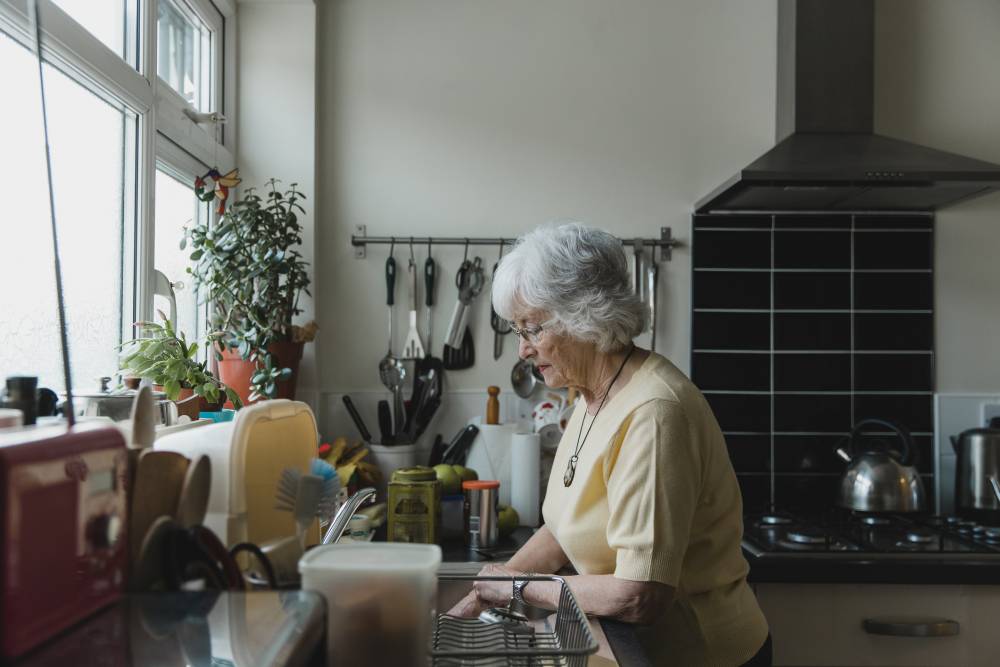
Gerontologist Dan Levitt is the executive director of Tabor Village. He champions a view of aged care in which residents have autonomy and control over their care, and he supports smaller, cluster-style aged care homes that feel like home, where residents can take part in preparing food, laundry and housekeeping. In this article, he discusses aged care in Canada, but there are important parallels with the Australian situation.
Before COVID-19, life inside aged care centres was pretty satisfying. A day filled with routines that made you feel good.
Then in March, it all changed. Everyone, except employees, were banned from entering. Outbreaks started occurring, and people died. Staff members were on sick leave because they had symptoms. Different people were now caring for seniors. Isolated in their bedrooms for days, weeks and months at a time.
This situation in aged care needs to change and cannot go on indefinitely. Simply because a person lives in assisted living or long-term care should not mean they give up their human rights. Seniors living in care are labelled as “residents” — a label that comes with a disproportionate amount of loss of personhood. With COVID-19, this segment of the population is more vulnerable and requires safety measures to protect them.
What is needed? To be able to decide for themselves (or their substitute decision-maker) if they wish to continue residing in the residence under such restricted conditions. Timely access to medical and hospital care. Regular communication with family members by phone, teleconferencing, and, most important, in-person visits. The option to choose a range of advance care planning interventions.
The spotlight of the pandemic has told the story of residents living in care — many who do not have a voice. We as a society must do everything to change the aging journey. Just because a senior lives in care does not mean their rights are any different from anyone else.
In Canada, a disproportionate number of COVID-19 deaths have taken place in nursing homes. Eight in 10 COVID-related deaths have been in long-term care, double the number in countries in the Organization for Economic Co-operation and Development. This has to change.
Renewal is needed in two areas: people and buildings. First, while funding in recent years has focused on staffing, more professionals, direct care and support services staff are needed to address the escalating needs of seniors. Second, capital funding for building replacement and adding new capacity as the current hospital-style institutions — many built a half century ago — do not meet the standards for infection control, nor one’s desire to live in an environment that feels like home. Single-occupancy bedrooms with ensuites and small home villages that provide a centre for optimal living are needed urgently.
As a society, it has taken decades to arrive at the current state in aged care. When moving into care (seemingly like magic), people take on the role of resident — losing not only their independence but giving up much of their individuality. Transforming the aged care industry and the way we as a society regard older adults needs our immediate attention. Our future depends on each of us creating a more age-friendly society. What are we doing about it?
An aging population will present challenges and opportunities for the foreseeable future. The rising tide of seniors is more than a demographic phenomenon. The reality impacts on public policy and society as a whole. How we die has changed with Medical Assistance in Dying legalized.
Will more palliative care and hospices open up? Families are faced with social and financial impacts of caregiving. How will family caregivers be supported emotionally and economically? Seniors’ retirement income and pensions are eventualities everyone who retires will face. Are we willing to save enough for retirement while offering old-age security to those in need? Delivering health care and social care is mostly expected to be a government-funded program. In some countries, like Australia, contributing more through a refundable bond for those who can afford to has resulted in a replacement of much of the outdated nursing home bed stock.
Despite the impact on aged care during the first wave of COVID-19, many aged care organizations responded to the devastating consequences of the pandemic in resourceful ways. Providing safety for staff and reducing the risk of the virus entering seniors care homes with the best infection control measures available. Teamwork and resilience helped front line workers weather through the adversity. As strong as the aged care industry has been to date, the infrastructure in place is chronically under resourced to go the full distance of a multi-year pandemic.
Aged care has been the elephant in the room for generations, an enormous issue that everyone knows about but most people do not want to discuss because it makes then uncomfortable. We know if we live long enough eventually we will face the reality of requiring care. Many of us fear elderhood. How will we manage with activities of daily living either at home or in aged care? Somehow, long term care is not publicly insured under the Canada Health Act and a result not a federal policy priority. With the pandemic shining the public policy and political spotlight on old age institutions, now is time to make a commitment to change from complacency with the status quo and create our preferred future.
In the 1962 film Jumbo, Jimmy Durante leading a live elephant is stopped by a police officer, who asks him, “What are you doing with that elephant?” Durante’s reply, “What elephant?”. It was a show-stopper.





