
There is a growing awareness of the safety risks that nurses, including aged care workers, face in the workplace.
WorkSafe Victoria recently reported that up to 95% of healthcare workers had experienced a verbal or physical assault while at work.
A global study by the International Council of Nurses said nurses are more likely to be exposed to violence in their workplace than prison guards and police officers.
While physical attacks can come from family, intruders, and even co-workers, most attacks, sadly, come from patients.
Violence at work mustn’t be tolerated, and employers have an obligation to provide safe working conditions for their staff.
Nurses and carers working alone and in remote areas are particularly vulnerable to physical attacks.
Mostly female (89%) and ageing (40.2% are 50 years and older, compared with 33% nationally), these nurses require particular attention when considering how best to manage the risks that lone and remote area nurses face.
Panic alarms, training staff how to minimise aggression, and even modifications to the design of workplaces can all help minimise the incidence of violence in healthcare workplaces.
New technologies are also being developed to help keep nurses and carers safe.
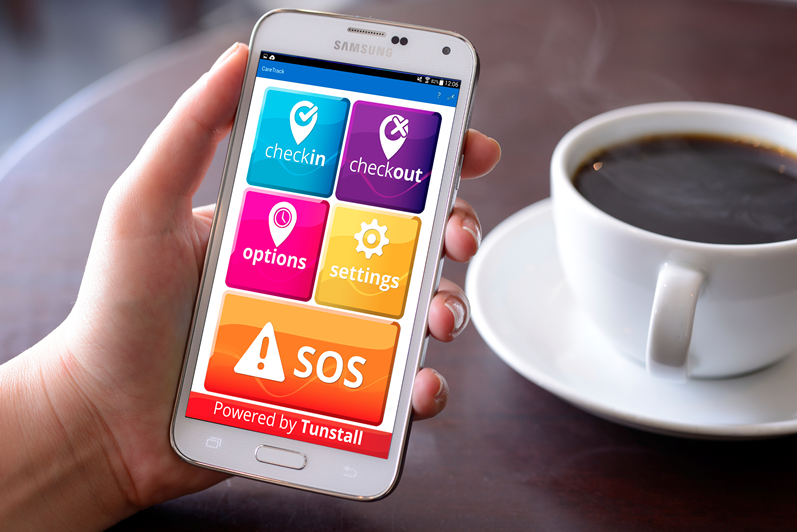
Ozcare, a not-for-profit organisation of carers, whose staff often work alone, has begun using Tunstall’s myCareTrack. The ‘check-in and check-out’ smartphone app can report on staff activity using GPS functionality. The app notifies Tunstall’s 24-hour, seven-days-a-week monitoring centre of staff movements, and can also issue emergency SOS calls in distress situations.
The app has the ability to switch between data and voice connections for improved network connectivity, and, if necessary, staff can log in and out with a separate phone call, using their individual PIN.
Jessica Brinton, a Care Assistant with Ozcare, has been using myCareTrack for more than two years. She said the app has made her feel more confident when she has been working alone.
“It makes me feel safer knowing someone is there if something does go wrong,” she said.
“I have received nothing but positive feedback from staff,” said Damian Foley, Ozcare’s Head of Community Care.
The app is easy to use and creates a sense of security for employees who work alone, he said.
Geoff Feakes, Tunstall Healthcare’s Chief Information Officer, said the myCareTrack app has been well received by those who work alone and in remote locations.
“We designed and developed the myCareTrack app specifically for mobile workers to improve staff safety,” said Mr Feakes.
Transferring the app to staff was seamless, he said.
Ms Brinton said thankfully she hasn’t had to use the SOS function on myCareTrack, “but I have peace of mind knowing it’s there.”
For more information about myCareTrack or other staff safety solutions call Tunstall on 1800 079 758 between 9am and 5pm Monday to Friday.



The app is a good idea but clearly the people who developed this app don’t appreciate how it is when you are assaulted at work because you don’t have time to get to your phone and push the right button. Even pushing the personal alarm or duress button is out of the question if you are being wrestled to the floor or pummelled by fists. Aged Care needs more staff so that staff do not have to work by themselves. Risk assessments need to be updated shift by shift and if there is a risk of assault Security should be employed. Nurses and Carers are not Security Guards and should not be involved in restraint or have to fend off flying chairs, etc. If Aged Care can take 1 billion in subsidies and make 2 billion in profit (largely untaxed thanks to offshore tax havens) they can spend more on staffing and the reduction of OVA.