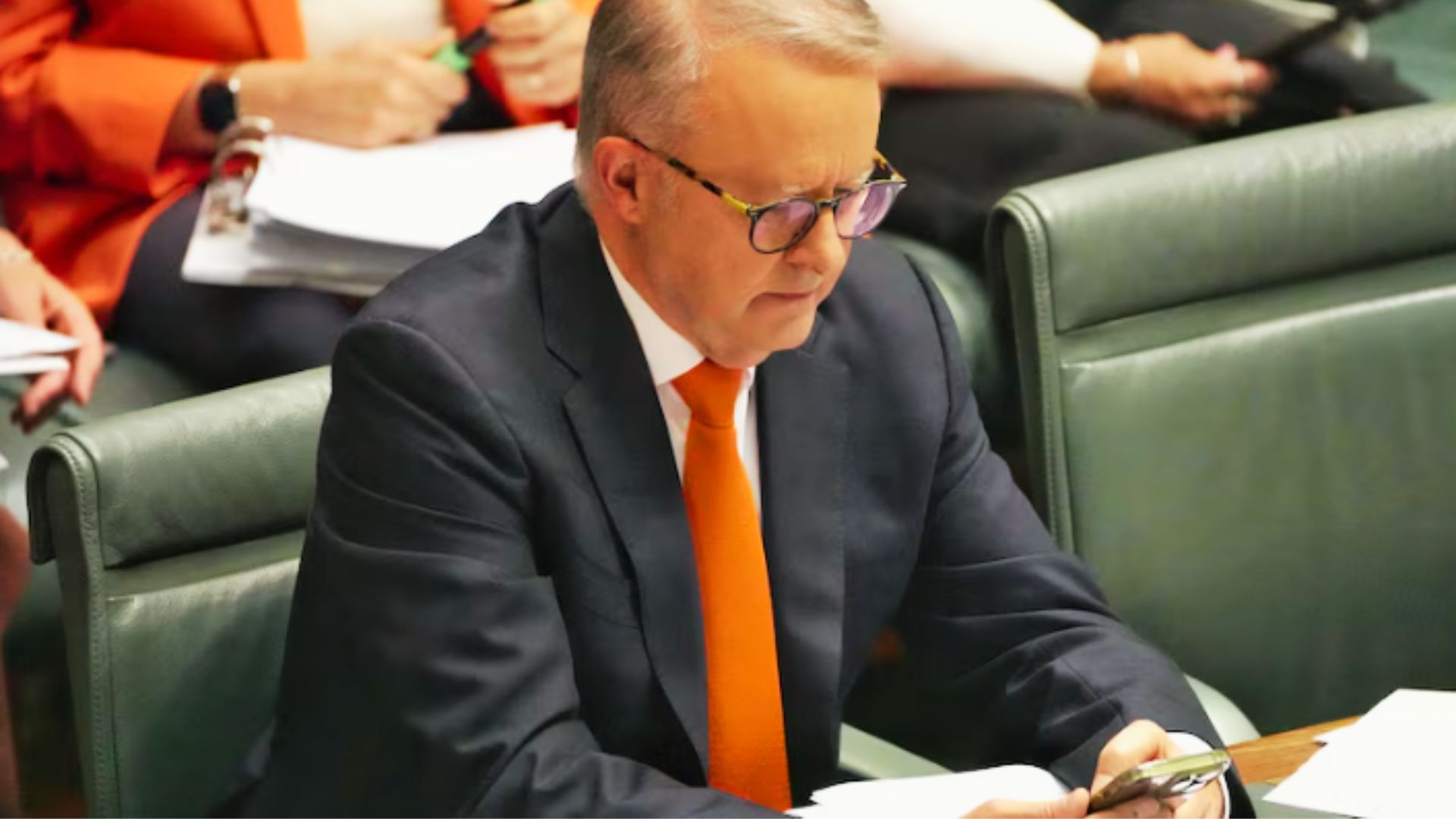
Canberra is pushing harder than ever to clamp down on negative opinion online, and to position the bureaucrats and ministers who run this country as the trusted narrators of what’s actually happening in it.
There’s just one problem. Politicians lie. Not occasionally, not by accident. Constantly, and often with a straight face. They just don’t call it lying. They call it “political spin,” or “framing,” or, if they’re feeling generous with themselves, “getting the messaging right.”
Australia’s aged care sector is the perfect case study in the gulf between what the government and its institutions say and what they actually do, and why unfiltered media and public commentary, however messy, remain the best disinfectant for decisions made behind closed doors.
Right now there are two separate efforts underway that would, in different ways, make it harder for ordinary Australians to see politicians and officials squirm under scrutiny.
The first comes from the Secretaries Board, the committee of federal department heads, some on million-dollar salaries. In a submission to a parliamentary inquiry, the board said it was concerned about the growing use of committee-hearing excerpts on social media, particularly where clips are shown without context and expose officials to ridicule, hostility or abuse.
It wants parliament to stop politicians posting this evidence online, or, failing that, to force clips to run in full, banned from being captioned or edited, and posted with comments switched off. Every one of those conditions is designed to strip a clip of the thing that makes it spread: context, brevity, and the ability for people to talk about it.
The second is Labor’s forthcoming “digital duty of care,” an exposure draft that will impose fines north of $100 million on platforms that fail to shield users from algorithmically amplified “harmful” content. It’s being sold as child safety and product-safety regulation.
But as tech figures and opposition politicians alike have noted, the categories of “harm” the eSafety Commissioner or the minister can add sit behind ministerial discretion, and the practical effect, whatever the intent, is to hand government more say over which ideas and criticisms reach people’s feeds.
Individually, either proposal might sound reasonable to someone who hasn’t been paying attention to how public servants actually behave when a camera is on them.
Together, they tell a story: a government and bureaucracy that would very much like to control the terms on which its own performance gets judged.
A recent ABC Four Corners investigation delivered a damning exposé of the Integrated Assessment Tool, the algorithm that decides how much home care funding older Australians actually receive. People were systematically under-assessed. Wait times stretched and large numbers of seniors have died while waiting for care they had already been approved for.
That investigation mattered. But the aftermath online reaches far beyond those who viewed the program on the ABC.
Clips of Aged Care Minister Sam Rae insisting there is “no artificial intelligence being used”, that an algorithm “is just a process”, and that everything is equitable and under control circulated widely online.
Carefully worded denials from Rae and Health Minister Mark Butler being delivered in Senate Estimates juxtaposed with the lived reality of a frail, elderly blind woman who was repeatedly denied the care she needs by a cruel system that was literally designed to take humanity out of care.
These were the moments being clipped, captioned and shared.
Late last year, Labor was under immense pressure after it was revealed that they were refusing to release Home Care Packages to seniors in need due to the administrative burden that it would have caused in the lead up to switching across the Support at Home Program.
It was not kindness or the data on the rising death toll that forced the release of 20,000 home care packages. It was political pressure in the Senate and the rapid online circulation of clips showing ministers and officials trying to explain away the obvious.
As someone who reports on aged care, the most consequential stories rarely start with a polished government media release. They start with Estimates footage, with a minister’s denial that does not survive contact with reality, and with the subsequent online amplification that makes the contradiction impossible to ignore.
Official government posts about the sector are routinely detached from the experience of older Australians. Sometimes they are simply false.
Politicians and bureaucrats love to blame social media for the collapse in public trust in institutions. What gets left out of that story is that the vast majority of the distrust is self-inflicted. The substance of what’s actually said in Senate Estimates is far more damaging than the fact that people later see it without three hours of surrounding context. “Context,” in this framing, is just another government soft-term for spin, which is essentially a polite word for lies.
Mainstream outlets aren’t neutral referees here either, and it’s worth being honest about that. The ABC, The Age and The Conversation lean left, and criticism of left-leaning policy tends to get filed under “missteps” or “teachable moments.” Sky News and the Murdoch press lean right and run the same play in the other direction.
The genuinely useful, and yes, genuinely awful, commentary increasingly lives on social media, precisely because it isn’t filtered through an editorial line with its own blind spots.
Some of it is bad-faith noise. But it’s also where an unedited thirty-second clip from Senate Estimates can travel further and faster than any official statement, and where the public can see for itself, without a press gallery intermediary, how a minister behaves when he’s cornered.
There are already laws against the genuinely harmful things the Secretaries Board says it’s worried about. Defamation is actionable. Menacing or harassing someone online is a crime. What isn’t, and shouldn’t be, illegal is being embarrassed by reality.
If senior officials and ministers don’t like being mocked for giving evasive answers at parliamentary hearings – stop giving evasive answers. Until that happens, the unfiltered footage, messy, unflattering, sometimes unfair, is doing exactly the job scrutiny is supposed to do.
Almost every meaningful aged care reform was sparked by the government being caught out. Don’t let them make it illegal to catch them.



Bravo Jakob! Freedom of speech!
The digital duty of care has nothing to do with censoring aged care. It is about the responsibilities of digital platforms for the harms their systems may algorithmically amplify. Bringing aged care into the argument conflates two completely separate policy issues. This narrative is being pushed by conservatives, so it’s disappointing to see you broadcasting it rather than engaging with what the policy actually does.
Those are definitely the talking points that the Government are using.
I think Albanese and his ilk should move to a communist country instead of desperately trying to make Australia one.
Since I cannot find one complementary adjective to describe this current government and particularly our excuse for a Prime Minister, I will leave the comments here because their behaviour speaks for itself.
You have every right to challenge and debate the Albanese Government’s aged care policies, and robust criticism of government is an important part of a healthy democracy. However, suggesting that policies you disagree with are somehow evidence that Australia is becoming a communist country is both divisive and illogical. We can strongly disagree on policy and hold governments accountable without resorting to exaggerated political labels that only inflame the debate rather than contribute to it.
100% Simone, completely agree with your comment
Labour is out of touch. As far as the next elections labour is out
Very biased article, you a member of One Nation by any chance? There was so much money held up in aged accounts, no wonder funding was restricted.
My thoughts exactly!
Yet your failing to acknowledge why there was, the reasons that have contributed to the amounts saved by many.
They where told to save funds, it provided additional services when emergencies occured and did not delay access because reassessment where not required. Many sacrificed needed services for future requirements that included equipment, home mods and even respite in the home. Requirements that had been driven from the roadblocks to access any alternatives.
The unspent funds were not based on greed nor where they unintended. Any claim otherwise is a false narrative and not based on fact. It should never have been reported so falsely and without lived expertise knowledge that was evidenced with logical and factual reasoning.
I challenge the claims made around such false claims.
We now have a system that prides itself or creating hurdles to access needed and necessary services items and funding. All shrouded in complex processes that are unclear to those in charge of instigating them. We have the lived experiences and expertise that proves this to be true and includes a recent 8 week hospitalization that has left us in a position of constant risk and consequence.
Censorship, in a not so subtle form, must be opposed. History has some awful examples of ‘creeping censorship’ by governments. If politicians would just own up and be real in the first place, then we wouldn’t be so angry with them. Labour governments used to be about the common people, the workers and their rights. Now the difference between Labor and Liberal is becoming difficult to notice in some areas. Keep up the good work Hello Care.
That really shows how corrupt most Politician’s are doesnt it.
The government has no right to force the bills through parliament without proper questioning in parliament – it is a political issue and effects the Australian people ,z -The Labor government is so desperate to that it doesn’t want any parliamentary debate on the bill — It has to be passed through both houses of parliament before it can become law ,-
Great piece Jacob, thank you.