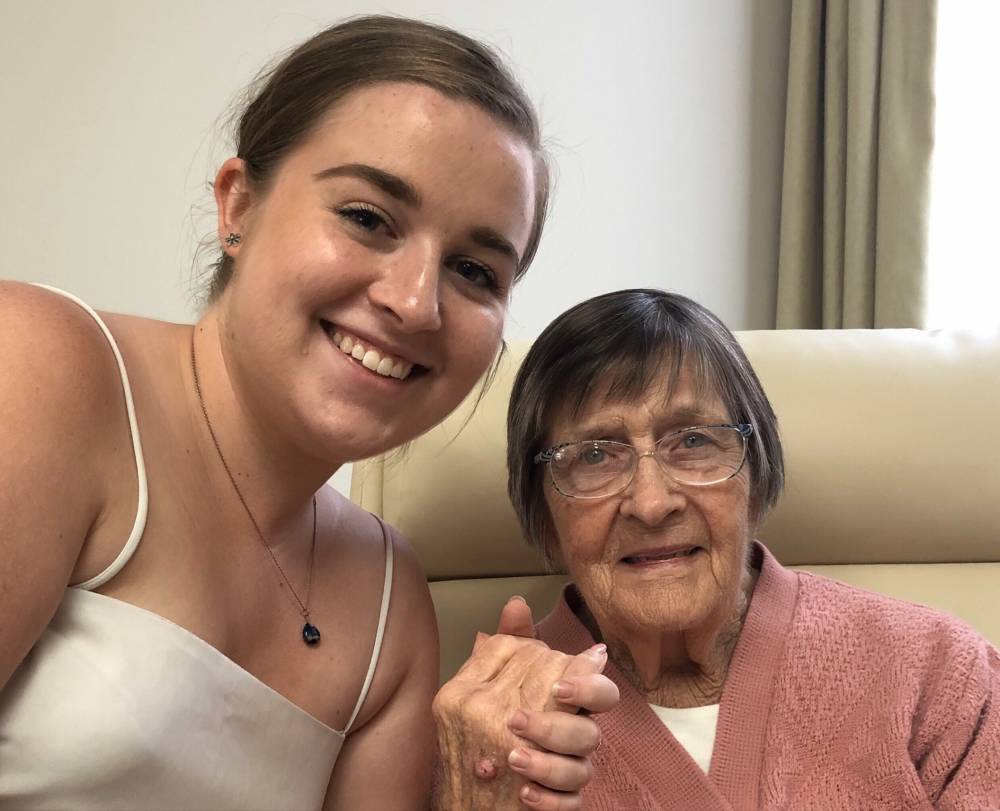
A few months ago, when it looked like coronavirus in Australia was clearing and restrictions were lifting, I was in Sydney. While I was there, I was taking every opportunity I had to visit my grandma in her care home. Due to coronavirus, I wasn’t allowed to actually enter the premises, but carers would sit her by a window, and I could talk to her from outside. Grandma is living with dementia and so would always question why I wasn’t allowed to come in to give her a hug.
Before I travelled back to Melbourne, her facility went into full lockdown after someone presented with a high temperature. This meant that the last time I got to see her before I left was via video chat, set up by one of the staff members on his personal mobile. I saw my grandma, who for my whole life has been fairly stoic, very much the product of Victorian era parents, tear up because I couldn’t come see her, and who knows when the next time will be.
The only saving grace of the situation is that despite her worsening dementia, for whatever reason her brain has locked onto the fact that there is a global pandemic. Even though she might forget about the rules between visits, once you mention that coronavirus is keeping us apart, she remembers with a “that blasted virus” and immediately questions us on our safety “out there with it”.
But unfortunately for others, things are not so easily explained. Particularly in Melbourne, where aged care homes have been in lockdown for almost six months, some residents have been confined to their rooms with little to no social interaction with others, and no concept of why.
With these confinements, carers, staff and families are already seeing a decline in their physical and cognitive health. They are unable to get any sort of exercise or help to strengthen their bodies, and we are already seeing the effects of this with increases in fall-related injuries across the state.
“We don’t have much data on falls, but we do know that the number of hip-fracture presentations has doubled at one hospital and others are noting similar trends,” said Rik Dawson, a gerontology physiotherapist and director of the Australian Physiotherapy Association.
“Without their usual support to get exercise and socialisation, the condition of older people is deteriorating.”
One of the biggest concerns is losing the added support of family in a residents care plan. For a lot of people, spending time with their family members, helping with meal times and offering social and mental support is a big part of the lives of both the residents and their loved ones. Losing this addition to their care plan could potentially have lasting effects on their quality of life.
“Particularly for people living with dementia or mental health issues, where the family member has been part of the care team … so often the family goes in and will then, having seen something out of the ordinary, raise issues with their carers.” said Craig Gear chief executive of the Older Persons Advocacy Network.
As much as the physical health of our aged care residents is of the highest importance, helping to maintain their mental and cognitive health is incredibly important too. We all want the best for the older people in our community, but the unfortunate reality of the current situation means that there is collateral damage in some unexpected places.



Thank you Rhianna for this story. You have said, clearly, what I’ve been trying to say since covid19 started. Family contribute hours of personal care and social support for their loved ones in care. Not all families, some can’t be bothered visiting normally. But there are many wonderful people who spend regular time with their people in care.