Ageing Australia says most providers are losing money. The regulator says some are charging too much. Both were speaking at the same conference, and the gap between them has never looked wider.
On the same conference stage in Sydney this week, two of the most important voices in aged care described two very different problems.
Ageing Australia chief executive Tom Symondson warned that most providers are operating at a loss, that the sector could shrink just as demand surges, and that many providers may not be able to keep their doors open. “Care delayed is care denied,” he said.
Aged Care Quality and Safety Commissioner Liz Hefren-Webb told the same audience her Commission had secured more than $300,000 in refunds of Support at Home fees, and she expects that figure to grow. She warned residential providers about what they charge for meals, TVs and Wi-Fi. “Just think about what you would think is okay for your mother or father to pay, or for you to pay,” she said.
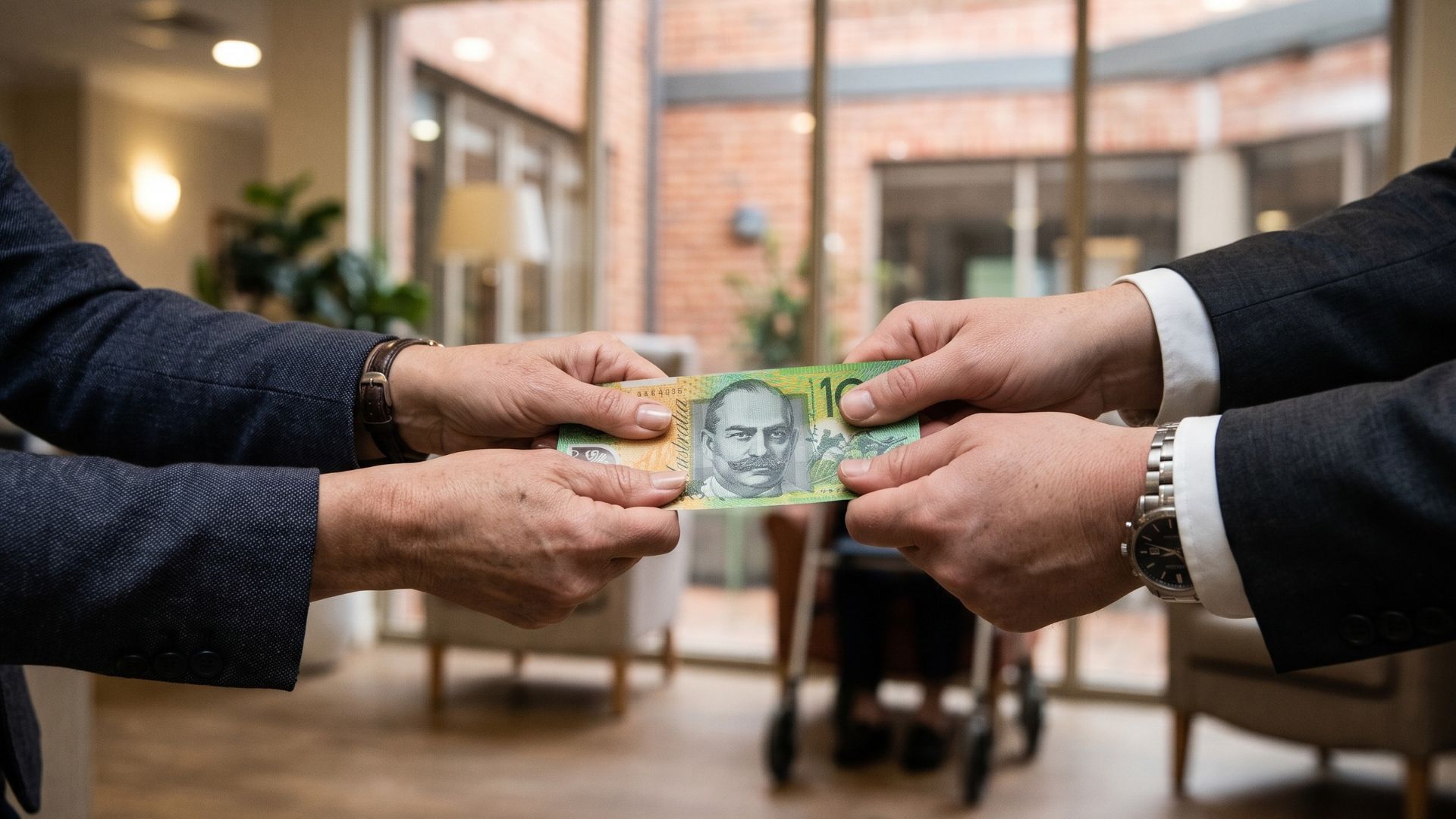
One side says the money isn’t there to deliver care. The other says some of what is being charged is too much. Neither is necessarily wrong. But a year into the new Aged Care Act, those two positions have hardened into a standoff, and older people are caught in the middle.
Ageing Australia’s figures paint the provider side of the ledger. Most providers across residential, home and community care are losing money. Only about a tenth of the new residential places needed have been added in the past two years. A provider that can’t cover today’s costs, the peak body argues, can’t build tomorrow’s beds.
In conversations with providers over the past 12 months, HelloCare has heard the same frustrations again and again. They boil down to one complaint: government decides almost everything, then directs the blame towards the providers.
Government sets who is eligible and how much funding they get. It defines the service categories, the quality standards and the reporting. It decides what can and can’t be charged, and may yet cap prices. Providers say they are left to make the numbers work inside a framework they had little say in designing.
The most common flashpoint is the hourly rate. When a client sees a worker paid, say, $45 an hour and a bill of $90 to $120, the gap looks like profit. Providers say that hour also has to carry care management, rostering, scheduling software, clinical governance, mandatory reporting, quality systems, recruitment, training, travel between clients, cybersecurity and insurance.
They also point out that Support at Home moved costs that used to be charged separately, including administration, overheads and travel, into the hourly price of every service. The Minister has acknowledged on air that travel must now be built into the price rather than charged on top. Providers say that makes the “ticket price” look higher even where underlying costs haven’t changed much.
RFBI chief executive Frank Price put it bluntly when Health Minister Mark Butler first used the language of “price gouging” in May. “The policy settings are put in place by Government,” he said. He pointed to StewartBrown data showing operating margins of around $1.44 per client day, and said nobody had defined what gouging actually means in aged care.
The funding picture hasn’t improved since. In September, the Government lifted the AN-ACC price by 2.55 per cent, while award wages rose 4.75 per cent and inflation sat at 3.5 per cent. RFBI responded with a satirical video campaign that showcased just how dire circumstances are.
Superior Care Group CEO Russell Egan told HelloCare in August that hotel services already run at a loss under the basic daily fee, which is why providers lean on higher everyday living fees. “The government has outsourced their risk to providers and will not give them a profit,” he said.
Government sees a different problem. Last week, on 2GB Breakfast, host Ben Fordham read out Support at Home price rises reported by listeners: personal care up almost 50 per cent, a dozen pre-packaged meals tripling in price, and seven smoothies jumping from $20 to $118.
Mr Butler described them as “pretty outrageous rip-off stories”. He said providers could once take as much as 35 per cent of a package as an administration fee, and that this is now capped at 10 per cent, which he suggested was a good return. He made clear the Government would not let providers win back that lost margin through inflated prices.
That is where providers say the debate goes wrong. As HelloCare reported this week, the 10 per cent cap applies to care management, which is a separate service. Under Support at Home, providers can no longer charge separately for administration, overheads or travel at all. Those costs now sit inside the hourly price.
In the meantime, Butler said, the Commission is already ordering refunds where prices are clearly unreasonable, and the Government publishes prices so older people can check their bills. Within the same interview, he described that data as published quarterly, then three-monthly, then monthly. The department’s national price summaries actually report medians and ranges rather than averages, and the latest edition, published in late October, covers January to March.
Hefren-Webb’s speech this week was the regulator’s side of that promise. Under Support at Home, providers must ensure prices are not unreasonable. The Commission has run proactive reviews of higher-risk providers and will keep investigating fees that appear extreme and out of step with community expectations.
In residential care, she said a premium dining option under Higher Everyday Living Fees (HELF) is fine, but only if the standard menu already delivers enough protein and nutrition. She asked homes charging for TVs and Wi-Fi to keep costs reasonable.
Her concern goes beyond individual bills. Reports of unreasonable charges end up in the media, she said, and erode trust in the whole sector. “I can’t say enough how important it is that we rebuild that trust in this community.”
Strip away the rhetoric and the standoff comes down to one question: who is responsible for what older people pay?
Even Fordham pressed the point. With price caps deferred indefinitely in May, he asked how providers are meant to know what to charge. It was, he suggested, like pulling over a speeding driver on a road with no speed signs. Asked what a reasonable price for an hour of cleaning or gardening would be, the Minister said he didn’t have the figure in his head. He pointed listeners to a government website, which he couldn’t name on air.
That is the gap providers keep returning to. The Act says prices must not be unreasonable, but providers say no one has told them where the line is. Government and the regulator say the worst cases speak for themselves.
The Government’s own evidence doesn’t point to widespread gouging. The day after the caps were shelved in May, the Independent Health and Aged Care Pricing Authority (IHACPA) released its first Support at Home pricing advice. For six of the nine services compared, its cost-based prices were higher than the average prices providers were charging.
In September, a department payment assurance review found most apparently high prices were caused by incorrect claiming, which made recorded prices look higher than what clients were actually charged. Sector data shows Support at Home prices rose by just over 10 per cent on average.
That doesn’t mean no one is overcharging. HelloCare has reported meal bundles advertised at $99 being billed at around $300, and the Commission’s refunds show some prices haven’t passed the test. But it suggests the problem may be narrower than the rhetoric implies.
The Commissioner’s own speech showed how tangled the question is. Acknowledging the sector’s complaints about red tape under the new Act, she said much of it is beyond her control. “Legislation is definitely a camel,” she said, borrowing the old joke about a horse designed by a committee. Much of what providers call regulatory burden, she said, is required by the Act rather than imposed by the Commission.
Providers would say that is exactly their point. Compliance, reporting and quality systems are among the costs they say are built into every hour of care. The regulator is policing prices while acknowledging that a major cost driver was written into the law.
She also asked providers to come to her with their concerns “before you go to the media”. It was said with humour, but it hints at how strained the relationship has become. Providers have spent the year taking their case public, from peak body campaigns to RFBI’s satire, while government has done the same through talkback radio.
For older people, the argument over who is to blame matters less than what lands on their statement.
Ageing Australia says people now wait more than 10 months on average for a Support at Home package, and almost 4,000 are in hospital because the care they need isn’t available in the community.
Those who do have a package are feeling the pricing fight directly. In comments under HelloCare’s coverage this year, readers on Support at Home have described paying around $140 an hour for domestic help when the worker is paid around $34, sometimes with two-hour minimums. Others say their package value dropped overnight, or that they have waited months for a statement showing where their money went.
Some readers have backed providers’ calls for clearer rules. Others insist that price gouging is real and that the Government has been too slow to stop it.
Others have asked a question government hasn’t answered: what rise in hourly rates did it expect when it required package management and travel to be folded into the price of every service, and how many hours can clients actually buy now?
As another reader put it, both sides can be right at once. Providers may face genuine increases in what it costs to deliver care, while older people receive fewer hours from the same funding. Neither fact cancels out the other.
Neither side is backing down. The Minister says the Government remains committed to price caps but still hasn’t set a date, after three different explanations for the delay. Until then, the regulator’s refunds and investigations, and price data that is months out of date, are the main tools for policing prices.
Ageing Australia, meanwhile, is taking its Right to Care campaign to every MP in the country. It is asking government to fund existing residential services so they stay open, fund new beds, end the rationing of Support at Home and get community care back on track. “Our campaign will continue for as long as it needs to,” Symondson said.
Both sides claim to be standing up for older people’s rights. Providers say those rights mean little without the funding to deliver care. The regulator says they are realised in everyday interactions, including what an older person is asked to pay.
Until someone defines what a reasonable price is, and whether funding covers what care actually costs, the standoff isn’t going anywhere. And the older people waiting for care, or watching their package shrink, will keep paying for it.


