There is a well-documented connection between music and a person’s mood that goes way beyond the realms of simple entertainment.
Whether it’s the haunting wail of a seasoned blues guitarist evoking a lifetime worth of heartbreak, or the uptempo sing-song appeal of an iconic pop-music single, there will always be a particular style or song that strikes a chord within all of us that has the ability to change the way that we feel.
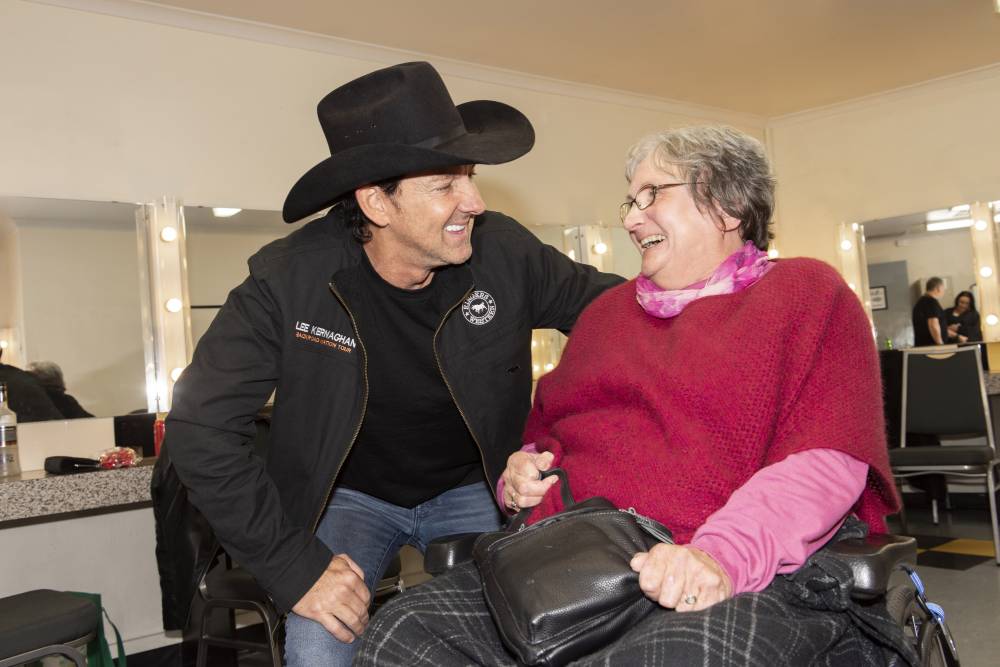
When it comes to 72-year-old paraplegic Susan Edmonds, music means everything – and the words of iconic Australian country singer Lee Kernaghan mean more to her than the singer could have ever known or appreciated.
The words of Lee’s song Electric Rodeo served as an inspiration to Susan following her horse-riding accident in 2014 and helped her through some very dark times in her life, so when she heard that Lee was playing a concert relatively close-by to her Western Australian hometown of Manjimup, Susan definitely wanted to be there.
The concert was to be held at the Bunbury Regional Entertainment Centre, and even though this is one of the closest cities to where Susan lives, attending this concert would require a 270km round trip.
Living life in a wheelchair has forced Susan to adapt to a number of things in her life, and a trip of this magnitude can pose a number of logistical challenges and also be very physically taxing.
Susan requires home care services in order to remain living safely and securely in her home, and when her home care provider, Baptistcare, heard that Lee Kernaghjan was coming to town, they decided that they were going to do everything that they could to make Susan’s dream a reality.
Alongside Susan’s sister Judith, Baptistcare organised wheelchair accessible accommodation in Bunbury and supplied Susan with a support worker to provide her with her regular care and support needs while she was away from home.
While Susan was obviously thrilled to hear the news that she would be attending the concert, what she did not yet know was that the people at Baptistcare had secretly approached Lee Kernaghan and organised for Susan to meet her hero right before he went out on stage that evening.
“Words cannot express how happy and grateful I am to Baptistcare for making it possible for me to meet Lee Kernaghan,” she said.
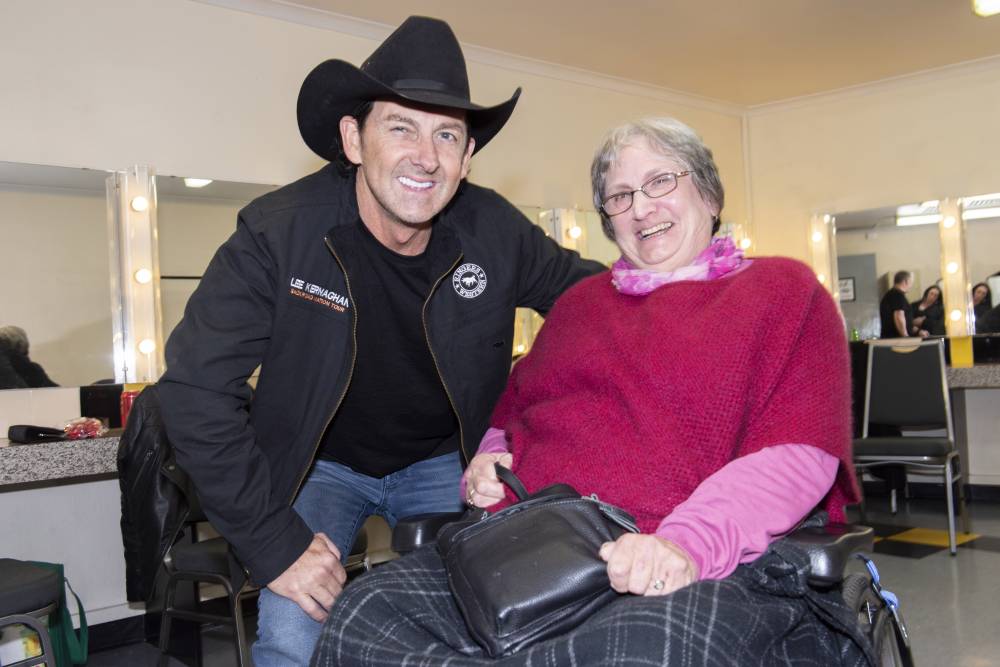
“The words of his song Electric Rodeo helped me through some very dark times following my horse-riding accident in 2014, and I was able to tell Lee so in person. He was very charming and gracious.”
Susan’s experience is a great example of the current shift in thinking from a number of care providers in recent times. Up until recently, clinical care has been such a primary focus from both residential aged care and home care services, that the other aspects of a person’s needs had really taken a back seat.
Embracing and working towards people’s goals outside of clinical care is the essence of what person-centered care is, and even though providers may not be able to grant every individual wish, the fact that the interests that bring people joy are being factored into their care is a great indication that things are changing for the better.





