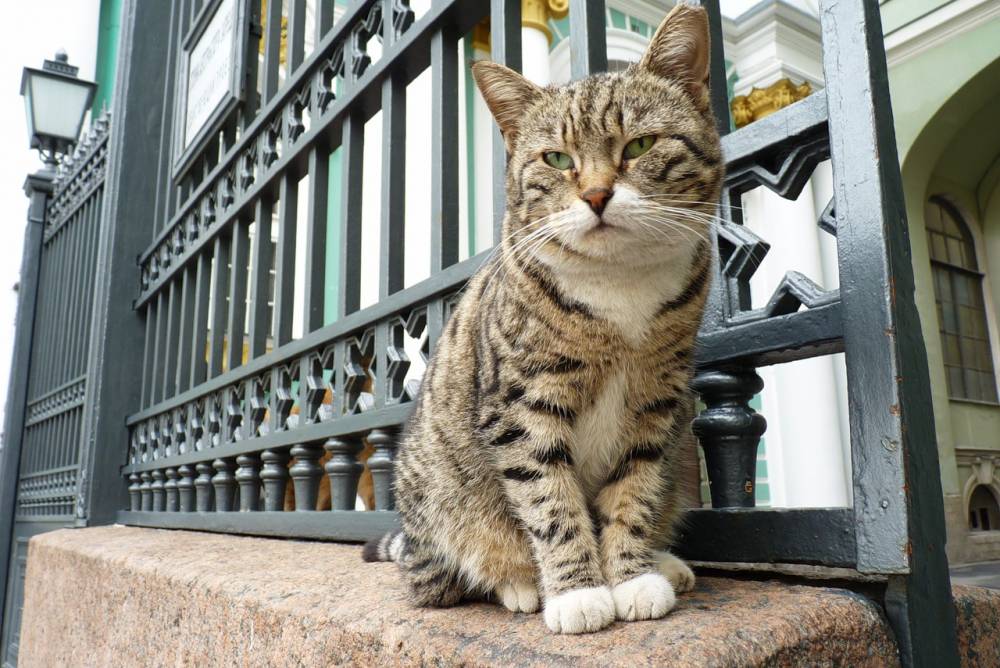
A Frenchman has probably surprised his relatives by nominating some unusual beneficiaries in his will – the cats of the Hermitage Museum in St Petersberg, Russia.
Frenchman Christoff Botar was so taken with the 50, or so, cats that live in the basement of the world-famous museum, he decided to leave a small portion of his fortune to them in his will, according to the Moscow Times.
Museum staff describe Botar as “an ordinary, modest man”, and have not been able to ascertain his connection to the museum, even if he ever visited.
A French citizen left part of his inheritance to the 50-or-so cats that live in St. Petersburg’s State Hermitage Museumhttps://t.co/zCvHERKNqI
— The Moscow Times (@MoscowTimes) December 4, 2020
As well as its feline inhabitants, the Hermitage Museum is home to around 3 million works of art, housed across several buildings, including the spectacular Winter Palace.
Cats have been a feature of the Hermitage Museum since the 18th century, when they were introduced by Empress Elizabeth Petrovna to keep mice at bay.
They have proved so successful in the role, and remain there to this day.
The Hermitage cats were granted the status of ‘guardians of the art galleries’ by Catherine the Great, who founded the Hermitage, according to CNN.
Today, volunteers and museum staff care for the furry helpers.
In a video conference with museum visitors earlier this month, the Hermitage’s general director, Mikhail Piotrovsky, said the museum’s “French friend did a very good thing.”
A generous French philanthropist has left a sum of money to some unusual beneficiaries in his will — a bunch of cats living in the basement of the State Hermitage Museum in Russia. https://t.co/1dPGX7cewn
— CNN (@CNN) December 8, 2020
“This is brilliant PR for both the cats and charity. The sum is not very big but it’s very important.”
“Such a nice gesture that came from France,” he added.
It’s likely the funds will be put towards a renovation of the museum’s basement, where the cats live.
The cats are such a popular feature of the museum that earlier this year more than 800 people submitted pictures and photographs of the cats for the museum’s Day of the Hermitage Cat.
Botar left the remainder of his fortune to loved ones and a French environmental organisation, according to the St Petersberg news website, Fontanka.
“Including a gift in their will to a charity is a way to help many animals in so many ways,” Kate Hoelter, Gifts in Wills Manager at RSPCA Vic, told HelloCare.
“It helps fund services that help animals in need now, but also contributes to initiatives to prevent animal cruelty and a create a kinder, better world for animals in the future.”
It’s “very common” for people to leave gifts to animals when they die, Hoelter said, and they generally do this by including a gift in their will to an animal welfare organisation like RSPCA Victoria.
“I think the motivation for the gift is a love for animals and a desire to help them. More specifically, I think the gift is their way of giving back to animals that have enriched and shared their life.
“Later life pets are particularly important companions and I think people want to say thank you.”
Answering questions about how others can donate to the Hermitage cats, Piotrovsky said there is no special “button for cats” on the museum’s website, but if you contact the development department they will help you arrange it, and it is always possible to donate to the Hermitage Museum more generally.
Image: Yandex, Wikipedia.





