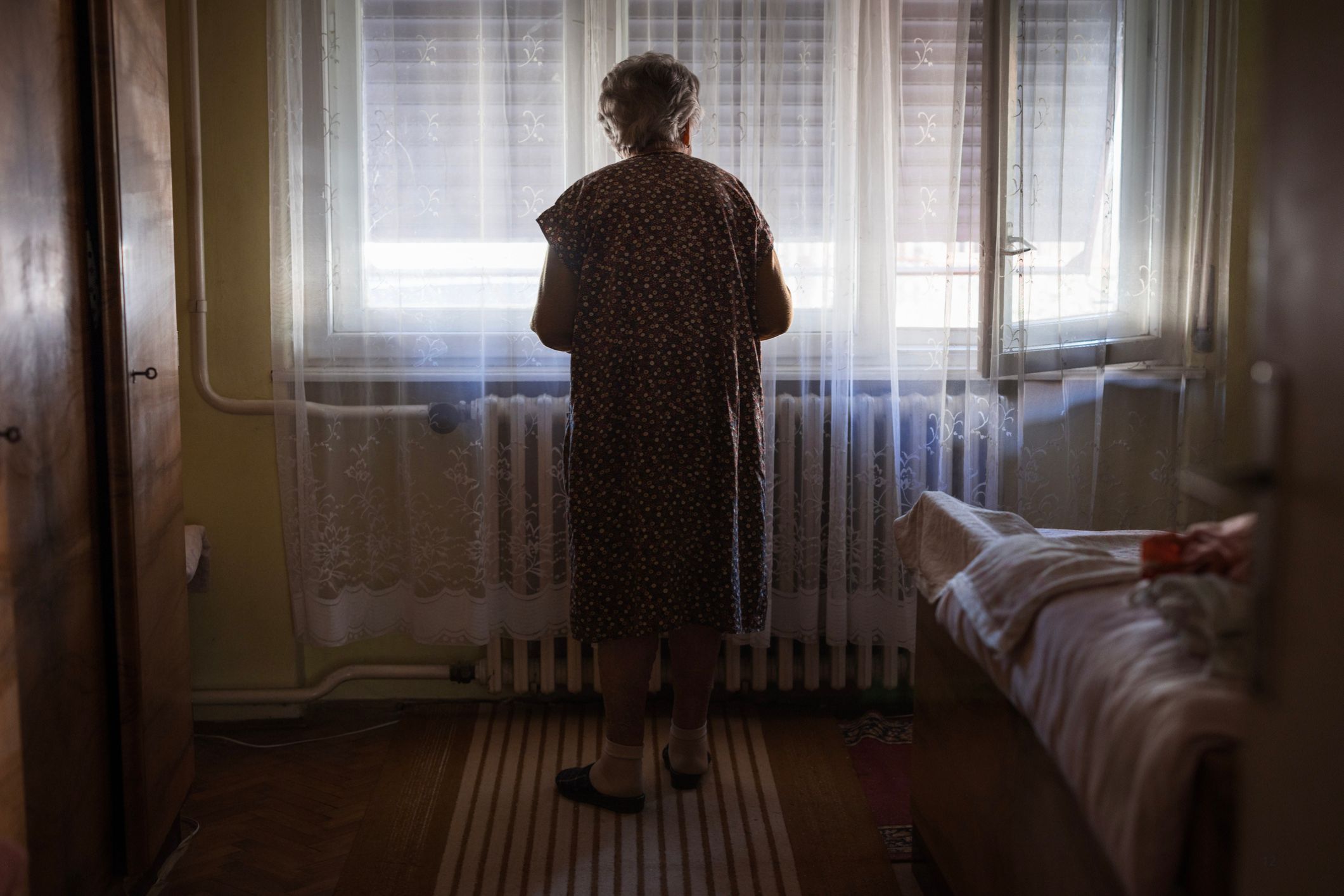
More than 100 federal politicians from across the political spectrum have formed an unusual alliance to challenge the Federal Government’s aged care reforms, raising serious concerns about their impact on older Australians.
The coalition of MPs and senators, spanning the Liberal and National parties, the Greens, One Nation and the crossbench, has taken the rare step of jointly calling for urgent changes to Labor’s new “Support at Home” program. Their intervention reflects growing unease not only within Parliament, but across the broader aged care sector.
Cross-party agreement on policy is uncommon in Canberra, making the scale of this alliance particularly significant. Senior opposition figures have joined forces with Greens representatives and prominent independents, signalling that concerns about the reforms cut across ideological lines.
At the centre of the dispute is the claim that the new system, introduced late last year, is leaving some older Australians worse off rather than improving access to care.
Politicians involved in the alliance say they are hearing consistent reports from constituents who are struggling to afford basic supports, including help with showering and meal preparation. These are not optional extras, they argue, but essential services tied directly to dignity, health and safety.
Under the revised model, some services are classified in a way that requires older people to contribute to their cost. Critics argue this has led to unintended consequences, with vulnerable Australians forced to make difficult trade-offs in their daily lives.
There are growing calls to reclassify personal care, such as assistance with showering, as a clinical need rather than a lifestyle support. Advocates say this would remove out-of-pocket costs for services that are fundamental to maintaining health and preventing hospitalisation.
Meal preparation is another flashpoint. Stakeholders question whether it has been appropriately categorised, with reports suggesting some older people are reducing or skipping services due to cost pressures.
A major source of concern is the system used to assess care needs, which relies heavily on automated decision-making. Critics argue that the tool lacks transparency and does not adequately reflect real-world health conditions.
There are increasing reports of people with complex or deteriorating conditions being reassessed at lower levels of support, despite medical evidence indicating the opposite. In some cases, frontline staff have reportedly been unable to override the system’s determinations, even when they disagree with the outcome.
This has led to comparisons with past automated government processes, with fears that an over-reliance on algorithms could produce unfair or inaccurate results.
Politicians are now calling for greater transparency around how the tool was developed, whether it was properly tested, and why human oversight appears to have been limited.
The political pushback is being reinforced by mounting concern from aged care providers and advocacy groups.
Organisations across the sector have warned that the rollout of the new system has been problematic, with some providers reporting confusion, funding shortfalls and rising service costs. There are also calls for clearer pricing structures, including the introduction of caps to prevent excessive fees.
Advocates argue that without intervention, the system risks shifting costs onto those least able to afford them, while also placing additional strain on hospitals if people are unable to access adequate support at home.
Behind the policy debate are the lived experiences of older Australians and their families.
There are cases emerging of individuals with serious conditions, including degenerative diseases, who have struggled to secure appropriate levels of care under the new system. Family members often step in to fill the gap, sometimes at significant personal and financial cost.
These stories are fuelling concern that the system may be too rigid, relying on data inputs rather than clinical judgement or lived reality.
The Federal Government has defended the reforms, maintaining that the new model is designed to deliver a more equitable and consistent approach to aged care. It argues that the changes will ultimately allow more Australians to access support and remain in their homes for longer.
However, critics say the implementation has fallen short, and that urgent adjustments are needed to prevent further harm.
The alliance of more than 100 politicians is now pushing for immediate changes, including a review of service classifications, greater transparency around the assessment process, and the reinstatement of human oversight in decision-making.
Their collective message is clear: when such a broad cross-section of Parliament raises the same concerns, it signals a deeper problem that cannot be ignored.
As pressure builds from both politicians and the aged care sector, the Government faces a critical test, whether it can refine its reforms quickly enough to restore confidence and ensure older Australians receive the care they need and deserve.



The previous system was not necessarily broken but needed more staff to assess the aged people. My Age Care needs to be run similar to that of an insurance company. Yes, I have worked for an insurance company to be able to recommend their systems.
Yes , there should be fair system
NDIS should be removed and universal services for all old, disable and vulnerable people should get
I know peoples whose health detoriating , care providers companies in real don’t care for as they themselves are confused with all the time changing system
Who gave government such advice is questionable?
Lots of west of money could have been saved if competitive fair system could have been introduced
And we don’t get services we used to get before from public as well as gp
Currantly no gp has got time to make understand properly specially petient is aware of all symptoms related treatment and evolution here also government can save money if instead of relying everything on test dr can treat symptomatic ailment and go in root cause and form proper diet pogram for petient
NDIS is totally discriminatory services
Worst part is on the piece of paper hips of law facility care they advertise but in real world all those glossy words are for display only in short agecare become buisness so I will advice if a petient handle their own money and instead of paying overexsarated labour charges take charge of their health in their own hand and most of allied services should be provided by government clinic and Medicare and people learn to contribute for themself for certain out of pocket fees which should be tax deductible
Just remove NDIS lots of money will spare for vulnerable people to get more services
I know one hung I am not getting many services I am entitle to compare to other peoples ailment but I know I will not get it and all of sudden so much price hacking a comfortable middle class person struggling to meet their ends since last 6 month constant currant passing through hand dr knows need neurologist but they don’t give referral all the time only one thing PTH high I are in Que for operation I clearly ask one of dr about my all condition related to calcium and PTH he clearly said no ask gp to evelute further and gp bounce back to them and my 24 hours goes behind treating myself a homecare provider never in last 3 years ring and took assessment of my requirement and to buy one walker why we need it as I used Aldi walker 65 dollar for 10 years without problem currantly wheels seperate by mishandling of aircraft
I was needed emergency walker but I had advices 10 month old Ot report can’t use will require new Ot report
There is too much hypocrisy and unnecessary condition imposed on people and finally they chock and give up person who raise voiced against system gets mouth shuts up and don’t get services till they die
Very inhuman , unfair, adultart system no transparency
All knows agecare is possible by spending half of government budget if so many term and conditions removed and peoples should get freedom to choose their own care plan maintained by them it will be lucrative and economical
It is deeply troubling that it has taken devastation for people to finally listen.
While there is some comfort in knowing voices are now being heard, we must ask—at what price?
The cost has been the loss of life, the erosion of dignity, and the ongoing compromise of safety. These losses cannot be measured, excused, or undone, yet they continue to occur.
Why does meaningful action only follow tragedy?
Why is prevention perpetually sacrificed until harm is already done?
What happened to the fundamental principles of early intervention and safeguarding those most at risk?
The Aged Care Act was forced through despite incomplete documentation.
We warned, repeatedly, that we did not want to be served an undercooked cake.
The Support at Home program-more accurately described by many as “Suffer at Home”-is fundamentally unfit for purpose.
We raised clear, evidence-based concerns that personal hygiene is a clinical task, not a domestic one.
Health professionals reinforced this, providing detailed clinical assessments covering skin integrity, peripheral circulation, mobility and flexibility, thermoregulation, and cognitive awareness, among others. Our warnings were not speculative; they were grounded in clinical expertise. And yet, they were dismissed.
The same disregard was shown toward nutrition and hydration.
These are not optional extras-they are core clinical assessments.
Instead of recognising their complexity and importance, dietary needs were minimised, with priority shifted toward enteral feeding and supplementary meals, further distancing care from the individual and their lived needs.
We are told by OPAN that they are acting on our behalf. I do believe many state and territory OPAN affiliated organisations are advocating in good faith.
However, confidence falters at the executive level.
We were instructed by Gear to stop agitating and to allow the process to unfold.
In effect, we were silenced-gagged by someone who was meant to amplify our concerns, not suppress them.
This is not consultation.
This is not co-design.
And this is not care.
The consequences of ignoring lived experience and clinical evidence are no longer theoretical-they are visible, devastating, and ongoing.
Accountability can no longer be deferred, and voices can no longer be muted in the name of process.
Lives depend on getting this right.
The group needs to look at blatant price gouging. A provider proposing a third party deivering an eligibe service now requires over $2000 of provider allied health staff oversight for a limited series of sessions in addition to the almost 100% subsidy on top of the third party hourly rate. $4,200 from my package for a third-party $1,200 cost. Under HCP it would have been about $1,500! Well-resourced large not-for-profit providers are writing new rules. The new Act places the elderly person’s funds at the centre of decisions NOT the elderly person.
Thank you.
Let every Politican, Providers along with Directors and Managers of Aged Care Homes (like the exercise when some polititicans did sleeping in the streets with the homeless ) spend 48 hours in the homes of a Carer living with their loved one with Dementia … then they will realize how hard it is, and learn what is really needed to preserve the dignity and rights of those with Dementia.
Then let’s extend this exercise by doing 2 x 12 hour shifts in an Aged Care Residential Homes to experience the process how all dementia and hanicapped residents are really treated. Let the carers select the homes.
Am sure the above challenges will get better results from the powers to be and decision makers, for the current aged care system in recent times is appaulling. It takes a lot, for us ‘silent majority’ to speak up and now the ‘baby boomers’ are about to enter.